Short answer: Drone spraying income depends on three numbers: the price per hectare, the hectares you spray, and your costs. A University of Missouri Extension guide gives about USD 16 per acre (about USD 39.5 per hectare) as a typical US custom rate in 2025, and shows that the cost per acre falls as volume rises. In the worked example below, a team needs about 615 ha a season to break even. This is an example, not a promise of income.
Start with the formula
Income = price per hectare × hectares sprayed. Profit = income − fixed costs − variable costs.
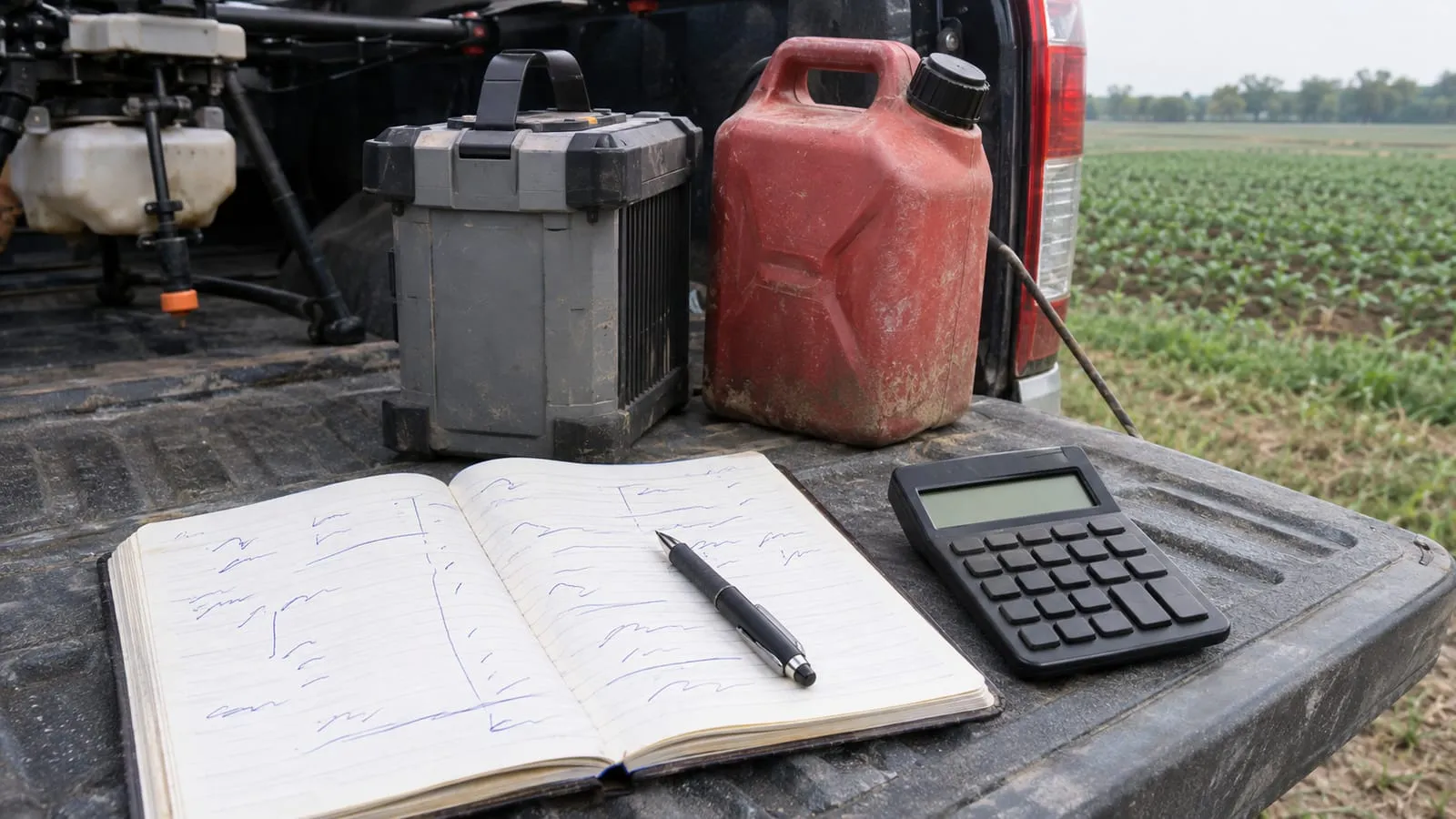
Fixed costs are paid even when you fly little: the drone and kit written off over a few years, insurance, licences and pilot training. Variable costs grow with work: labour, fuel for the generator and truck, transport to fields, spare parts and battery wear. The Missouri guide reports that ownership cost is the largest part of its cost per acre, with operating costs added on top. Read it with our cost per acre guide and the business plan guide.
Hectares per hour: do not use the brochure number
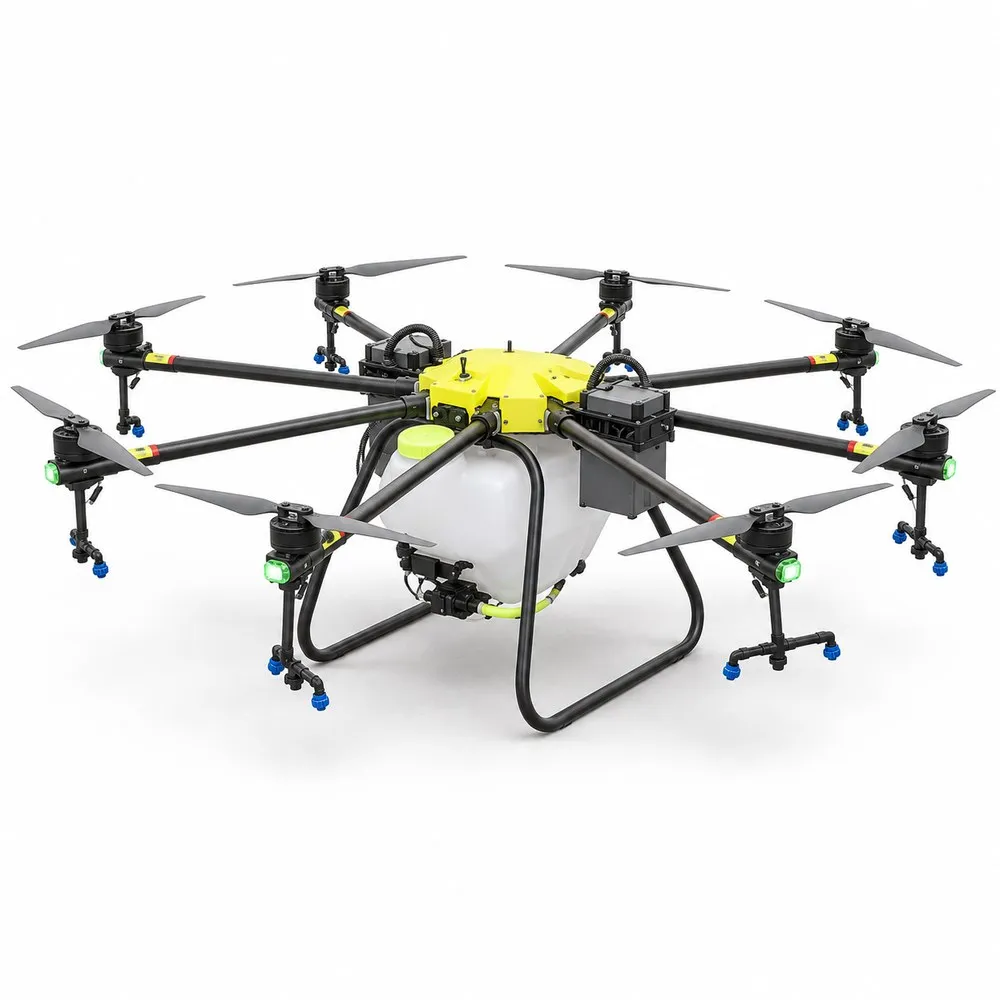
Our site formula gives an estimate: effective swath (m) × 6 m/s × 3,600 × 50 % ÷ 10,000, which is about swath × 1.08 ha per hour. With a 10 m effective swath (the planning figure for the F52), that is 10.8 ha/h on paper. In real work you lose time on refills, battery changes, turns and moving between fields. In the example below we use 60 % of the paper figure, so 6.5 ha per flying hour. See also how many acres a drone can spray per day.
Example: three seasons for one team (illustration only)
Assumptions. These are invented for the example and are not FLYZOR prices or promises:
- Drone, batteries, charger, generator and tank kit: USD 25,000, written off over 3 years, so USD 8,333 a year.
- Insurance, licence and training: USD 1,500 a year.
- Variable cost: USD 9 per hectare (labour, fuel, transport, parts, battery wear).
- Price charged to the farmer: USD 25 per hectare, with chemical paid by the farmer.
| Scenario | Hectares per season | Flying hours at 6.5 ha/h | Income (USD) | Fixed costs | Variable costs | Net (USD) |
|---|---|---|---|---|---|---|
| Low | 300 | about 46 | 7,500 | 9,833 | 2,700 | −5,033 |
| Medium | 800 | about 123 | 20,000 | 9,833 | 7,200 | 2,967 |
| High | 1,500 | about 231 | 37,500 | 9,833 | 13,500 | 14,167 |
Break-even hectares = fixed costs ÷ (price − variable cost per hectare) = 9,833 ÷ (25 − 9) ≈ 615 ha.
Notice what drives the result: not the speed of the drone but how many hectares you can sell. A faster drone helps only when there is work waiting.
A sourced reference for the price
The Missouri guide reports a typical custom rate of about USD 16 per acre for drone spraying. One acre is 0.405 ha, so USD 16 per acre is about USD 39.5 per hectare. The same guide notes that farms spraying about 980 acres a year (about 397 ha) or more can find owning cheaper than hiring at that rate, using its own assumptions. Your numbers will be different: use quotes from farms, cooperatives and service teams in your area.
Costs people forget
| Cost | Why it is missed | How to plan |
|---|---|---|
| Battery wear | It looks like a cost "later" | Divide battery price by expected cycles; see the battery guide |
| Waiting and travel | Not paid by the farmer | Add a minimum charge per job and a travel fee |
| No-fly days | Wind, rain, heat | Count only productive days in a season |
| Repairs and spare parts | Crashes happen | Keep a stock; see the spare parts list |
| Insurance and licence | Paid once a year | See the insurance guide |
| Unpaid time for admin | Quotes, maps, reports | Add it to the price |
How to raise the numbers honestly
- Increase hectares per season with repeat customers, several crops and a longer season.
- Reduce idle time with a good field setup (see trailer and field setup) and enough battery sets.
- Choose the right size. Small plots and terraces suit a compact drone. Open blocks suit larger tanks. The tank size guide helps.
- Sell the whole service, not only spraying: field mapping, scouting, spreading.
Next step
If you plan a spray service, send us your crops, expected hectares and power on site. We can suggest a drone class and a kit, and we quote by request. See the spray service solution or contact us.