Short answer: Plan three battery sets per drone as a start, then check the number with this formula: sets = charge time ÷ cycle time, rounded up, plus one set that is flying. Our supplier catalogue gives 300 to 500 cycles per battery as a planning range. A University of Missouri study of drone costs found that ownership costs, including battery replacement, are the largest part of the cost per acre, so battery planning is a money question as well as a time question.
Why batteries limit your day
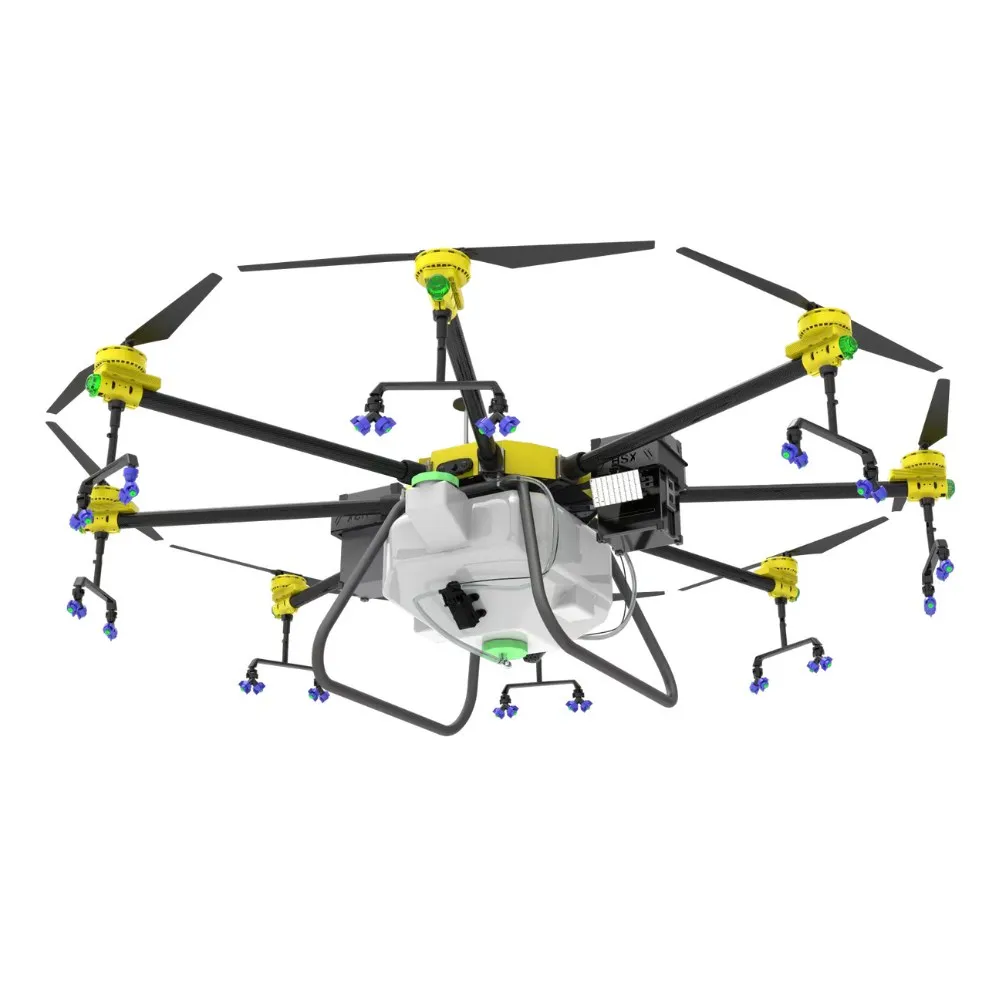
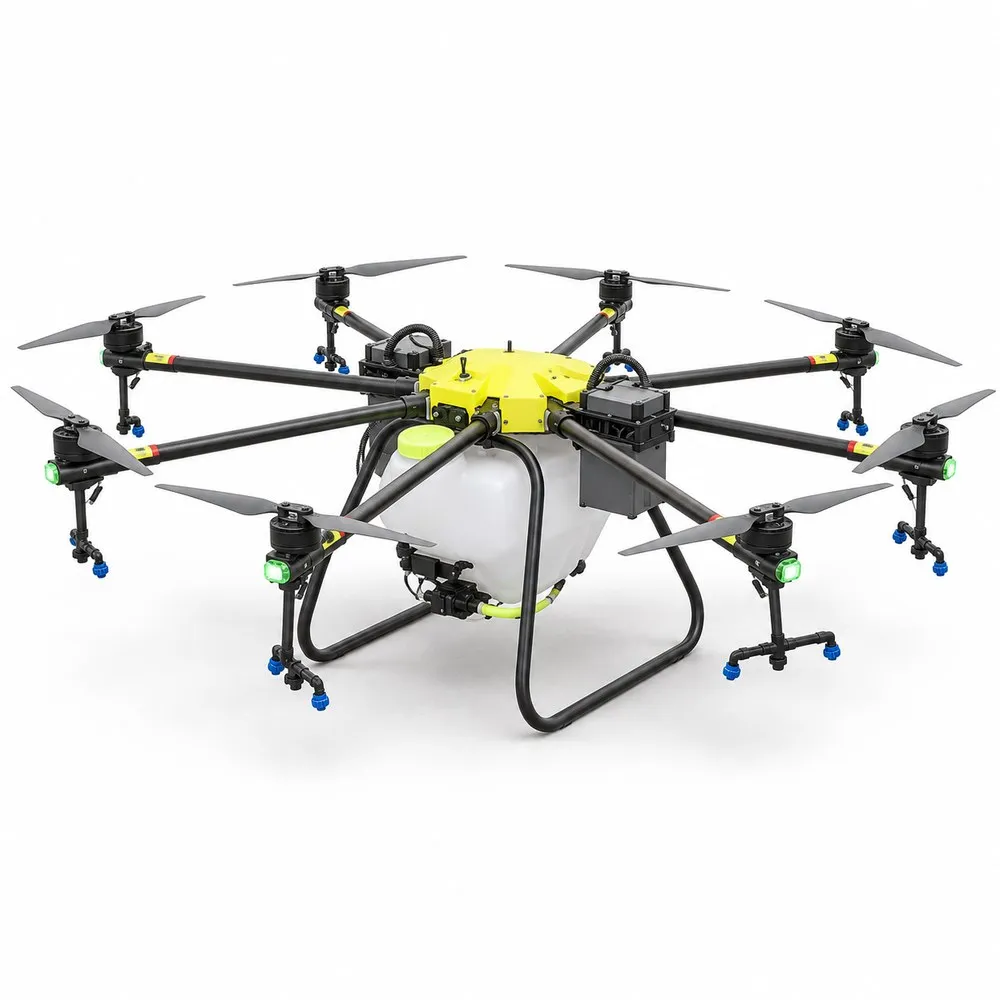
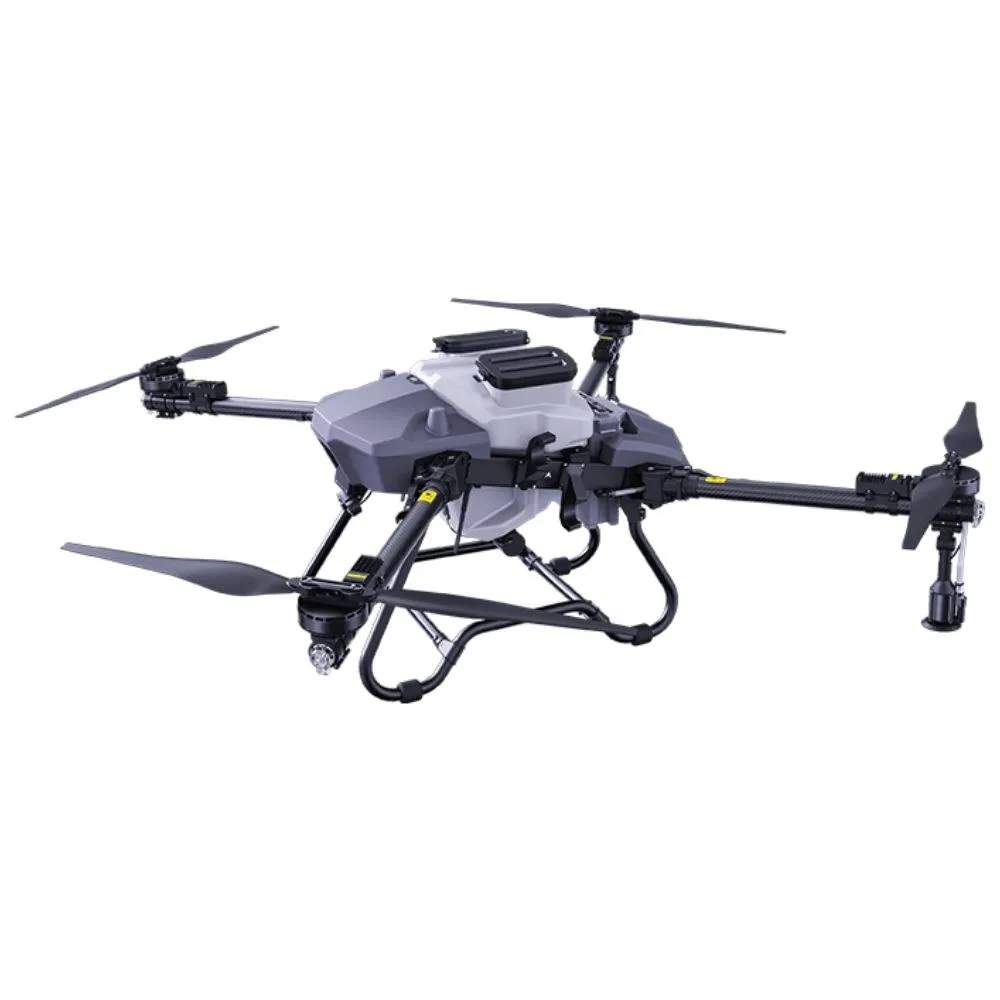
A spray drone carries a heavy load, so it uses its battery fast. Our F72 shows a hover time of 15 minutes unloaded and 5 minutes with a full load. The F50C shows 20 minutes unloaded and 7 minutes full. A sortie is short. After each one, the crew refills the tank and swaps the pack. The charged packs you have at that moment decide whether the drone flies again or waits.
What the FLYZOR product pages say
| Model | Battery per flight | Charger or charge time |
|---|---|---|
| F30C | One 14S 28000 mAh | 30 min |
| F50C | One 18S 30000 mAh | 20 min |
| F52 | Two 14S 28000 mAh (8.6 kg) | Charger 60.9 V / 40 A / 2400 W |
| F72 | Two 14S 42000 mAh (13.5 kg) | Charger 60.9 V / 40 A / 2400 W |
For the F52 and F72 we do not publish a single charge time because it depends on the charger, the generator and the battery temperature. We confirm it in your quotation.
The battery set formula
Define one work cycle as the time from take-off to the next take-off with the same drone: flight, landing, refill, swap and take-off. Then:
Sets per drone = round up (charge time ÷ cycle time) + 1
The +1 is the set in the air. Add one more if your packs need to cool before charging.
Example: F50C crew
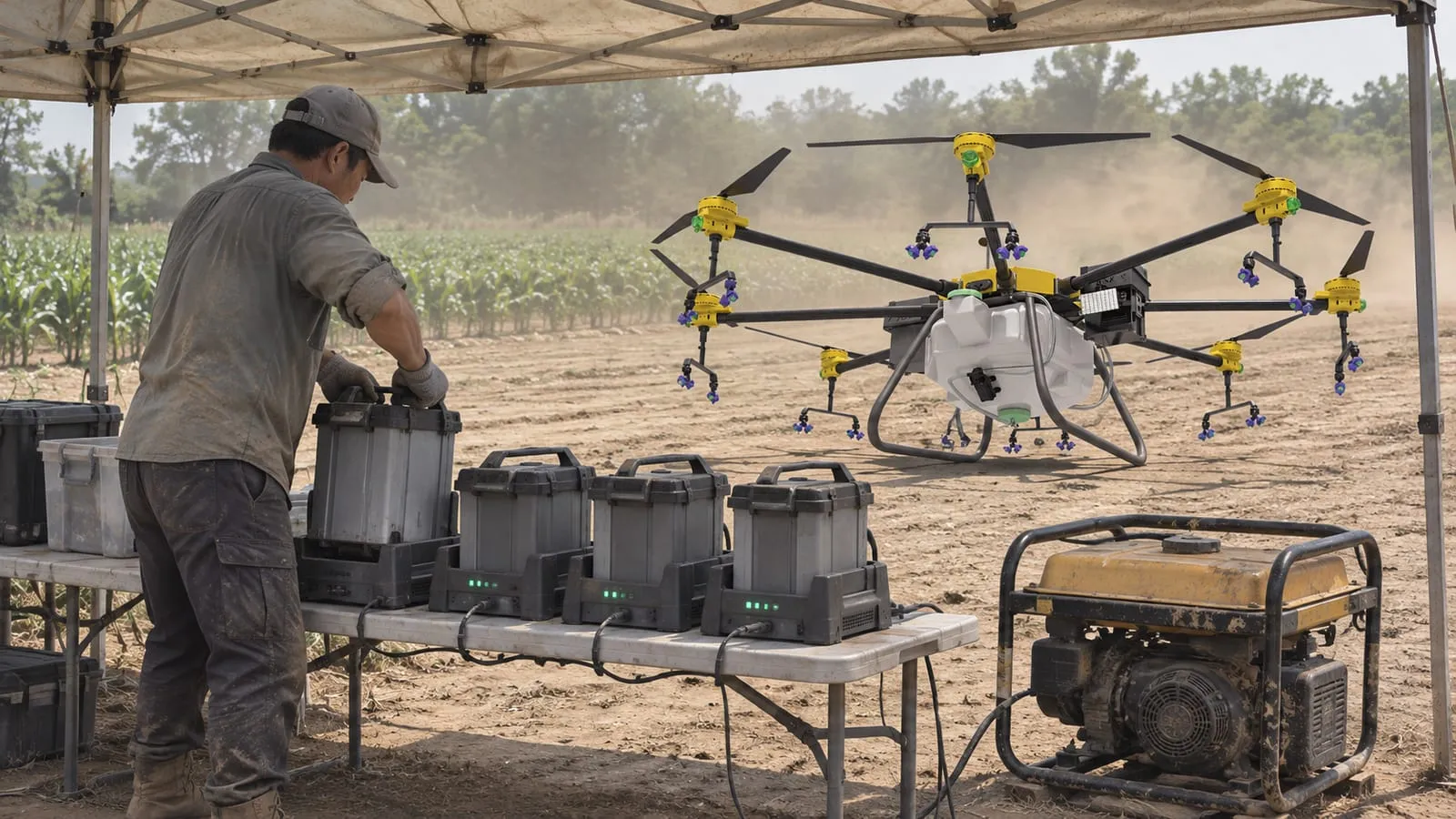
This is a planning example, not a promise. The product page shows a 20 minute charge time. Suppose your crew needs about 10 minutes for one full cycle. Then 20 ÷ 10 = 2, plus 1 for the set in the air = 3 sets per drone. If you add a cooling step, a fourth set avoids waiting. For two drones, plan six to eight packs and enough chargers to charge them in parallel.
Energy and generator size
Battery energy in watt-hours is roughly volts × amp-hours. For a 14S pack the nominal voltage is about 14 × 3.7 V = 51.8 V, so a 42 Ah pack stores about 2.2 kWh. Two packs on the F72 are about 4.3 kWh. This is our calculation using a nominal 3.7 V per cell; the supplier’s own watt-hour rating may differ.
If a charger is rated 2400 W, charging a 4.3 kWh pair takes at least about 1.8 hours even if it is perfectly efficient. That is why heavy crews use several chargers, more sets or a fast-charger station. In the field, add the rated power of the chargers you will run together and add a 25–30 % margin for the generator. Two 2400 W chargers need about 4.8 kW, so a generator near 6 kW is a sensible starting point. Check with the generator maker, because motor starting loads and altitude change the result.
Cycle life and cost per flight
Our catalogue gives 300 to 500 cycles. Other sources quote different numbers, often from battery sellers using different end-of-life limits, so do not trust a single claim. Ask what remaining capacity counts as the end of life.
Example for cost per hectare, with invented prices that you must replace: if one pack costs US$1,500 and lasts 400 cycles, a cycle costs about US$3.75. A pair on the F72 is two packs per flight, so US$7.50 per flight. If the tank is 72 L and the rate is 20 L/ha, one flight covers 3.6 ha, so batteries cost about US$2.08 per hectare. If life is only 300 cycles, that rises to about US$2.78. Use your own quote.
Care in the field
- Keep packs out of direct sun and let them cool before charging.
- Charge on a non-flammable surface, away from fuel, with someone watching.
- Do not use a swollen, damaged or wet pack.
- Store at partial charge if the drone will not fly for weeks.
- Label each pack and track its cycle count, so you retire the weakest first.
Shipping batteries
Lithium batteries are dangerous goods in air, sea and road transport. IATA publishes guidance for UN3480 (batteries alone) and UN3481 (batteries packed with or inside equipment), and the rules change by edition. Ask your forwarder to confirm current state of charge limits, packaging and paperwork before each shipment. Our product pages note that lithium batteries travel as dangerous goods.
Next steps
Tell us your crops, daily hectares and power source and we will suggest battery sets and chargers with a quotation through the contact page. After-sales and parts are described on our support page. Compare drones in our guide on how to choose a spraying drone, and plan the work site in the field setup guide.
Related reading: spare parts list, the F72 spray drone and support.