Short answer: For orchards, tea gardens and terraces, choose a compact, easy-to-manoeuvre drone such as the F10-30 series or the F30C/F50C, then fly lower and slower over the canopy than you would over field crops. Use centrifugal nozzles or finer droplets for fungicides and insecticides, and check coverage inside the trees before treating the whole block.
What is different about tree crops
A field crop is a flat, even target. A tree is a three-dimensional one: dense on the outside, hollow or shaded inside, and often planted on slopes with wires, poles and buildings nearby. A drone’s downwash helps open the canopy so droplets reach the inner leaves, but only if height and speed are right.
Slopes are where drones help most. Tractors and air-blast sprayers are slow and risky on steep ground, and backpack spraying is hard, unsafe work. A drone sprays from above without touching the slope.
Choosing the drone
| Situation | Recommended | Why |
|---|---|---|
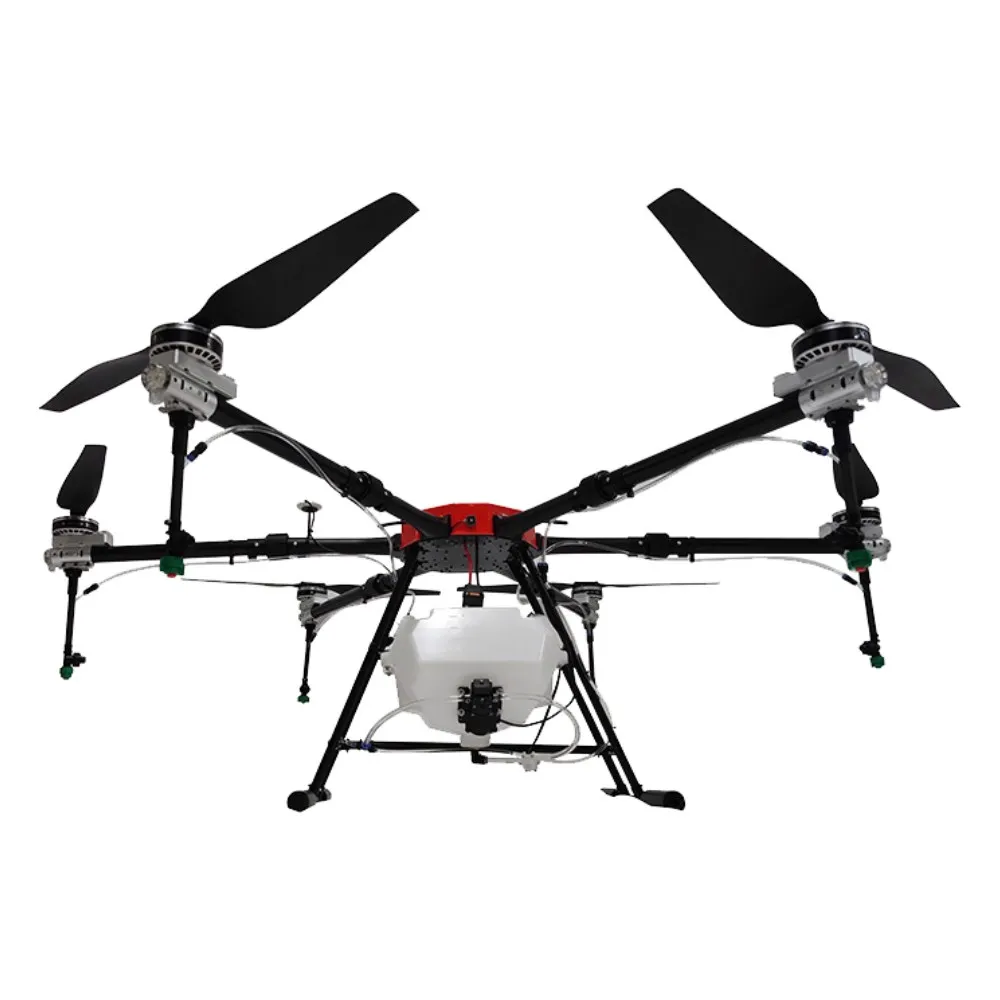
| Terraces, tea, young orchards | F10-30 series | Light, compact, quick between blocks |
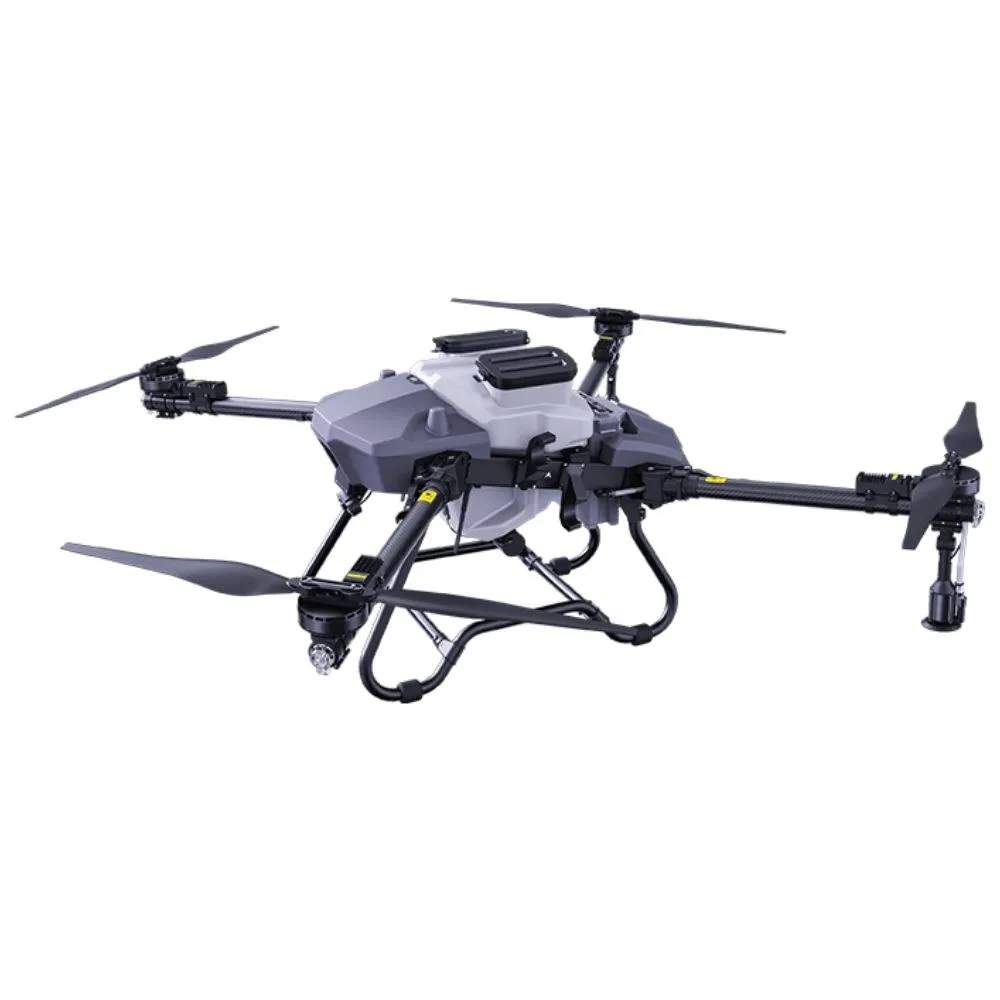
| Mixed fruit and vegetables | F30C/F50C | Centrifugal nozzles, 50–500 μm droplets |
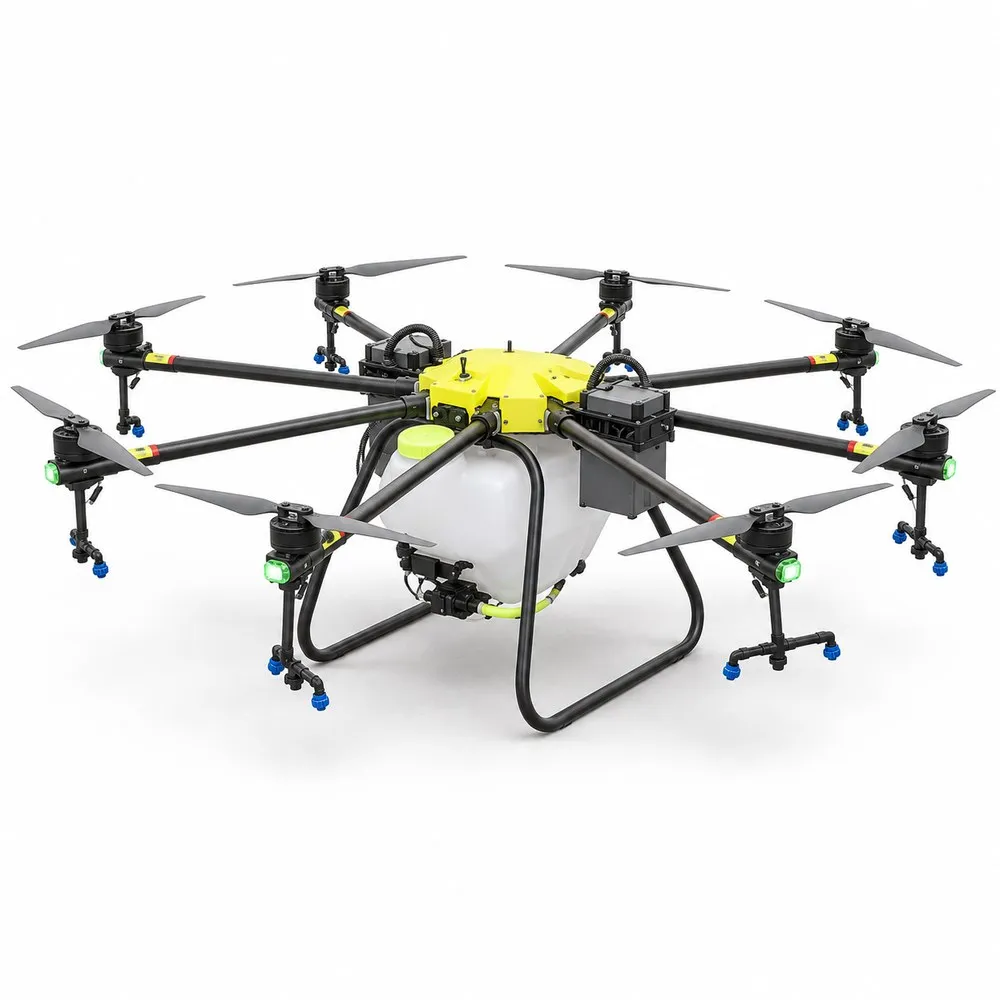
| Large, regular orchards | F52 | Bigger tank for long rows |
Setup in five steps
- Map obstacles. Note power lines, poles, nets, tall trees and buildings. Plan take-off points with a clear line of sight.
- Fly row by row. Follow the tree rows rather than flying diagonally across the block.
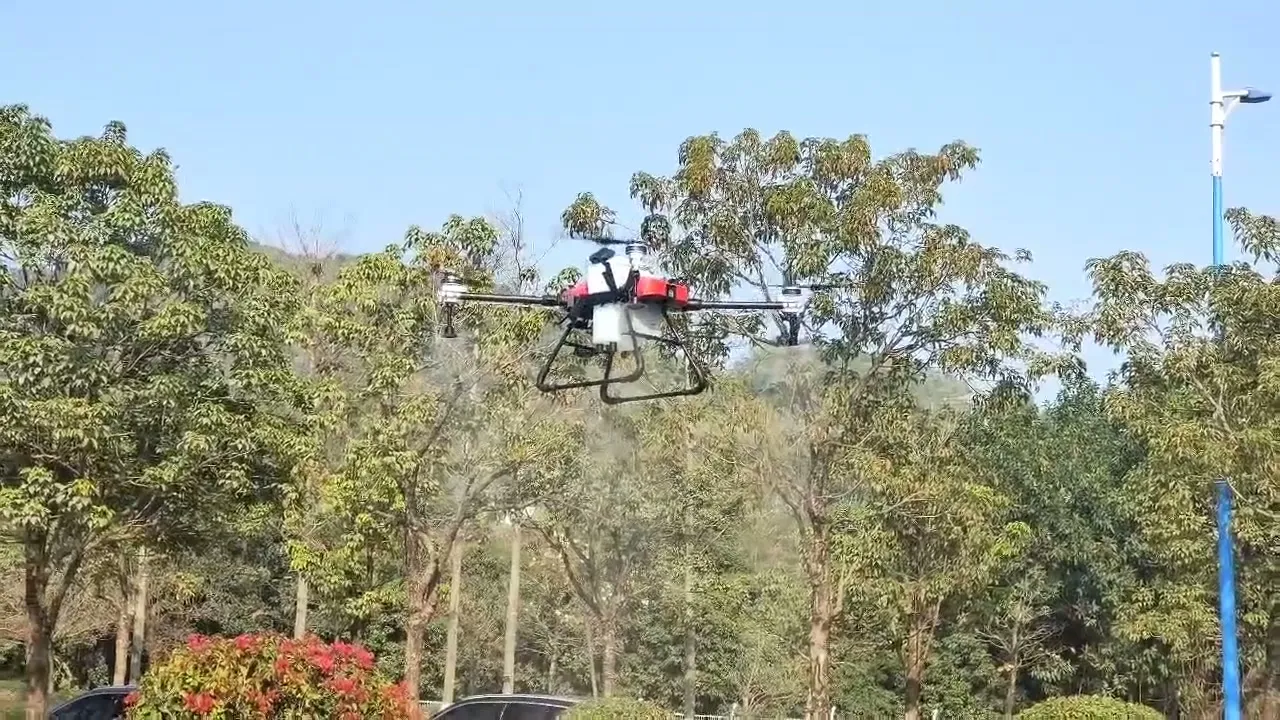
- Lower and slower. Fly a few metres above the canopy and slower than over field crops, so the downwash pushes spray into the tree.
- Pick the droplet size. Finer for fungicides and insecticides that need coverage, coarser for herbicides under the trees. Follow the label.
- Check coverage. Use water-sensitive paper at the top, middle and inside of several trees, then adjust.
A practical example
A grower with 20 ha of citrus on terraces sprays with a F30 drone at a spray rate set from the product label. Instead of covering the block in one pass at full speed, the pilot flies each terrace along the rows at reduced speed, checks the paper cards on the first three trees, then raises the flow slightly for the denser older trees. The aim is even coverage, not the fastest hectares per hour.
Weather and timing
Spray when wind is low and leaves are dry, usually early morning or late afternoon. Avoid spraying in strong sun and heat, when fine droplets evaporate before reaching the leaves. Respect re-entry intervals and the harvest interval on the product label.
Rules and safety
Many countries require pilot certification, drone registration and products approved for aerial application. Keep clear of houses, water and beehives, and warn neighbours before spraying.
Next steps
Send us your crop, tree height, row spacing and slope. We recommend a model and nozzle setup and arrange pilot training with the first units. Dealers working in fruit regions can see our dealer program.