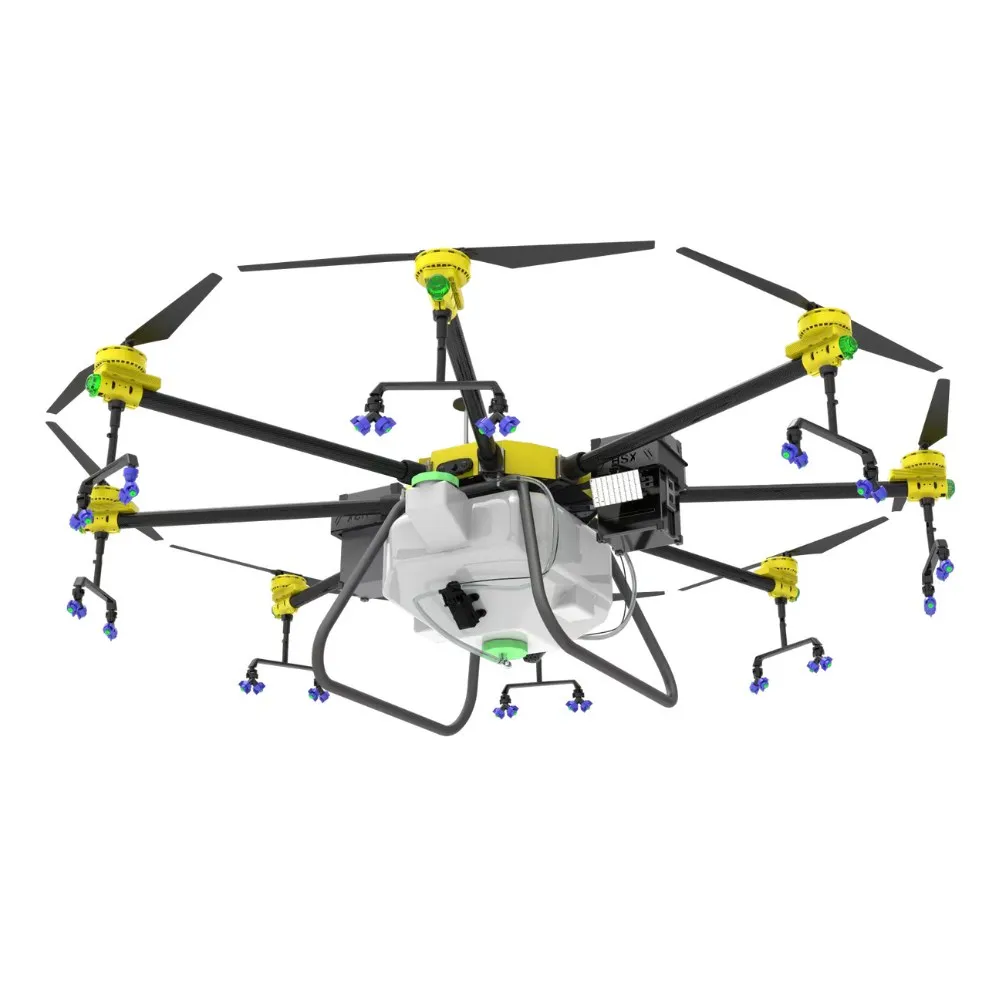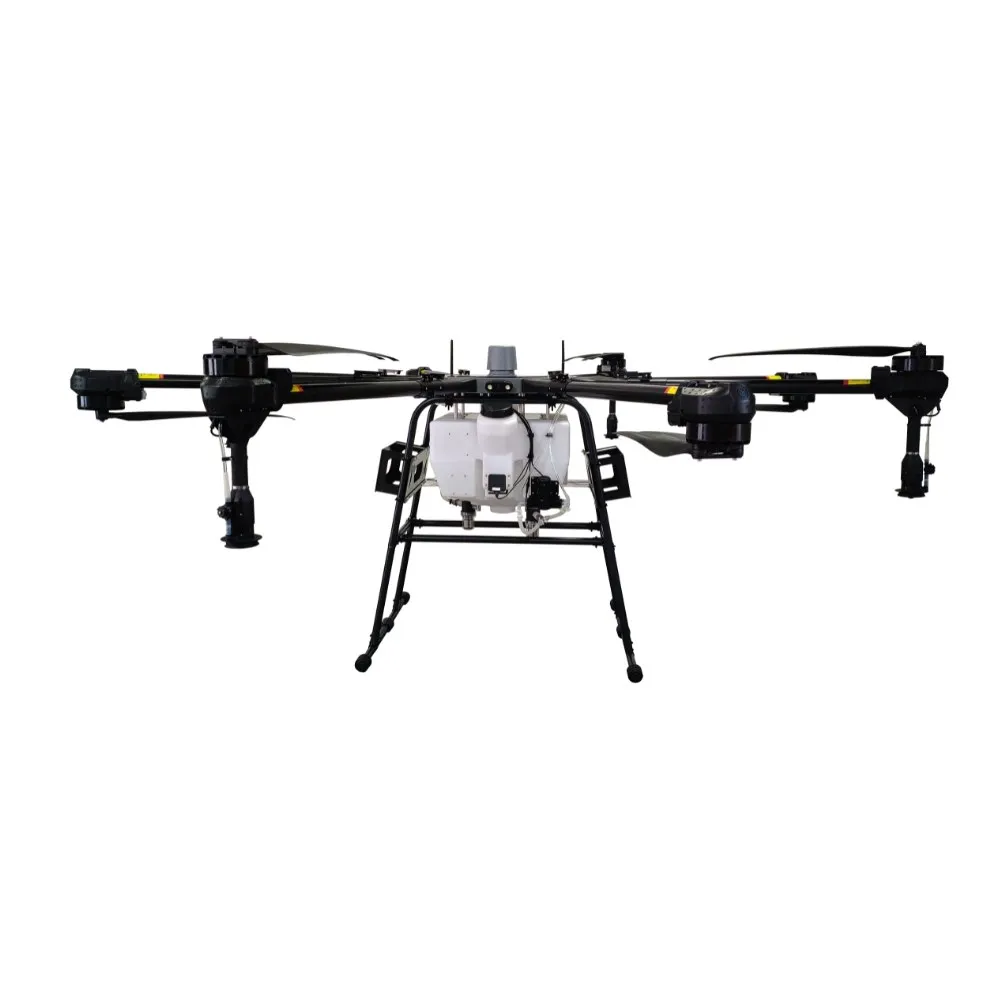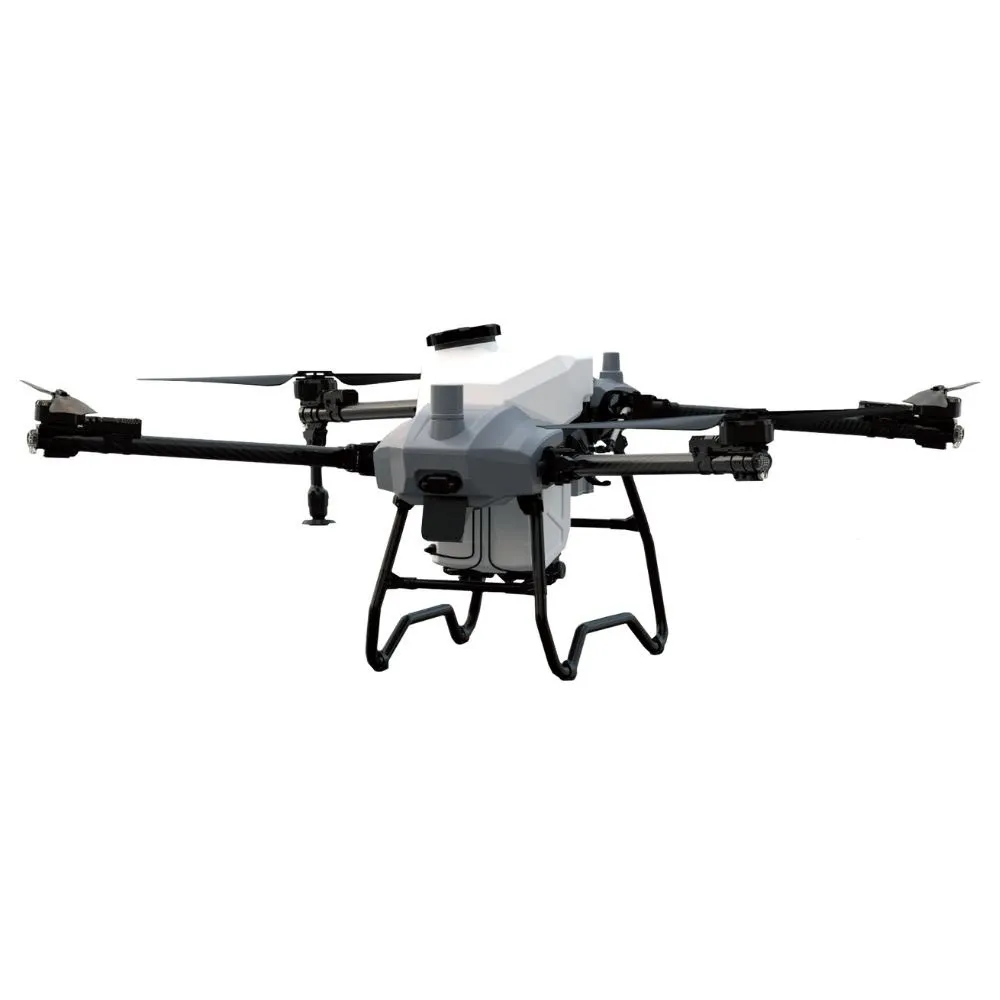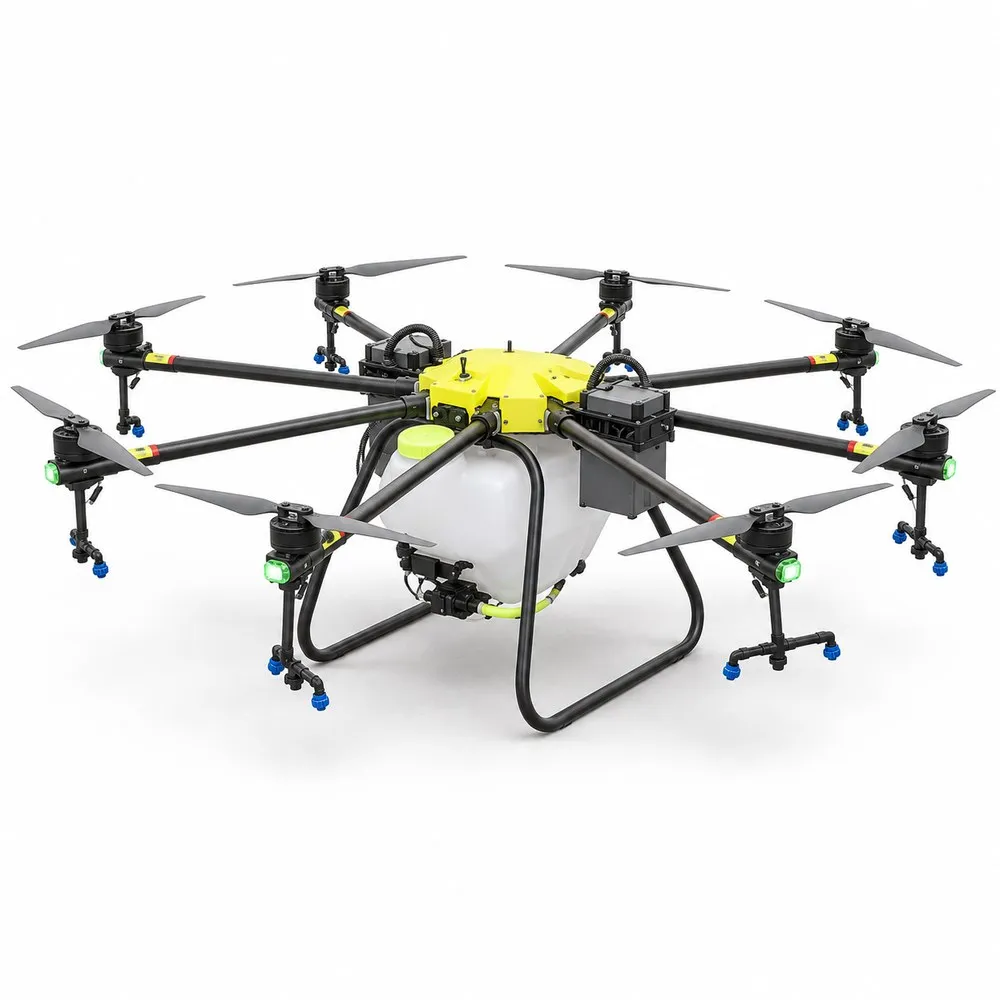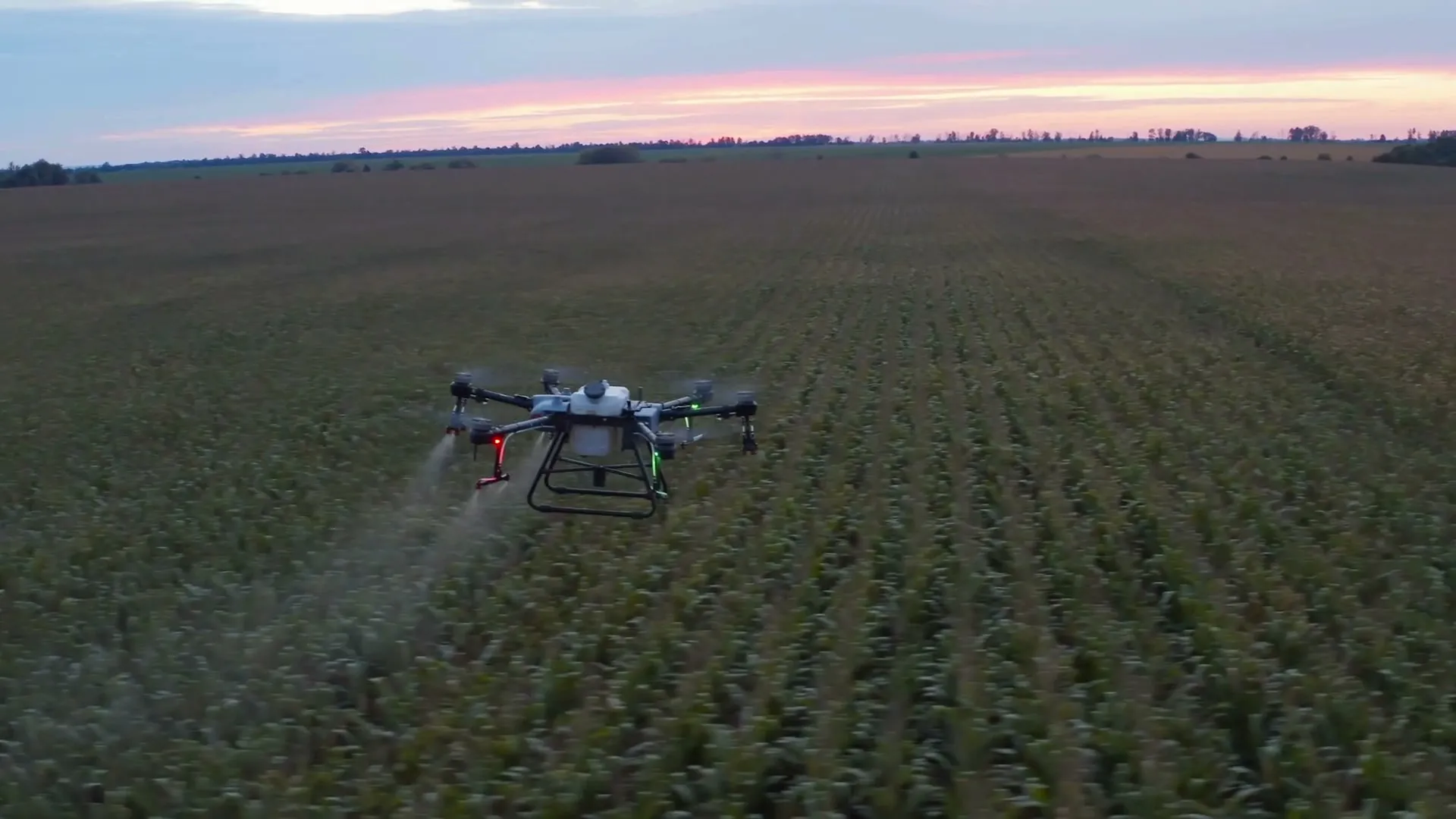
Short answer: For rice, wheat, corn and other open-field crops, choose a drone with a large tank and a wide swath, such as the F72, F92 or F62/F50. Then plan the logistics around it: battery sets, charging power, water and mixing at the field edge. Those decide how many hectares you finish per day far more than top speed does.
Why drones suit field crops
Ground sprayers struggle in flooded paddies, tall corn and wet soils, and they leave wheel tracks through the crop. A drone flies above the canopy, so there is no compaction and no crop damage, and it can work fields that machines cannot enter after rain. The downwash from the rotors pushes droplets into the canopy, and the flight system logs every sprayed strip.
Choosing the model
| Field situation | Recommended | Why |
|---|---|---|
| Large, regular blocks (20 ha and more) | F92 or F72 | Fewer refill stops, wide spray width |
| Mixed field sizes, frequent moves | F62/F50 or F52 | Large tank, smaller folded size |
| Small paddies and terraces | F10-30 series | Light and quick to set up |
| Spraying plus top-dressing | F52, F72 or F92 | Spreading box for granules |
Setting up a field job
- Walk or map the field. Mark power lines, trees, houses and sensitive areas such as water and neighbouring crops.
- Plan the route by field boundary on the ground station and set a buffer at the edges.
- Set spray rate and swath from the product label and the drone’s rated width. Start in the middle of the rated range, for example 10–12 m on an F72, not the maximum.
- Run a test strip with water and water-sensitive paper to check coverage, then adjust height and speed.
- Spray in calm conditions. Early morning and evening usually bring lower wind and less evaporation.
A worked example
Take an F72 crew in a 250 ha rice area, working 8 hours a day:
- Effective swath 12 m × 6 m/s = 72 m² per second while spraying.
- With half the time lost to turns, refills and battery swaps: 72 × 3600 × 0.5 ÷ 10 000 ≈ 13 ha per hour.
- 13 ha × 8 h ≈ 100 ha per day, so about 3 days for the whole area.
These are planning figures, not a guarantee. A lower spray rate, longer rows and a well-drilled crew push the number up; small fields, high spray rates and slow refilling bring it down. Try your own numbers in the calculator on this page.
Batteries and power
Each sortie of a large drone lasts only a few minutes with a full tank, so batteries cycle all day. A typical setup for one F72 is:
- three to four battery sets, so one flies, one cools and one or two charge;
- a 2400 W charger per drone;
- a generator sized for the chargers, plus fuel for the day;
- shade for batteries waiting to be charged.
Water and mixing
Keep a clean water tank, a mixing drum and a transfer pump at the field edge. A fast refill is the cheapest way to raise output. Wear the protective equipment named on the product label and keep mixing away from water sources.
Rules and safety
Agricultural drone rules differ by country: pilot certificates, drone registration, approval of the product for aerial use and distance from homes are common requirements. Check them before you start, and keep a flight log for every job.
Talk to us
Tell us the crops, total hectares and length of your spray window. We suggest the model, the number of drones and battery sets, and send a quotation. Dealers can see our dealer program.