- Agricultural drones
- 72 L tank · 8–18 m spray width
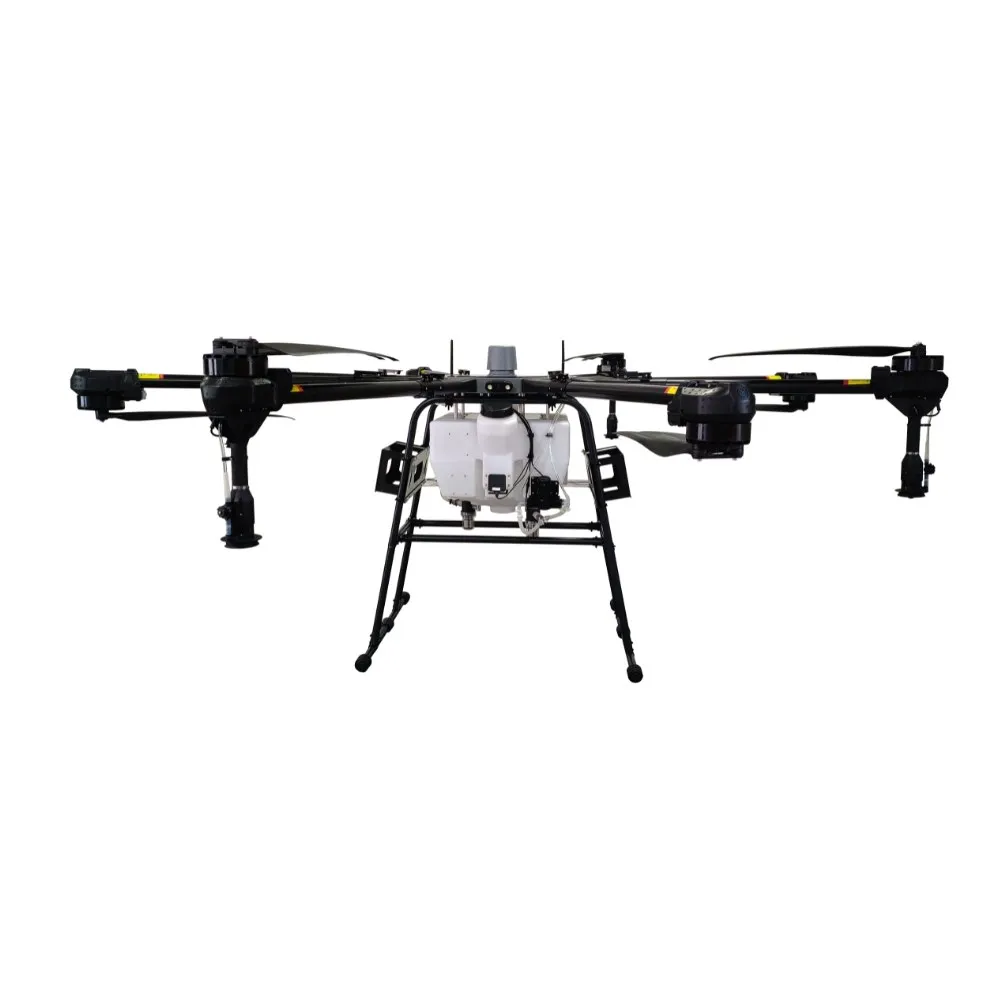
F72 Agricultural Drone
Spray contractors and large farms covering rice, wheat, corn and other open-field crops.
View details of F72 Agricultural Drone →
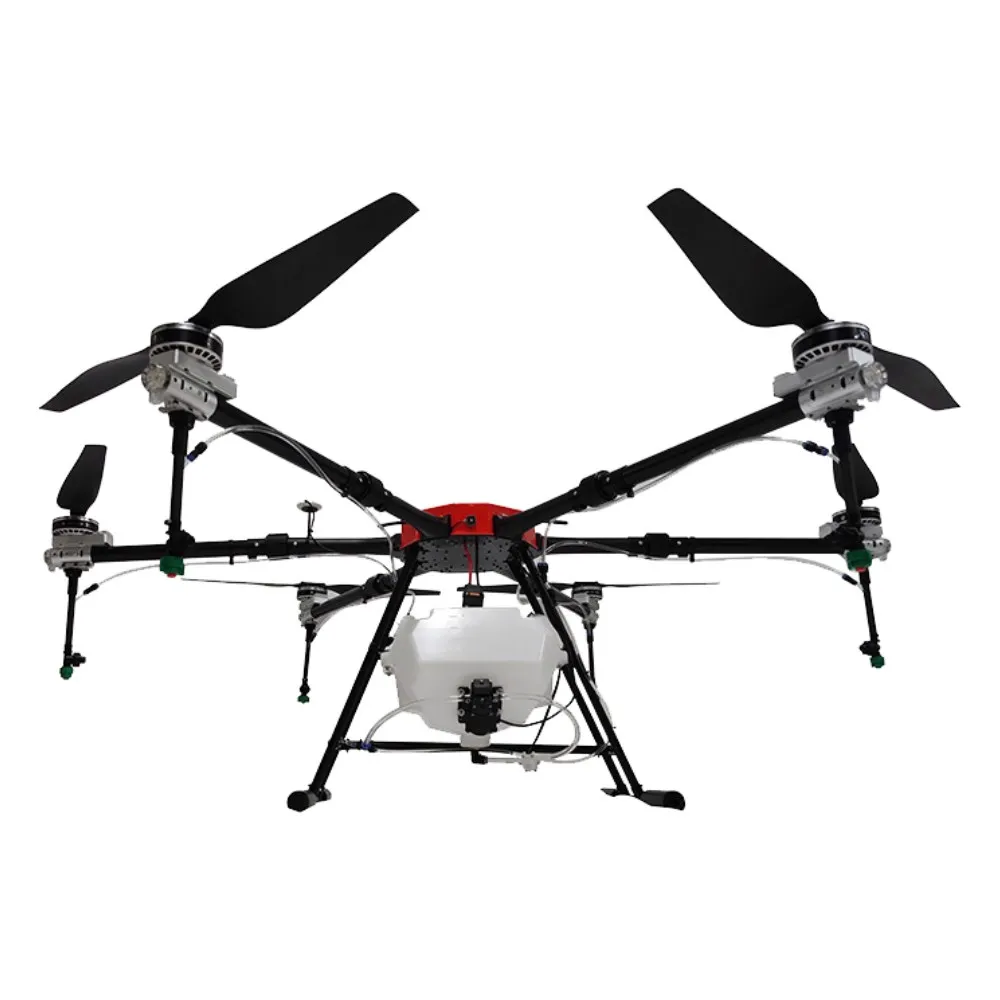
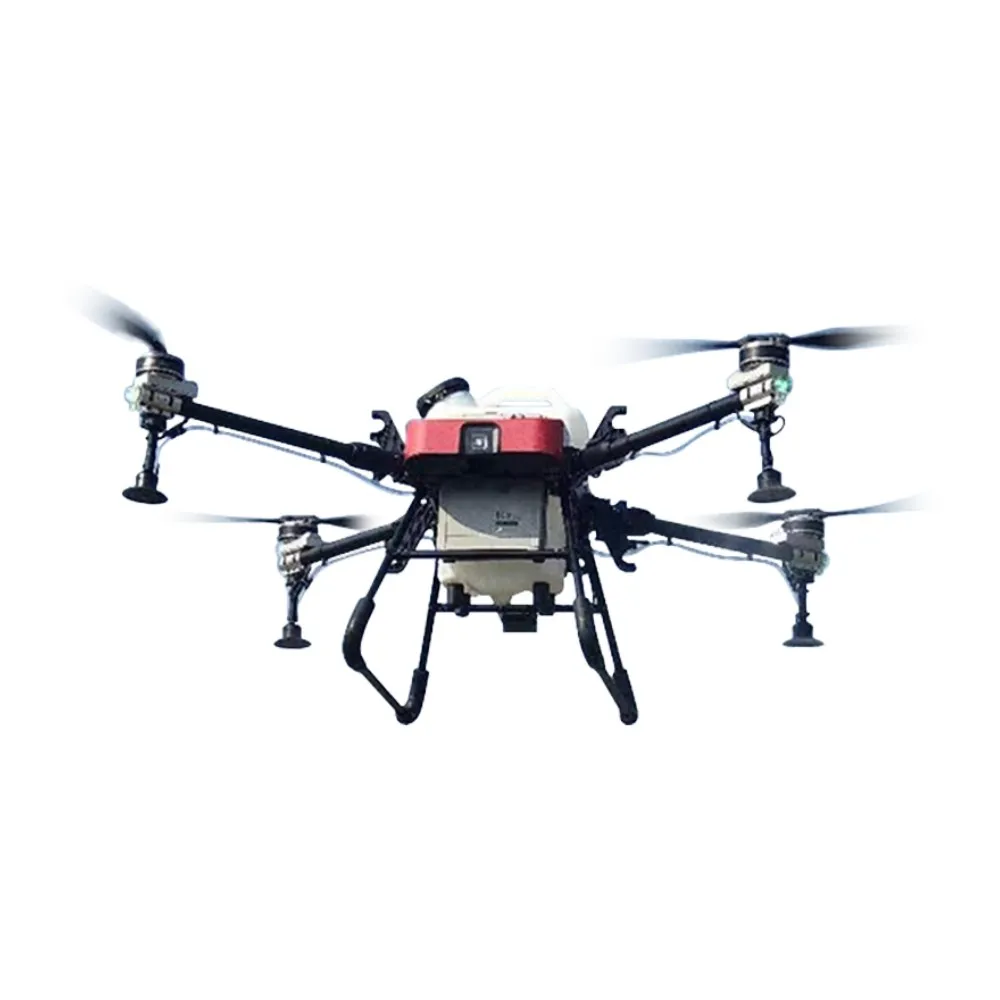
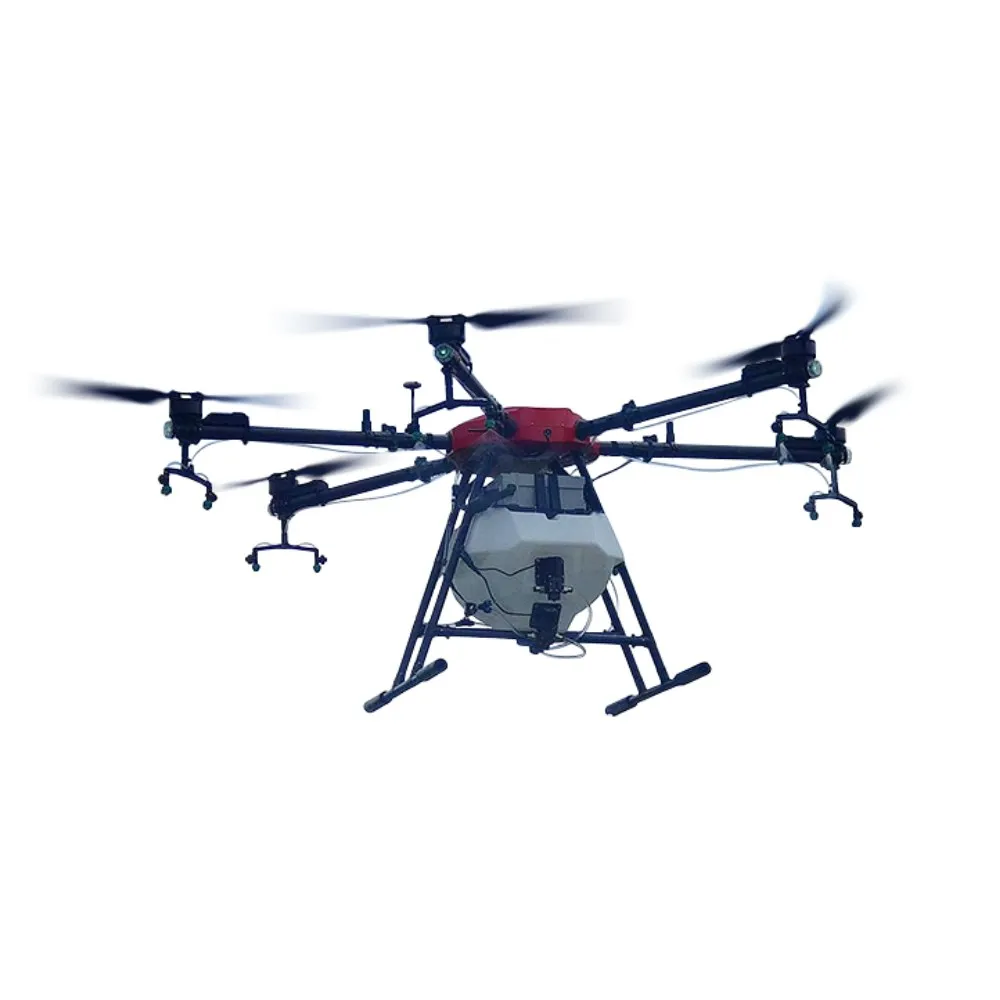
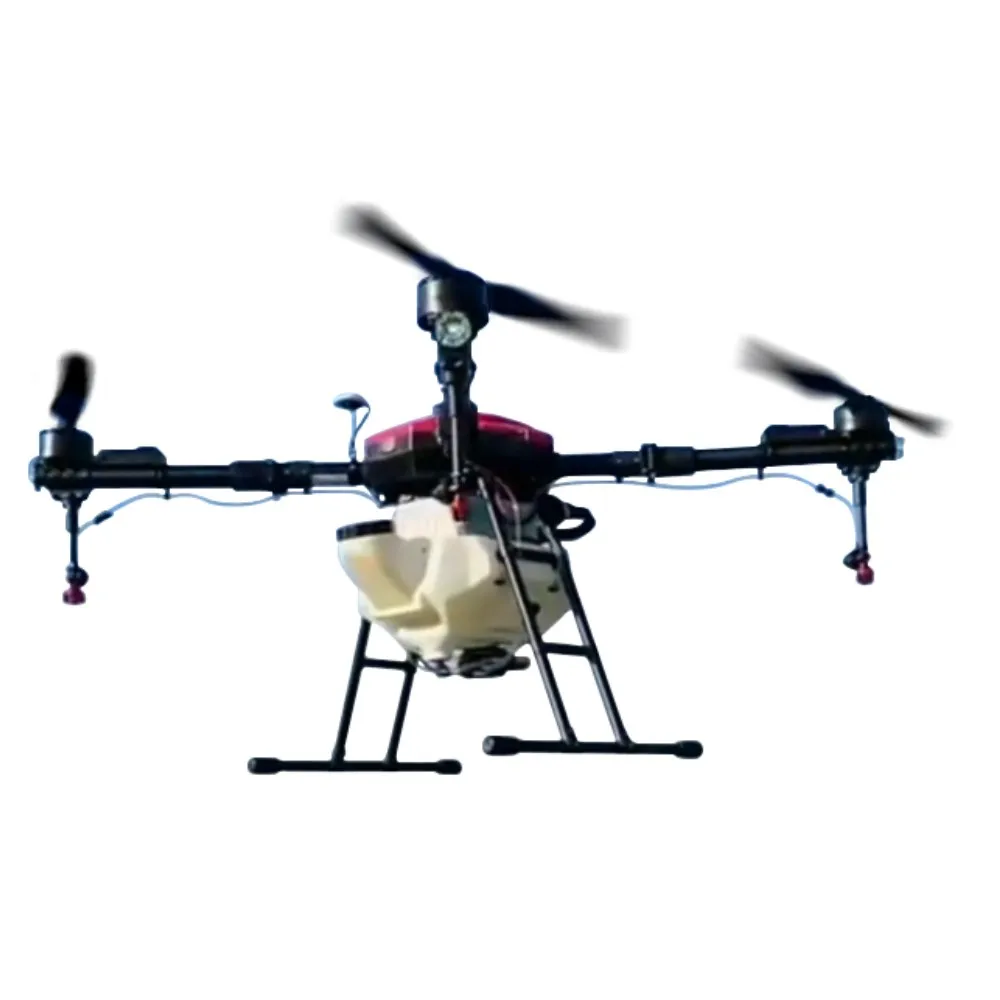
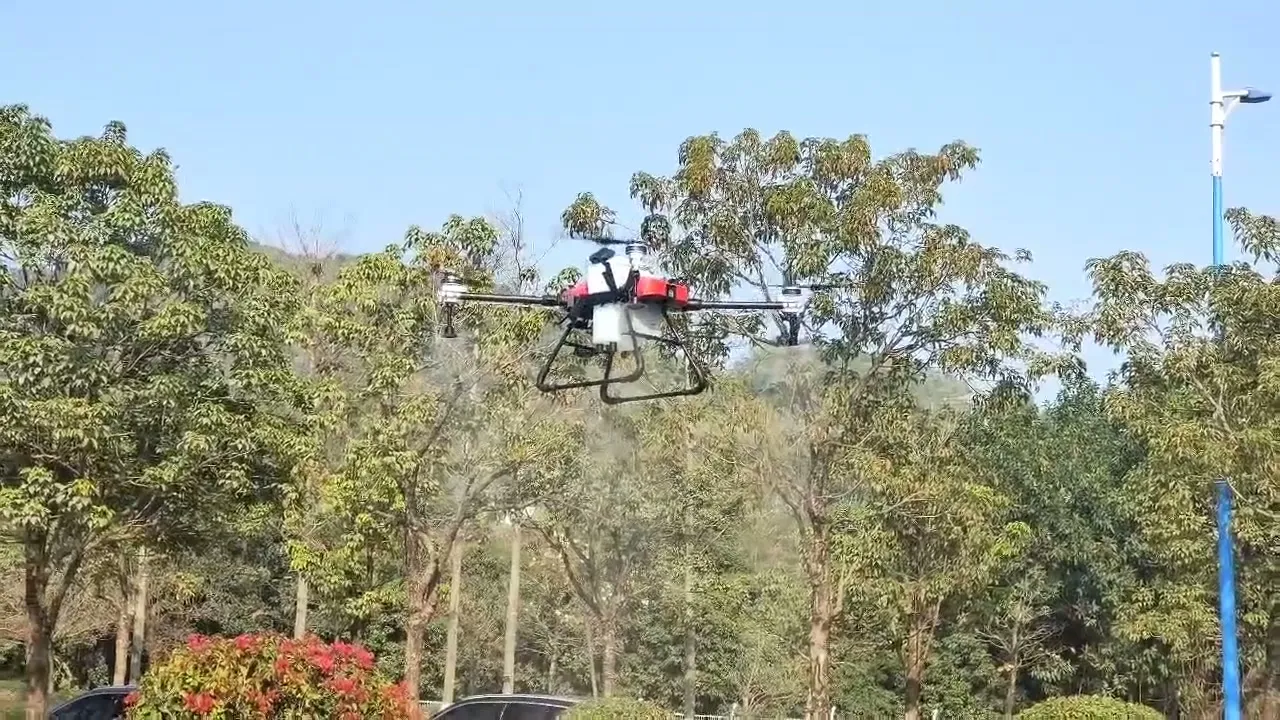
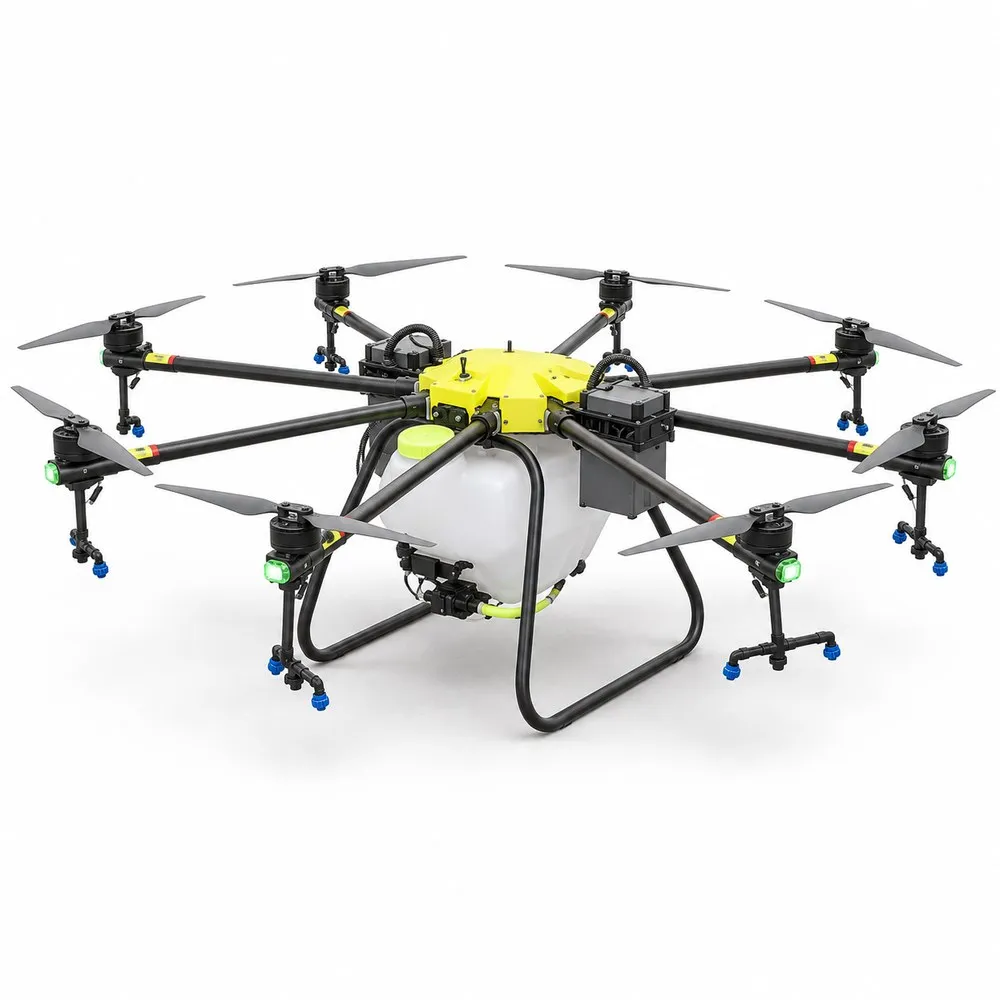
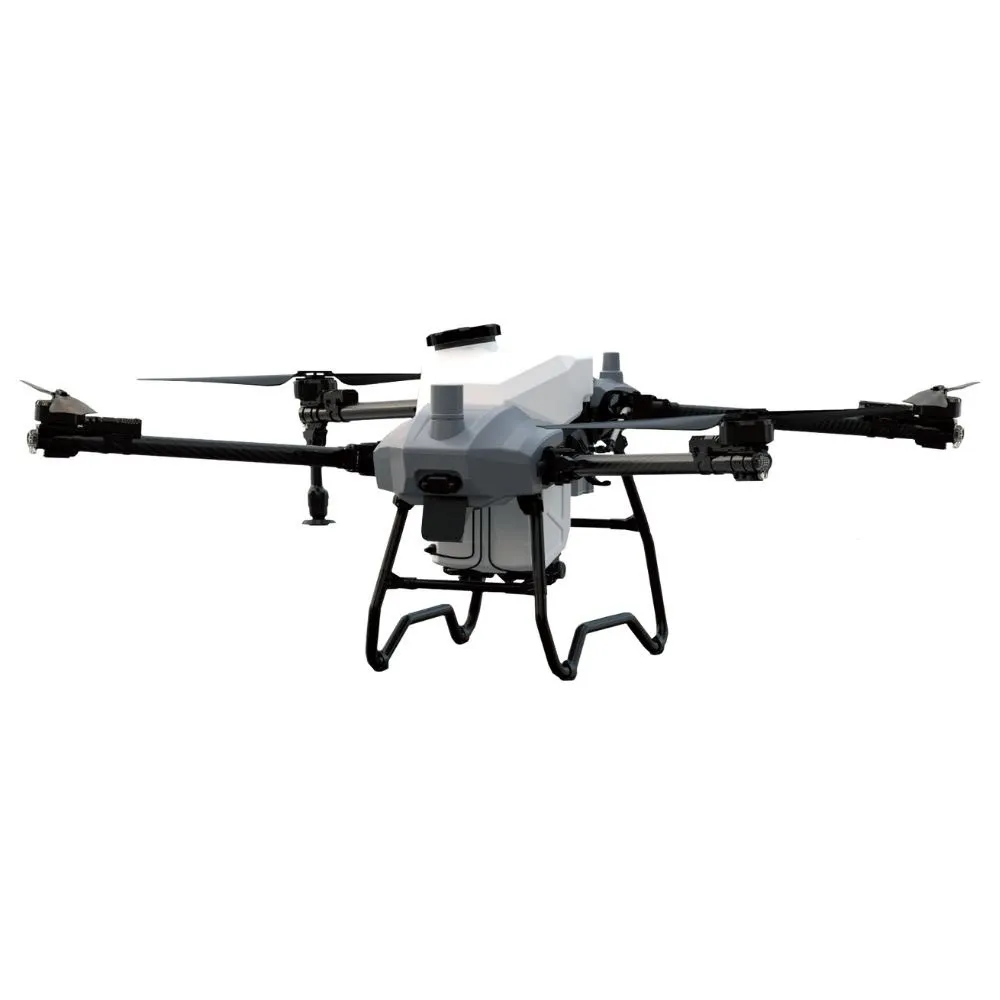
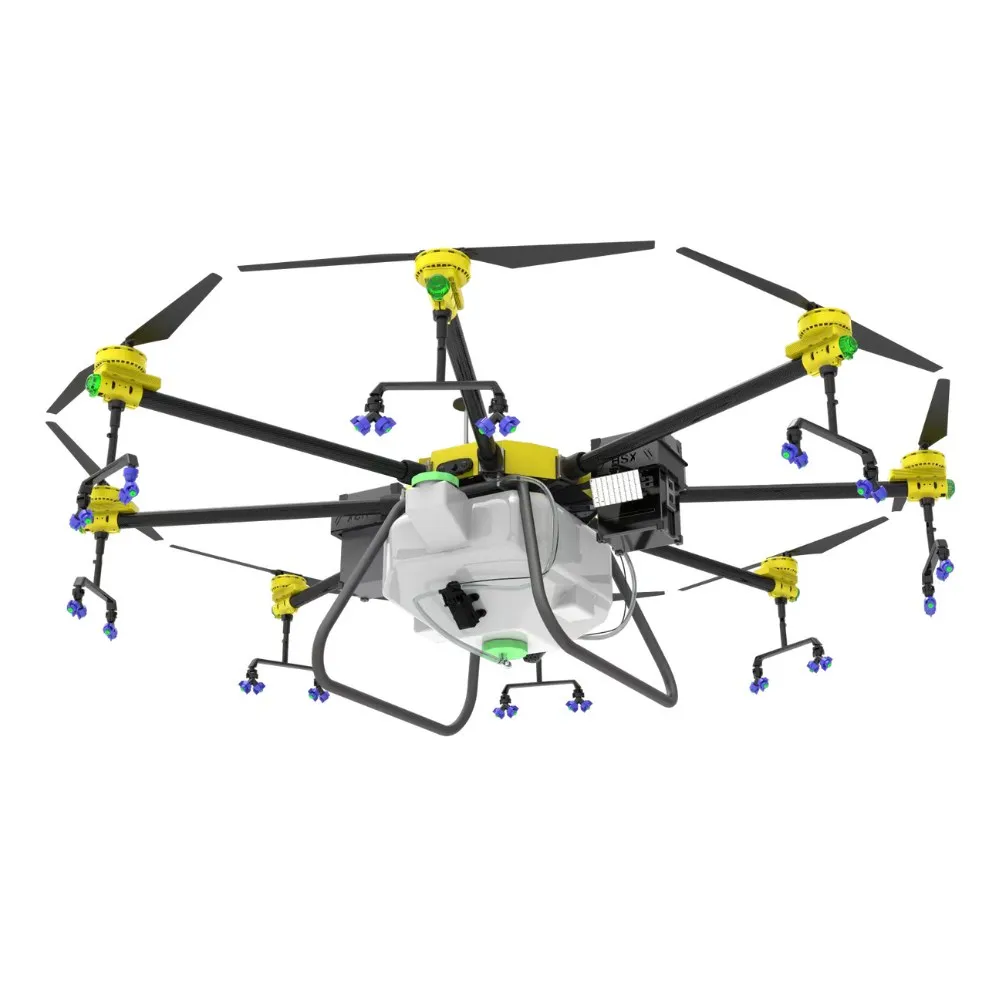
Our compact series: 10 L, 20 L and 30 L spraying drones that fold small, fly on one battery and suit small plots, orchards, vegetables and operators buying their first drone.
Best for: Smallholder plots, orchards, vegetables and first-time drone operators.
Short answer: The F10-30 series covers our compact spraying drones: the 10 L F10, the 20 L F20 and two 30 L versions with four or six rotors. They fold small, fly on one battery and are rated by the supplier at 6–12 ha per hour. They suit small plots, vegetables and orchards, and they are a sensible first drone for a new operator or dealer.
| Model | Rotors | Tank | Spray width | Take-off weight |
|---|---|---|---|---|
| F10 | 4 | 10 L | 3–5 m | 26 kg |
| F20 | 6 | 20 L | 3–6 m | 43 kg |
| F30-4 | 4 | 30 L | 6–9 m | 55 kg |
| F30-6 | 6 | 30 L | 4–9 m | 66.3 kg |
All four use high-pressure nozzles and fly at up to 10 m/s. The 30 L versions also list a spreading take-off weight (68 kg and 78 kg), so they can carry a spreading kit as well.
Large drones pay off on large blocks. Many growers, though, work fields of one or two hectares spread across a village, or tree crops on terraces. Here a light drone that two people can lift, fold into a car and set up in minutes finishes more work in a day than a heavy machine that spends its time on the road.
Compact drones are also easier to learn on. New pilots build experience with less risk and lower battery costs before moving up to an F52 or F72.
Over tree canopies, slower and lower passes put more spray into the foliage. The F10-30 series lets you work row by row between obstacles. Read our orchard and hillside guide for setup tips.
Like other current spraying drones in its class, the F10-30 series flies on a ground-station app with the functions operators now expect as standard:
Sensor options such as obstacle-avoidance radar or an FPV camera differ by configuration; we confirm the exact feature list with your quotation.
Each model flies on one battery: 12S 16000 mAh on the F10, 14S 20000 mAh on the F20 and 14S 28000 mAh on the F30 versions. For the F10 and F20 the supplier rates 30 minutes of charging and 300–500 cycles per pack. Plan at least two or three packs per drone for a full working day.
The series gives dealers an entry price point and a way to train new pilots. Orders start from one set. See the dealer program or contact us with the crops and plot sizes in your market.
F10-30 Series Agricultural Drones — F10 · F20 · F30-4 · F30-6.
| Model | F10 | F20 | F30-4 | F30-6 |
|---|---|---|---|---|
| Rotors | 4 | 6 | 4 | 6 |
| Tank capacity | 10 L | 20 L | 30 L | 30 L |
| Spray width | 3–5 m | 3–6 m | 6–9 m | 4–9 m |
| Spray flow rate | 1.5–4 L/min | 1.5–4 L/min | 8 L/min | 8 L/min |
| Efficiency (supplier rating) | 6–12 ha/h | 8–12 ha/h | 8–12 ha/h | 8–12 ha/h |
| Drone weight | 10 kg | 20 kg | 27 kg | 26.2 kg |
| Take-off weight | 26 kg | 43 kg | 55 kg spraying / 68 kg spreading | 66.3 kg spraying / 78 kg spreading |
| Unfolded size | 1500 × 1500 × 570 mm | 2350 × 2350 × 750 mm | 1570 × 1570 × 715 mm | 2150 × 1915 × 905 mm |
| Folded size | 750 × 750 × 570 mm | 870 × 870 × 750 mm | 845 × 860 × 775 mm | 1145 × 760 × 905 mm |
| Hover time | 20–25 min unloaded / 7–10 min full | 20–25 min unloaded | 8–9 min full load | 7.5–8 min full load |
| Flight speed | 10 m/s | 10 m/s | 10 m/s | 10 m/s |
| Battery | 12S 16000 mAh | 14S 20000 mAh | 14S 28000 mAh | 14S 28000 mAh |
| Charging time | 30 min | 30 min | — | — |
| Battery cycles (supplier rating) | 300–500 | 300–500 | — | — |
Configurations can be customized. Ask for a model recommendation →
We go through these points with you, so the offer fits your fields and your business rather than a catalogue default.
For a first drone on small plots, the F10 or F20 is easiest to handle and transport. If you plan to sell spraying as a service, the 30 L versions finish more hectares per battery.
Four-rotor versions are lighter and fold smaller. Six-rotor versions spread the downwash over more rotors and can feel steadier in gusty conditions. Both carry the same 30 L tank in the F30 series.
Yes, the compact frames are well suited to orchards and terraces. Fly lower and slower over tree canopies and test coverage on a few trees before treating the whole block.
The supplier rates the series at 6–12 ha per hour depending on model. Real output depends on spray rate, field shape and refilling, so use it as an upper reference, not a promise.
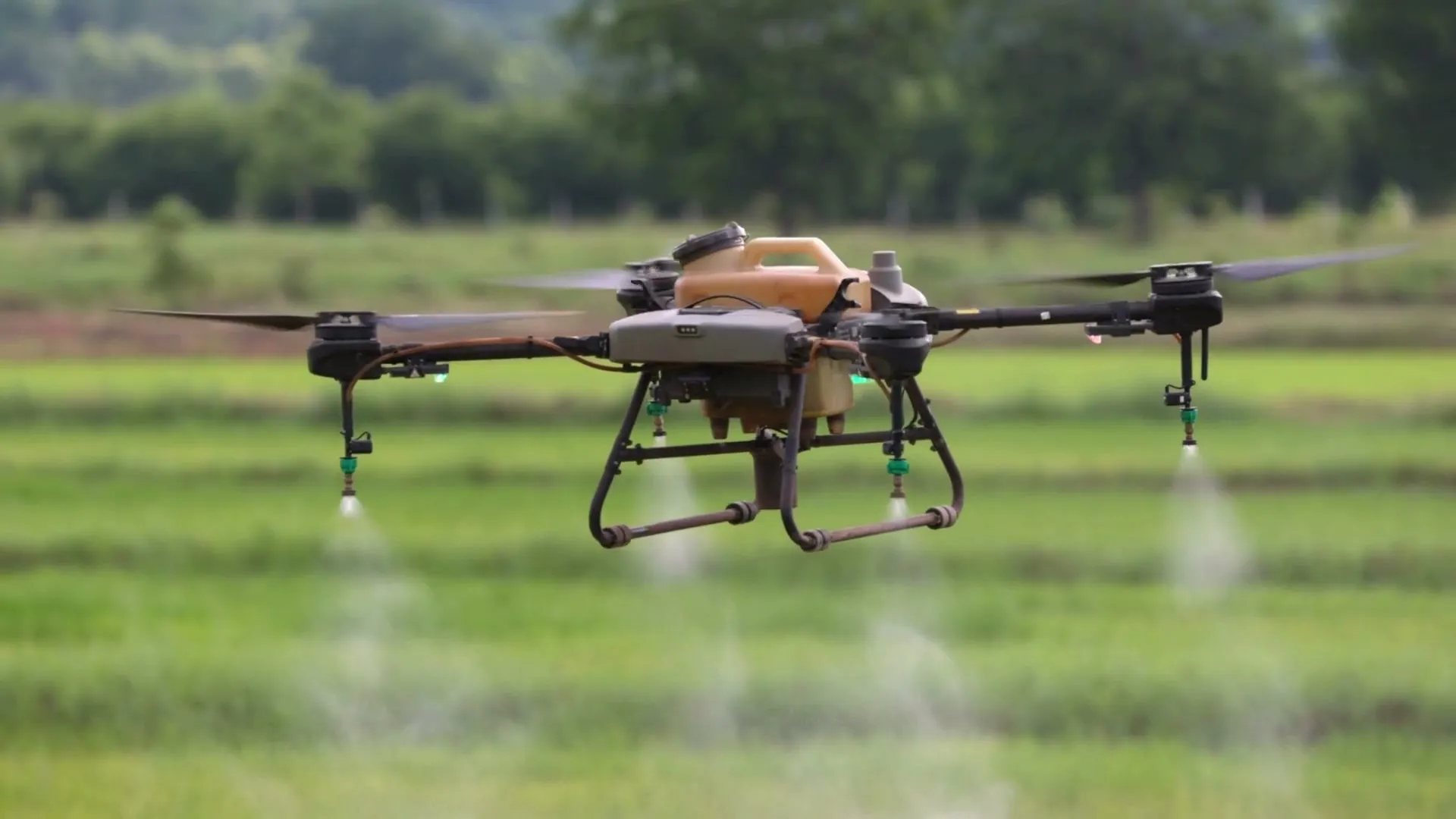
Tell us your country, crops and hectares per season. We reply with a matched configuration, battery set and quotation.
A three-tier spare parts list for spray drone dealers: wear items, medium-turnover parts and critical parts, with a stock example and a cash estimate method.
Compare spray drones with knapsack sprayers and tractor boom sprayers: speed, water use, labour, cost and the fields where each one wins.
A 12-point checklist for buying a spray drone: tank size, nozzles, batteries, power, training and after-sales support, with a worked example for dealers.
Spray contractors and large farms covering rice, wheat, corn and other open-field crops.
View details of F72 Agricultural Drone →Plantations, estates and high-volume spray contractors with large, regular fields.
View details of F92 Agricultural Drone →Mixed farms and spray contractors who move between medium-size fields.
View details of F52 Agricultural Drone →Contractors and farms that want a large tank on a four-rotor frame that folds small.
View details of F62/F50 Agricultural Drone →