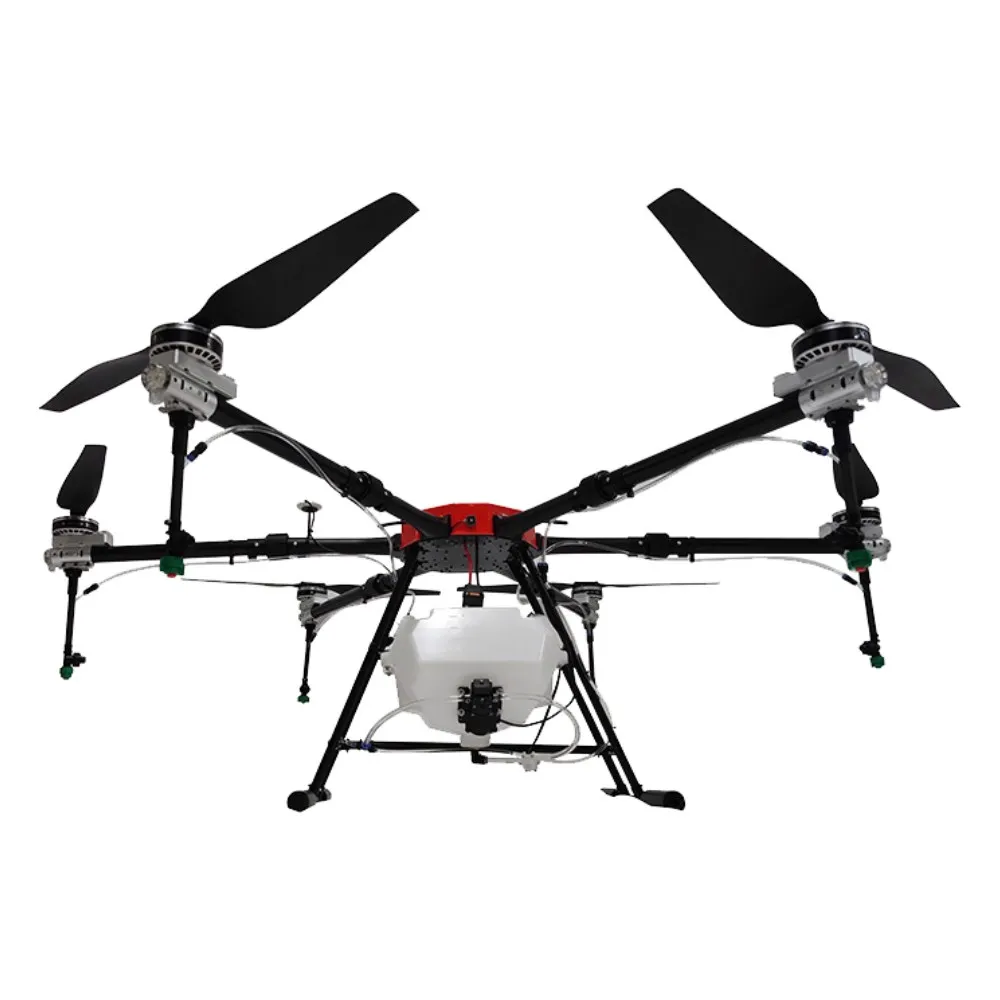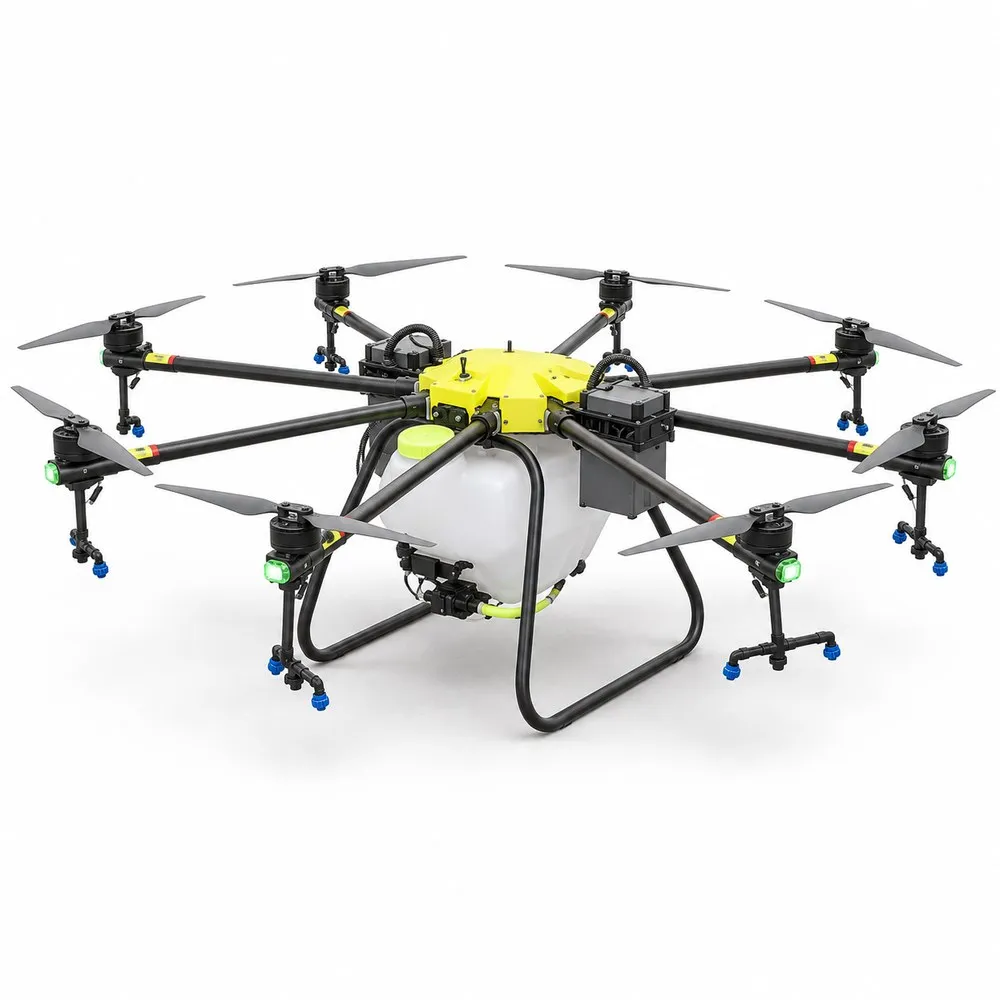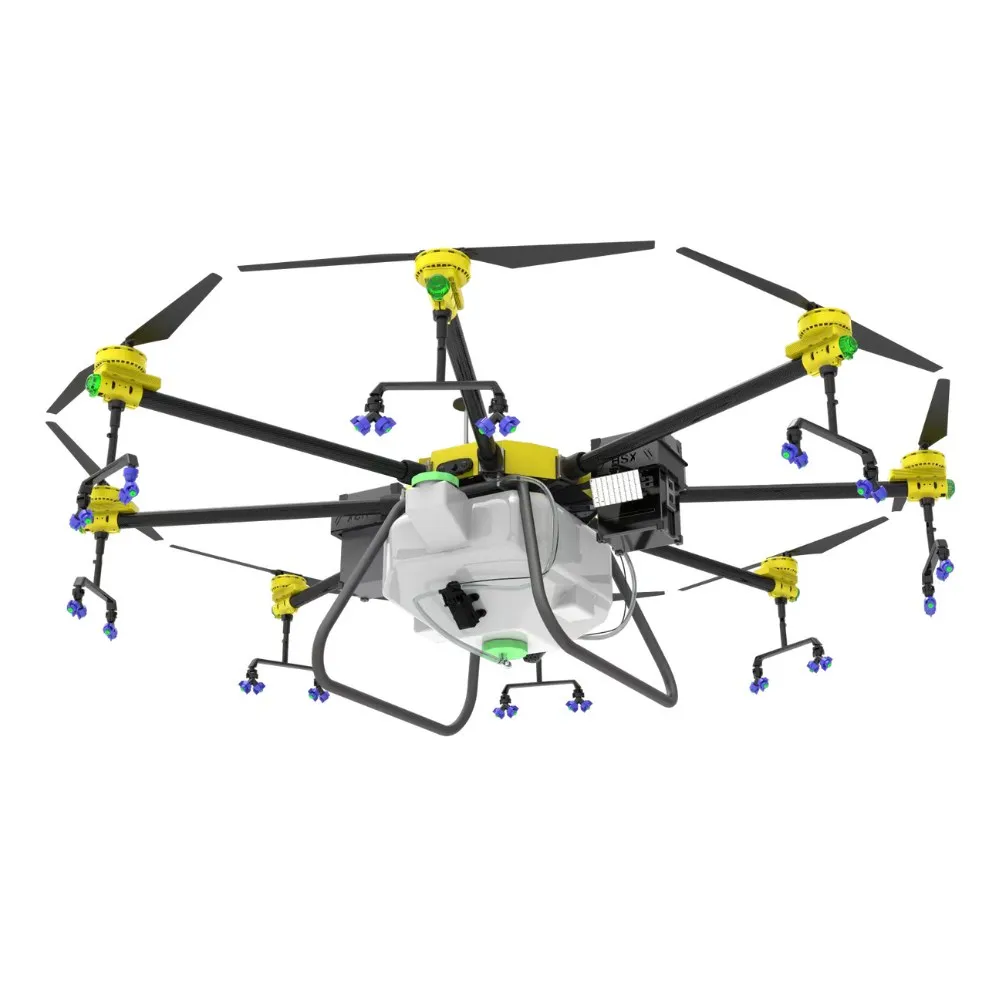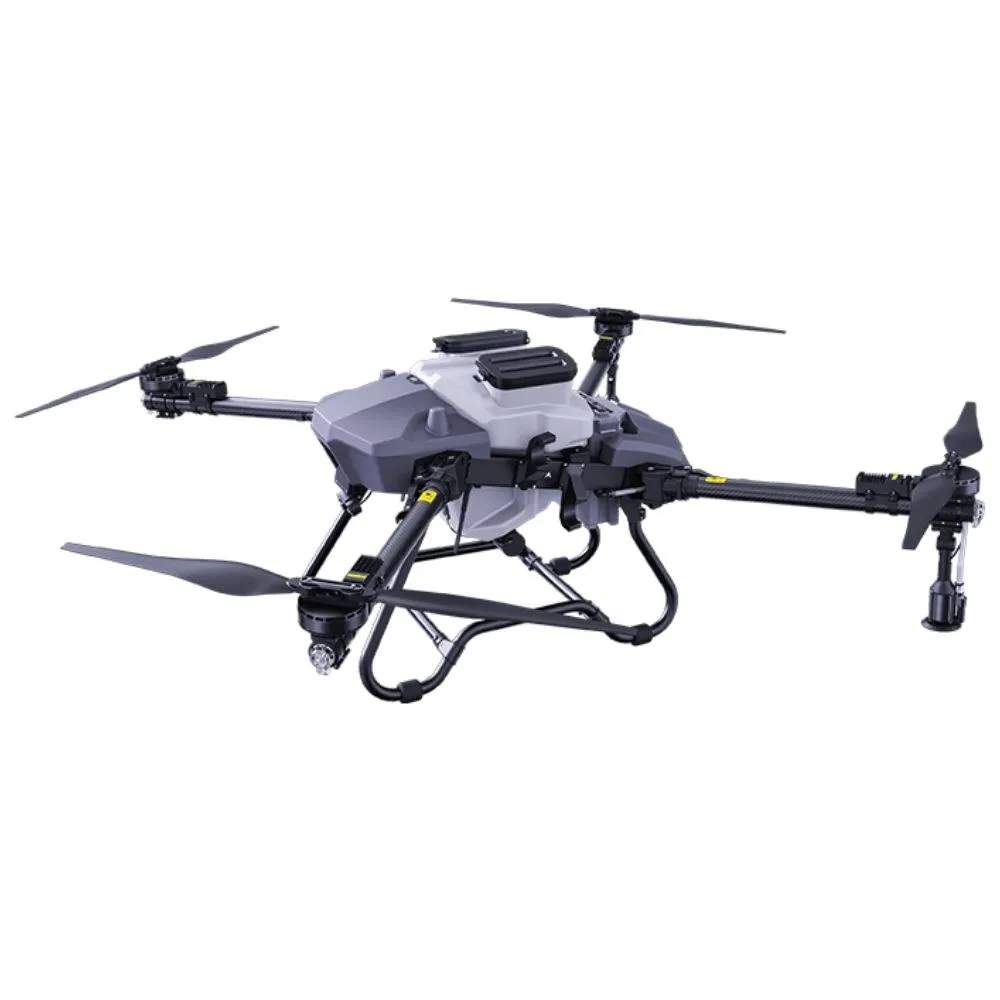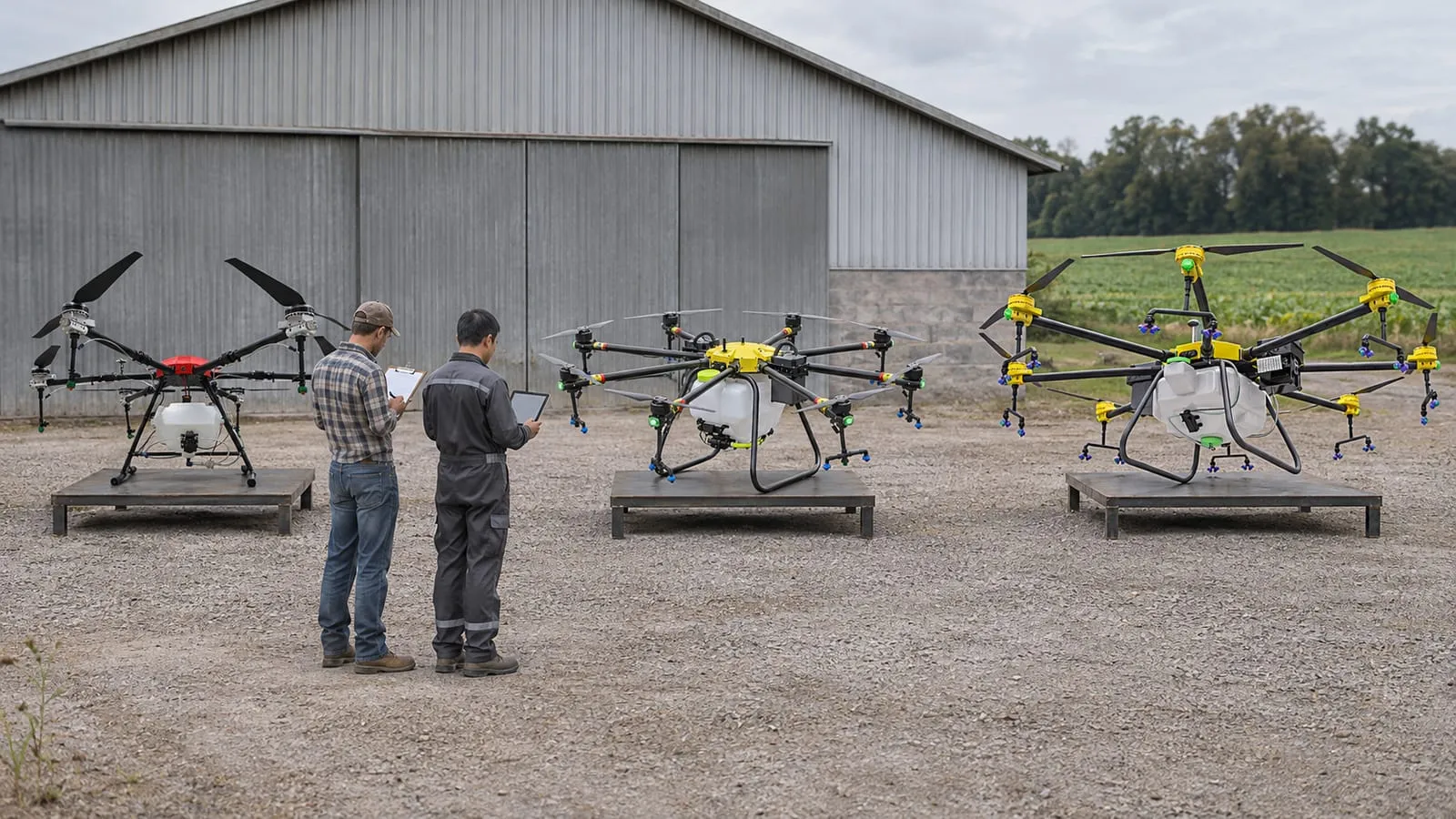
Short answer: Choose a spray drone in this order: your crops and hectares, then field size and access, then tank size and nozzles, then batteries and power, then training and after-sales support. A drone is a system, not only an aircraft. University extension guides from Kentucky and Missouri make the same point: output depends on swath width, pump flow, refill time and ferry time, and battery cost is one of the largest running costs.
Step 1: write down the job
Before you look at any model, answer five questions. How many hectares will you spray in a season? What crops, and how many sprays on each? How big are the fields, and how far apart? How many days do you have in the spray window? Who will fly, and how much experience do they have?
If you buy to resell or to run a service business, add one more: which customers will you serve in year one? A buyer who knows the answers can read a quote. A buyer who does not will buy on price alone.
The 12-point checklist
| # | Check | What to ask or measure |
|---|---|---|
| 1 | Tank size | Litres per flight against your spray rate in L/ha. Hectares per flight = tank ÷ rate. |
| 2 | Spray width | Supplier range, and the width you can really use on your crop. Our planning figures use a smaller effective width. |
| 3 | Pump and flow rate | L/min must match the speed and rate you plan. A weak pump limits swath. |
| 4 | Nozzle type | Pressure for flow, centrifugal for adjustable droplets. Ask which is standard and which is an option. |
| 5 | Batteries | Capacity, cycle life, charge time, and how many sets are in the quote. |
| 6 | Power on site | Grid, generator or both. Check the charger rating in watts. |
| 7 | Spreading option | Needed for fertiliser, seed or granules? Check box size in kg. |
| 8 | Sensors and safety | Altitude radar, obstacle sensing, return-to-home, breakpoint resume. Features differ by configuration. |
| 9 | Transport | Folded size against your vehicle. A drone you cannot carry is a drone you will not use. |
| 10 | Spare parts | A written first-season list and lead times for parts. |
| 11 | Training and language | Who trains your pilots, in which language, and for how long? |
| 12 | Warranty and service | What is covered, for how long, and how claims are handled across borders. |
Which class fits which job
| Job | Usual class | FLYZOR options |
|---|---|---|
| Small plots, terraces, vegetables, first drone | 10–30 L | F10-30 series |
| Orchards and mixed crops, adjustable droplets | 30–50 L, centrifugal | F30C/F50C |
| Service teams, medium farms | 50 L class | F52 |
| Contractors, large open fields | 70 L class and above | F72, F92 |
Example: matching a drone to a spray window
This is an example to show the method, not a promise of output. Suppose a service team must treat 100 ha in two days and can fly 6 productive hours per day. That is 12 flying hours, so the team needs about 8.3 ha per hour.
Using the site planning formula (effective swath × 1.08 = ha per hour at 6 m/s with 50 % efficiency), an F52 with a 10 m effective swath gives about 10.8 ha/h, an F72 with 12 m gives about 13 ha/h, and an F10-30 series drone with 5 m gives about 5.4 ha/h. On paper the F52 is enough. But real output is usually lower than a formula. If your first season gives 60 % of the estimate, the F52 delivers about 6.5 ha/h, or 78 ha in 12 hours. You would then need a second drone, a third day, or an F72. Test the numbers with the work-rate calculator on our field crops page.
Mistakes buyers make
- Buying on tank size alone. Without enough batteries and charging power, a big tank sits on the ground.
- Skipping the rules. Flight permission and pesticide rules vary by country. See our guide to spray drone license requirements.
- Forgetting running costs. The Missouri extension study found battery replacement, depreciation and interest to be the largest cost items per acre. Read our battery guide.
- No spare parts plan. A crash or a worn pump can stop the whole crew for days if parts are far away. See the spare parts list.
If you are buying to resell
Dealers have extra questions: territory, minimum order, demonstration unit, training for your customers and branding. Terms are agreed case by case; ask us through the dealer page or send your crops and hectares through the contact form and we will suggest a configuration. Support details are on the support page.
Related reading: spray drone license requirements, drone vs ground spraying and the F52 spray drone.