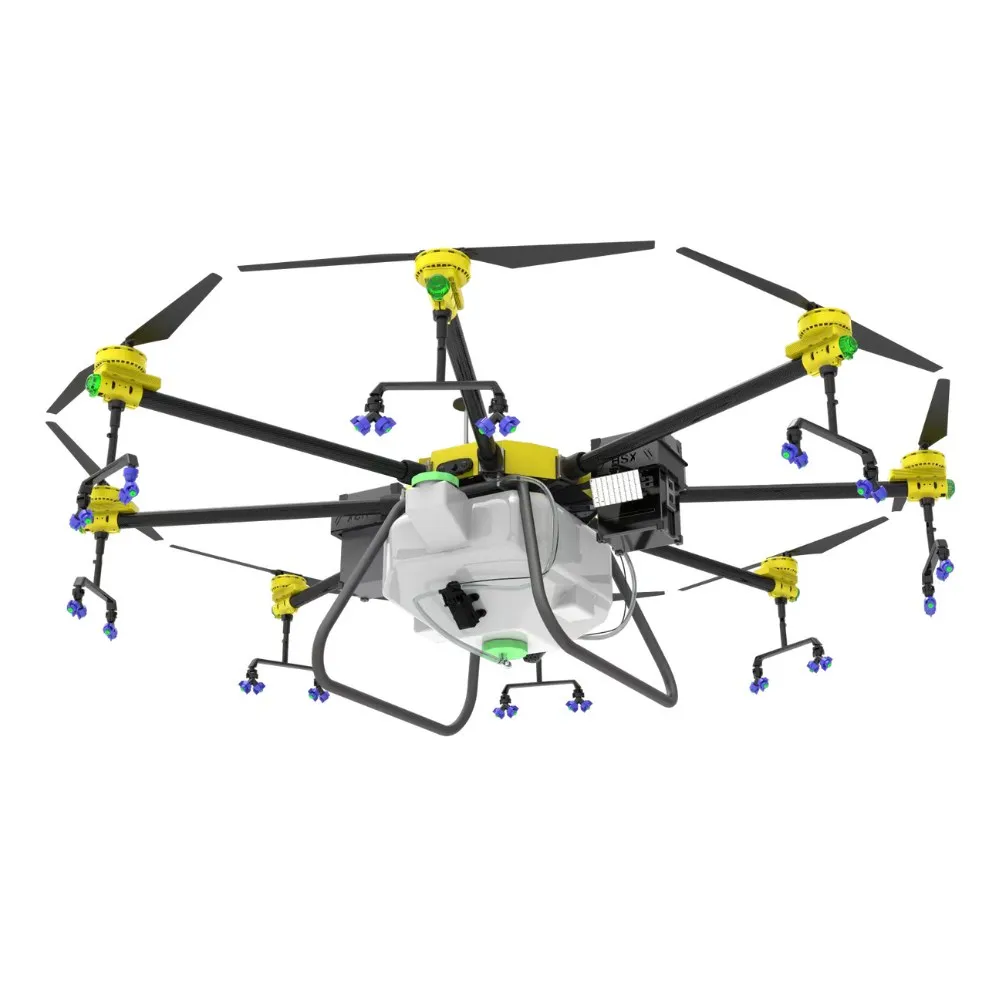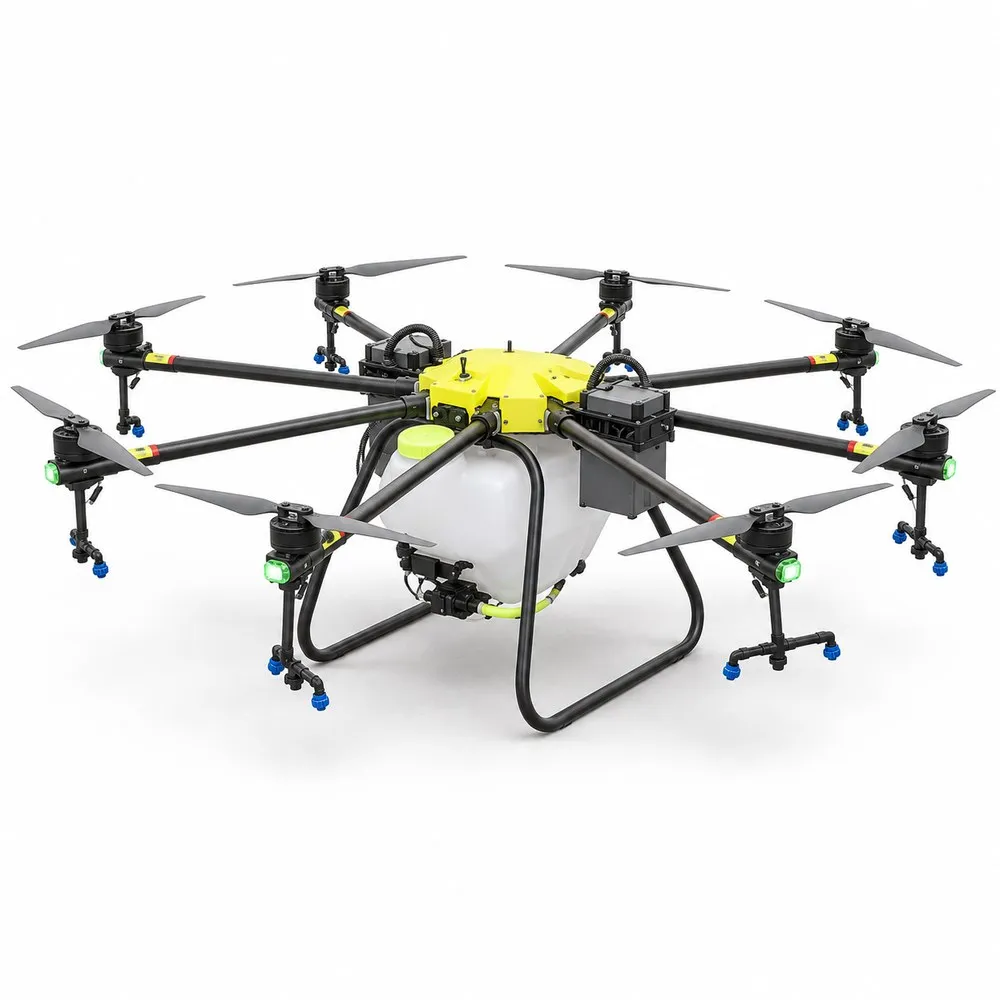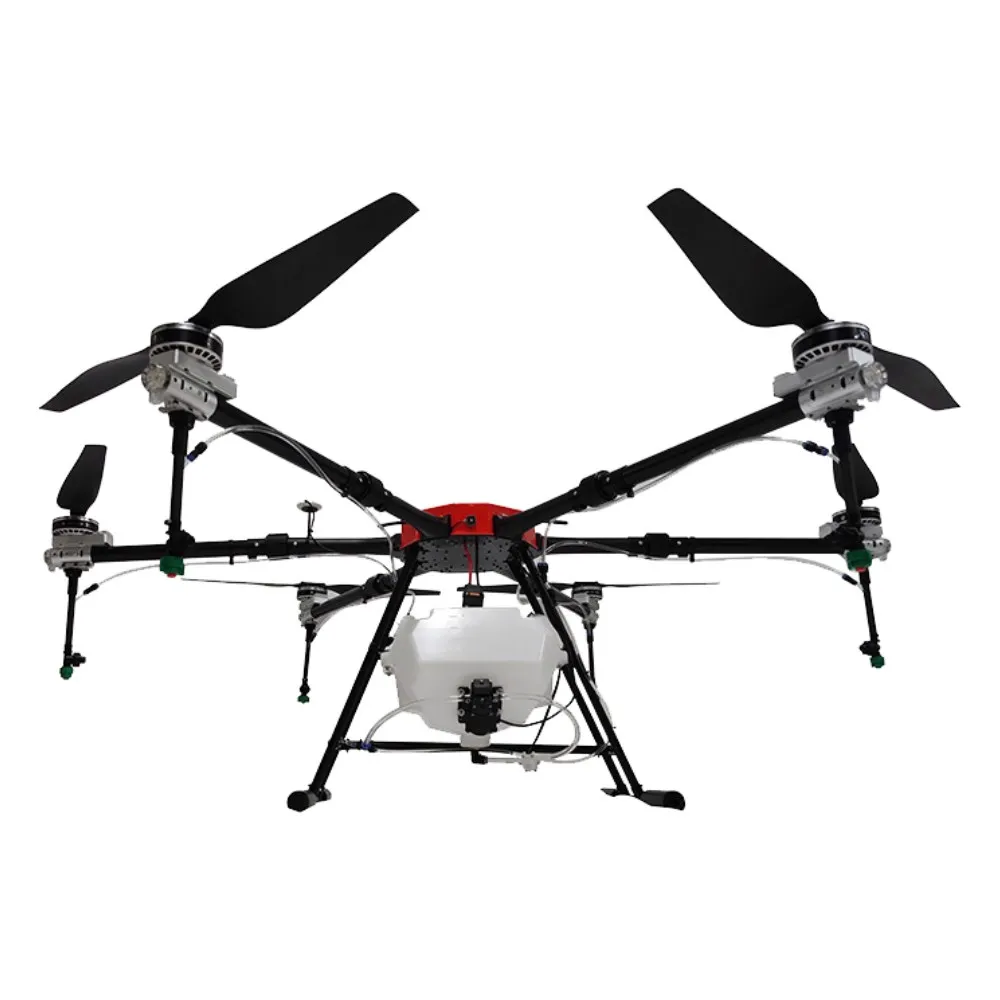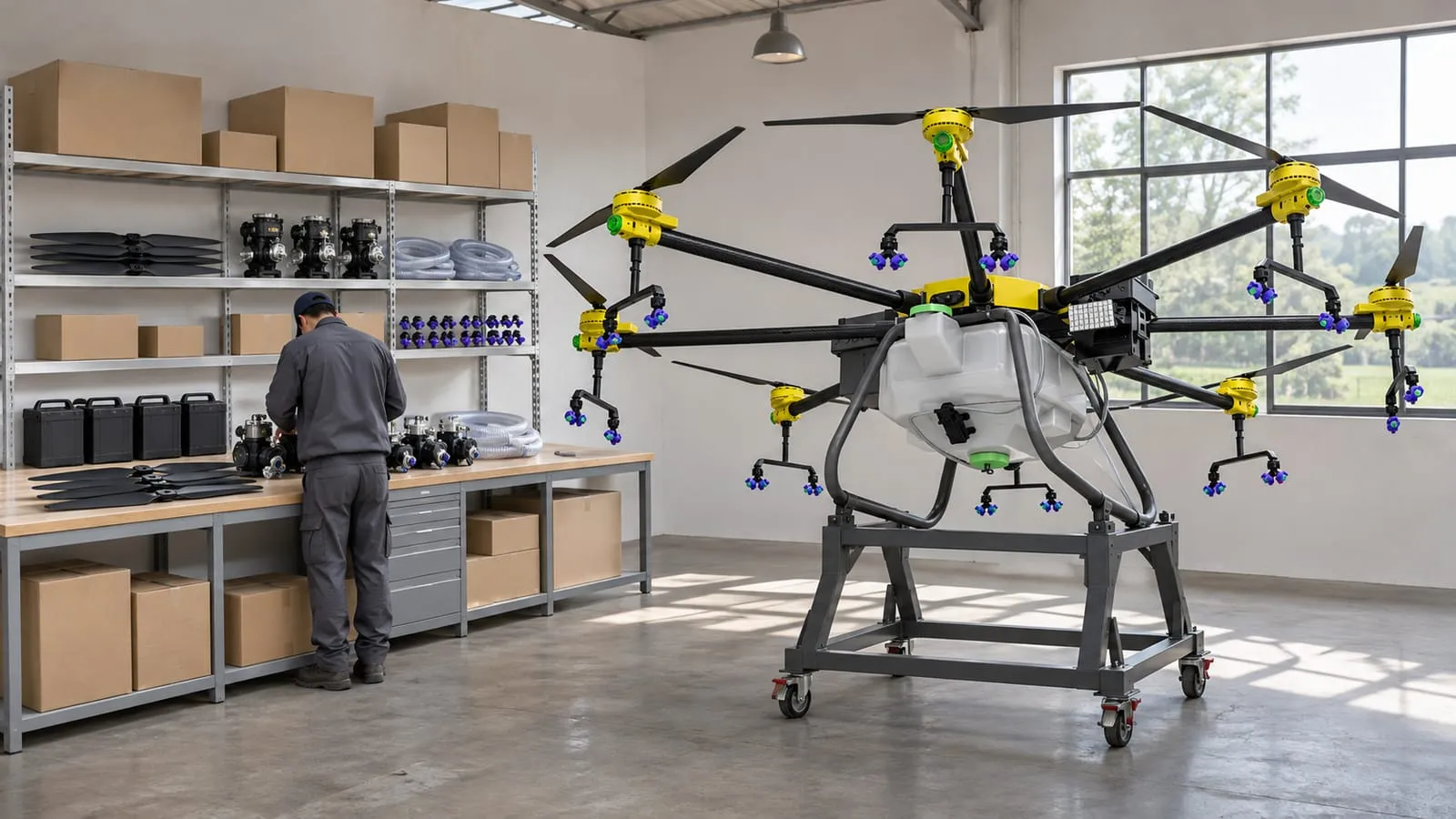
Short answer: A first-season spare parts stock has three tiers. Tier 1 is wear items that every customer needs (propellers, nozzles, filters, seals). Tier 2 is parts that fail now and then (pumps, hoses, motors, speed controllers). Tier 3 is critical and expensive parts that you keep in small numbers or can get by air in days (flight controller, arms, key sensors). A Purdue University extension guide says that when you have the parts, most spray drone repairs are rather straightforward. A drone that waits for a part during the spray window is the main reason customers lose confidence in a dealer.
Why dealers need a plan
Spray drones work in short seasons. If a customer’s drone fails in the week the crop must be treated, a one-week wait costs real money. Extension guides in Kentucky and Missouri list maintenance and repair among the main running costs. As a dealer, your service level is part of what you sell. A customer will often choose the dealer with parts on the shelf over the lowest price.
The three-tier list
| Tier | Parts | Why | How to stock |
|---|---|---|---|
| 1. Wear items | Propellers (in pairs by rotation direction), nozzles, spray filters, hose clamps, seals, landing gear pads, cable ties | Wear, small impacts and dirty water | Stock more, sell often, keep a small kit for each customer |
| 2. Medium turnover | Water pumps, hoses and fittings, flow sensors, motors, speed controllers, antennas, chargers, remote controller sticks and covers | Fail now and then; fail more with abrasive or unfiltered water | Keep a few of each per 10 drones sold |
| 3. Critical | Flight controller, GPS module, radar sensors, arms, frame parts, battery packs | Stop the drone for days; costly | Keep one or two, or agree air freight with the supplier |
Exact part names and numbers differ by model. Ask us for the list for the F-series you order. See the specifications on the F72, F52 and F10-30 series pages.
Example: stock for 10 drones
This is an example of a method. The numbers are not a recommendation for your market and are not a supplier promise. Change them after your first season.
| Item | Example stock for 10 drones | Basis |
|---|---|---|
| Propeller sets | 20 sets (2 per drone) | Most common wear item |
| Nozzles and filters | 2 spare kits per drone | Clog and wear |
| Pumps | 2 | One in five drones needs one in the first year (assumed) |
| Motors and speed controllers | 3 sets | Mostly after crashes (assumed) |
| Arms and landing gear | 2 sets | Hard landings (assumed) |
| Flight controller / GPS | 1 of each | Rare, expensive |
| Battery packs for replacement | Agree with supplier | Ageing by cycles; see the battery guide |
Estimate the cash you need
Use this method: multiply the quantity of each part by its unit price from the supplier quote, add freight and tax, and compare the total with the value of the drones you expect to sell. If the parts are 8 % of drone sales value, say, a team selling US$200,000 of drones holds US$16,000 of parts (an invented example). The percentage is yours to set. The right figure rises when your territory is far from the supplier or the terrain is rough, and falls when you can get air freight in three days.
Customer kits
Sell each customer a small kit with the drone: spare propellers, a set of nozzles, filters and tools. This helps the customer, and it takes small repairs off your workshop. Keep a written list for each customer and review it after the first month.
Export logistics and warranty
- Ask for the packing list and part numbers for each shipment.
- Lithium batteries must travel as dangerous goods. IATA publishes guidance, and your forwarder will advise on current packaging and documents.
- Ask how warranty parts are handled. Some suppliers want the old part or a photo first. Agree on the process before the first order.
- Keep a service log for each drone with the serial number, date, issue and part used. It shows which parts fail and helps in warranty claims.
Training makes parts last
Pilots who plan the flight, map obstacles and keep obstacle sensing on crash less. The Purdue guide reports that more than 90 percent of spray drone crashes happen when operators turn off obstacle avoidance or fail to map obstacles and wires. Training is the cheapest spare part. See the support page for what we offer.
Next step
Send us your planned number of drones, the region and the crops through the contact page and we will prepare a first-order spare parts list with the quotation. Dealer terms are on the dealer page; the conditions are discussed case by case. For more on running the day-to-day work, see spray drone field setup.
Related reading: battery guide, support and the dealer programme.