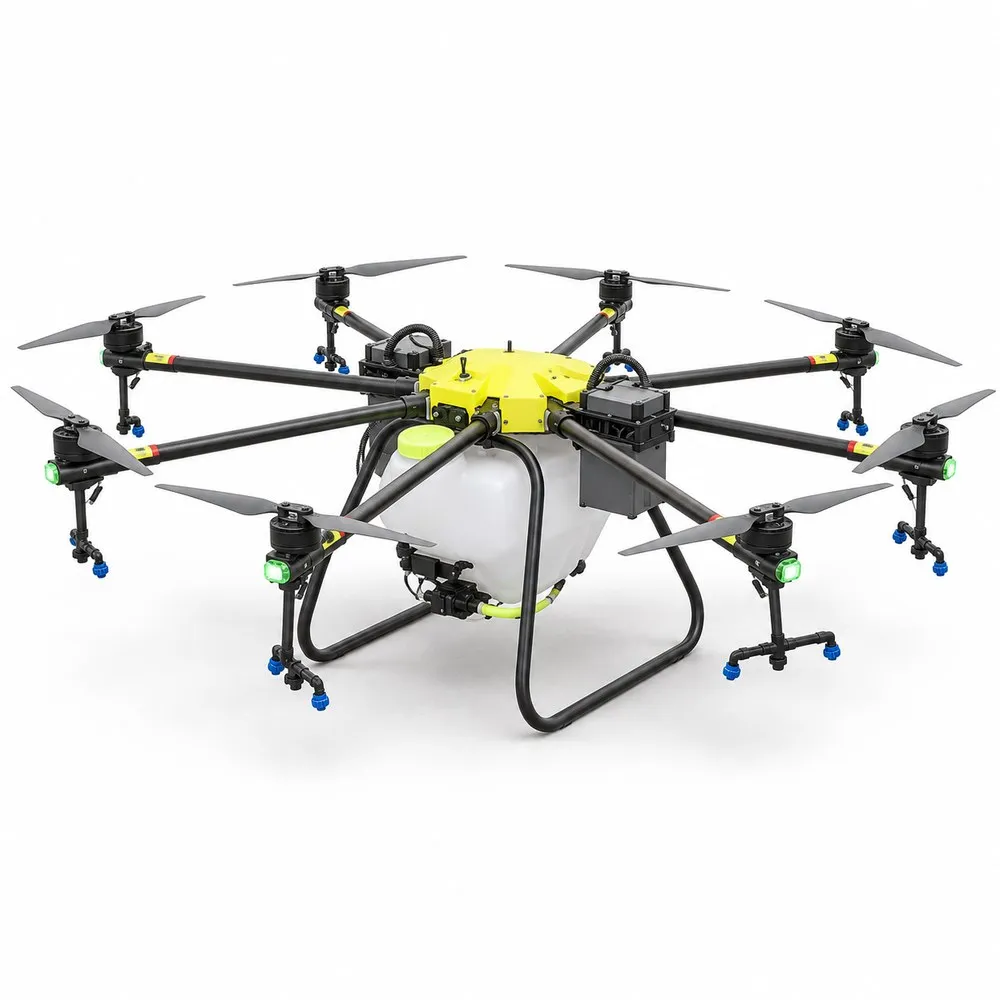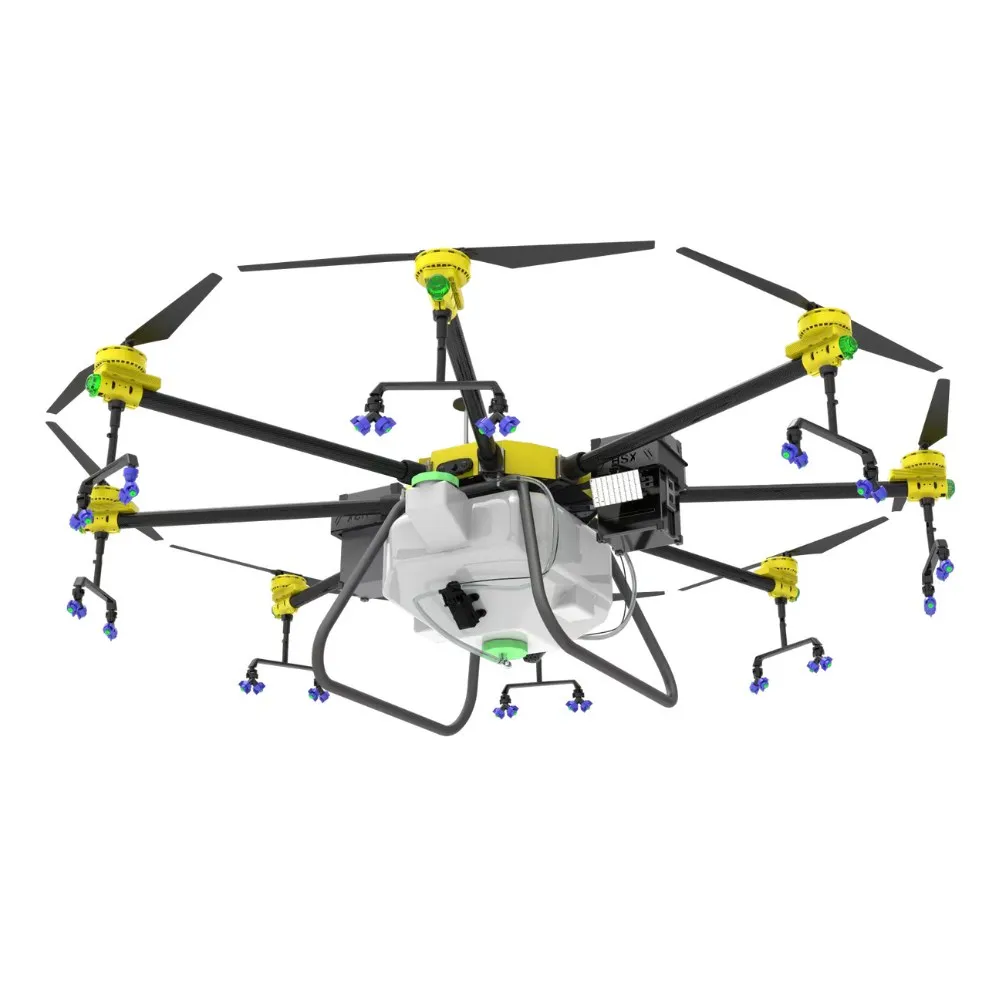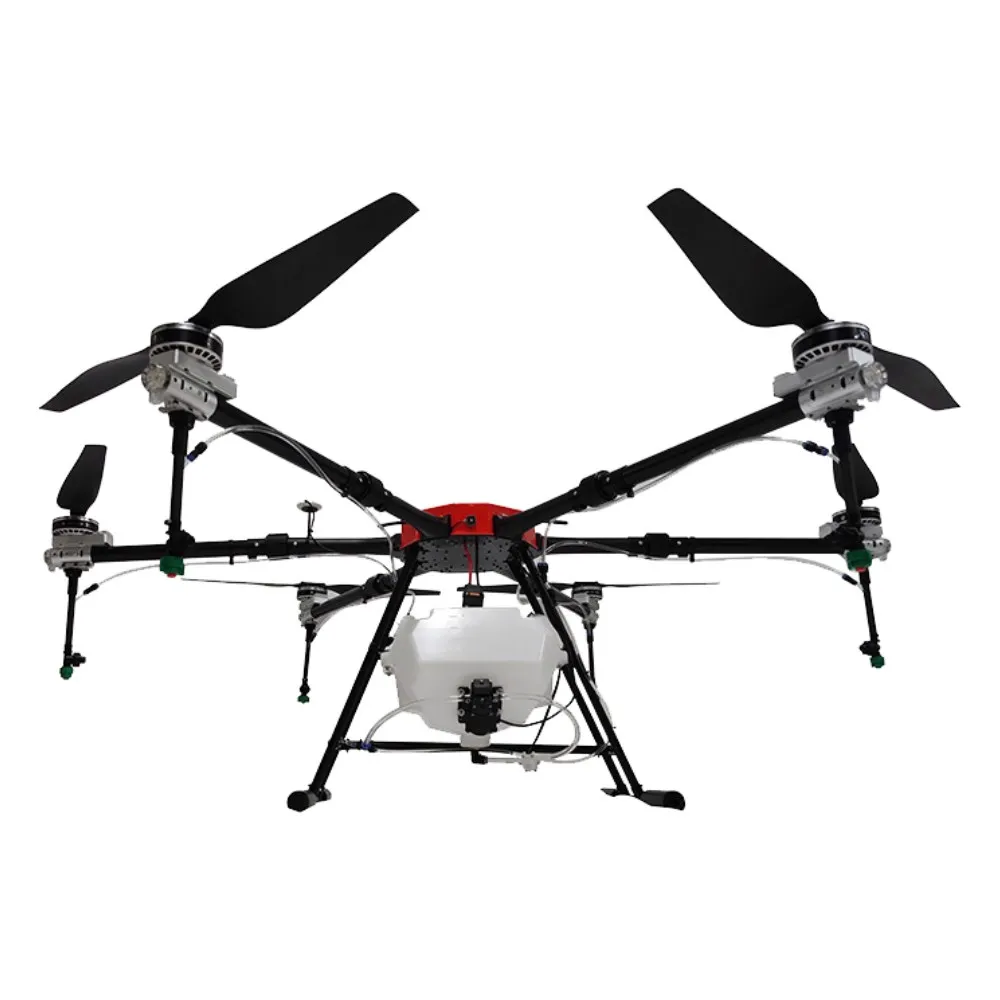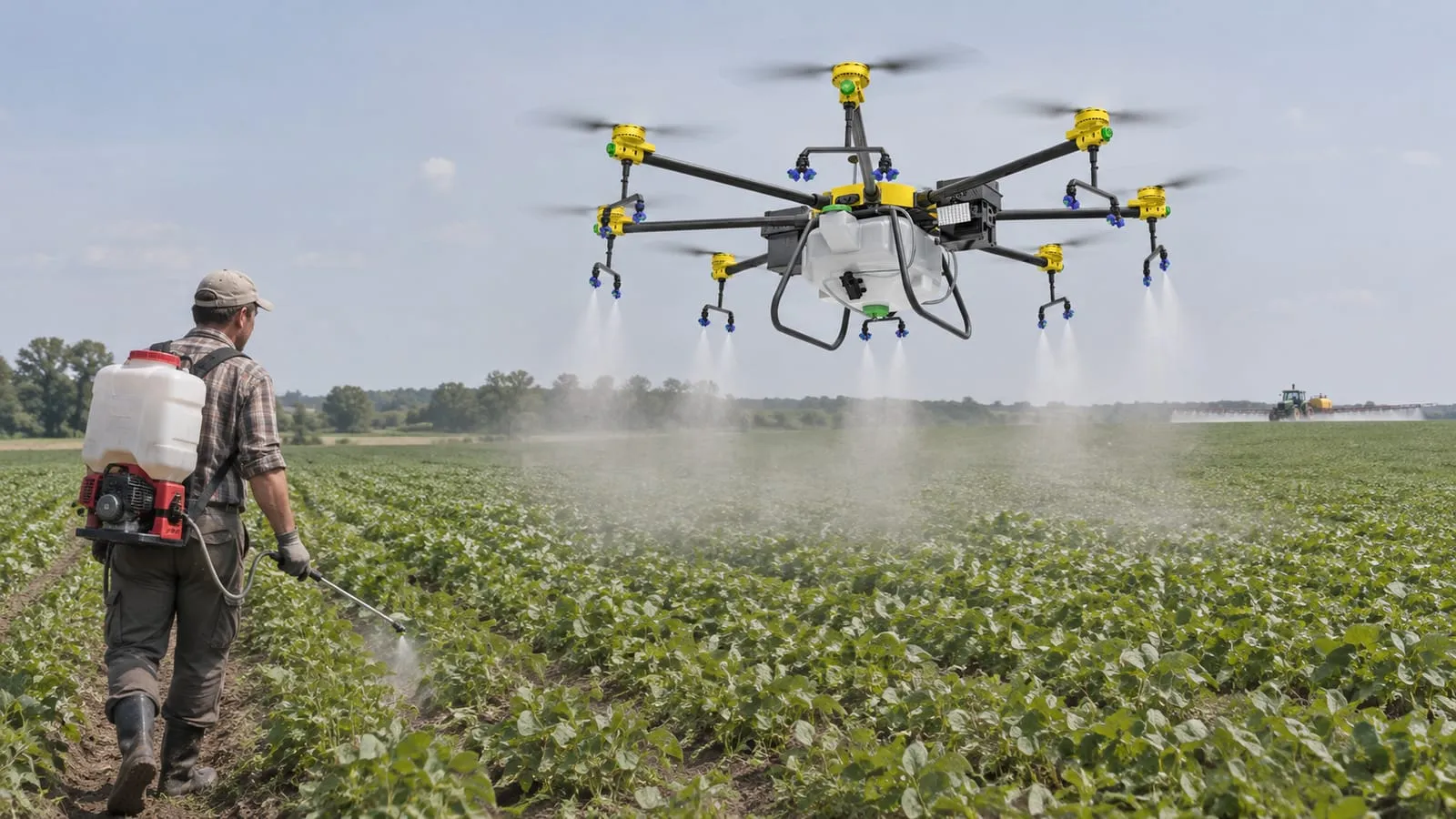
Short answer: Choose the method by field and labour, not by fashion. Knapsack sprayers cost little to buy but use many working hours. Tractor boom sprayers are fast and economical on large, flat, dry fields. Spray drones fit wet ground, slopes, tall crops, terraces and scattered plots, and they use far less water. University extension studies in the United States show that a drone’s cost per acre falls as the area per year grows, and that hiring a drone service was about US$16 per acre in one Missouri example.
Three methods side by side
| Factor | Knapsack sprayer | Tractor boom or self-propelled sprayer | Spray drone |
|---|---|---|---|
| Upfront cost | Low | High (machine plus tractor) | Medium to high (drone, batteries, power) |
| Speed per hour | Slowest | Fast on large flat fields | Fast, but limited by refills and batteries |
| Labour | Many people, hard work, direct chemical contact | One driver | Pilot and a helper for mixing and charging |
| Water per hectare | High | About 94–187 L/ha (Purdue figures) | About 19–28 L/ha (Purdue figures) |
| Wet or soft ground | Possible, slow | Wheel damage, may not enter | No contact with soil |
| Tall crops, terraces, slopes | Difficult | Difficult or unsafe | Good fit |
| Rules and permits | Pesticide rules only | Pesticide rules only | Aviation rules and pesticide rules |
The water figures come from a Purdue University extension guide, which says that drone applications use carrier volumes of 2 to 3 gallons per acre, far lower than 10 to 20 gallons per acre on the ground. The guide adds that the lower water volume means the pesticide mixes are more concentrated, so tank-mix compatibility needs more care. We converted gallons per acre to litres per hectare.
What the cost studies say
The University of Missouri study of drone ownership found about US$12.27 per acre for a farm spraying 1,000 acres a year, about US$7.39 per acre for a custom operator spraying 4,000 acres, and a break-even against hiring at about 980 acres a year when the hire rate is US$16 per acre. Ownership costs (depreciation, interest and batteries) were the largest part. The message for any country is: the more hectares each drone sprays per year, the lower the cost of each hectare. The numbers are US figures for a specific drone model, so use them as a method, not as a price list.
Where drones lose
Be honest with customers. Drones are not the best answer for large, flat, dry fields where a tractor boom can cover a very wide strip with a large tank. Strong wind limits drone work. If water or power is far from the field, refill and charging time can waste the speed advantage. A drone also needs a trained pilot and permission from the aviation authority. See spray drone license requirements.
Example: a 100 ha rice and vegetable cooperative
This is an example for planning. The knapsack figure is an assumption, not a measured value. Replace it with your own.
- Drone: an F52 with a 10 m effective swath is about 10.8 ha per hour on the site formula (swath × 1.08). At 60 % of that in real work, about 6.5 ha/h, 100 ha takes about 15 flying hours, or 2 to 3 days.
- Knapsack: if one worker covers an assumed 1 ha a day, 100 ha takes 100 worker-days. Ten workers need 10 days.
- Water: at 20 L/ha, a drone needs about 2,000 L of mix for 100 ha. A knapsack at an assumed 200 L/ha would need 20,000 L, which means carrying and pumping ten times more water.
If a cooperative pays workers to spray by hand, a drone may pay for itself quickly. If the same cooperative has a tractor sprayer and flat dry fields, the saving is smaller. Test with your own wages and fuel prices.
Matching the method to the field
- Terraced hills, small plots, orchards: start with the compact F10-30 series.
- Paddy and wet fields: drones avoid the soil. A mid-size F52 fits many service teams.
- Large open fields: the F72 with a 72 L tank reduces refills. Check the work-rate calculator on our field crops page.
For dealers
The easiest sales story is a side-by-side demonstration on the customer’s own field: one hour of drone work against the usual method, with a stopwatch and a water meter. Ask about dealer terms on our dealer page. See also how to choose a spraying drone.
Related reading: battery guide, field setup and the F72 spray drone.