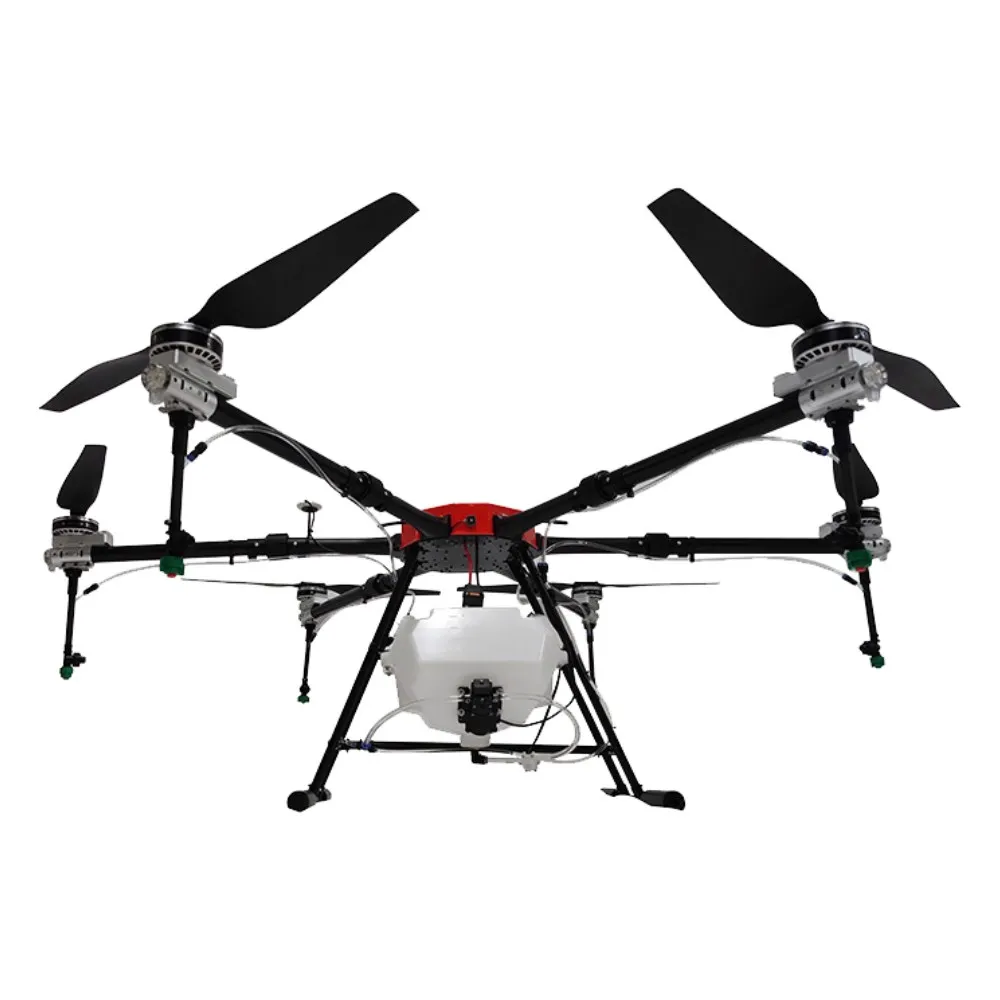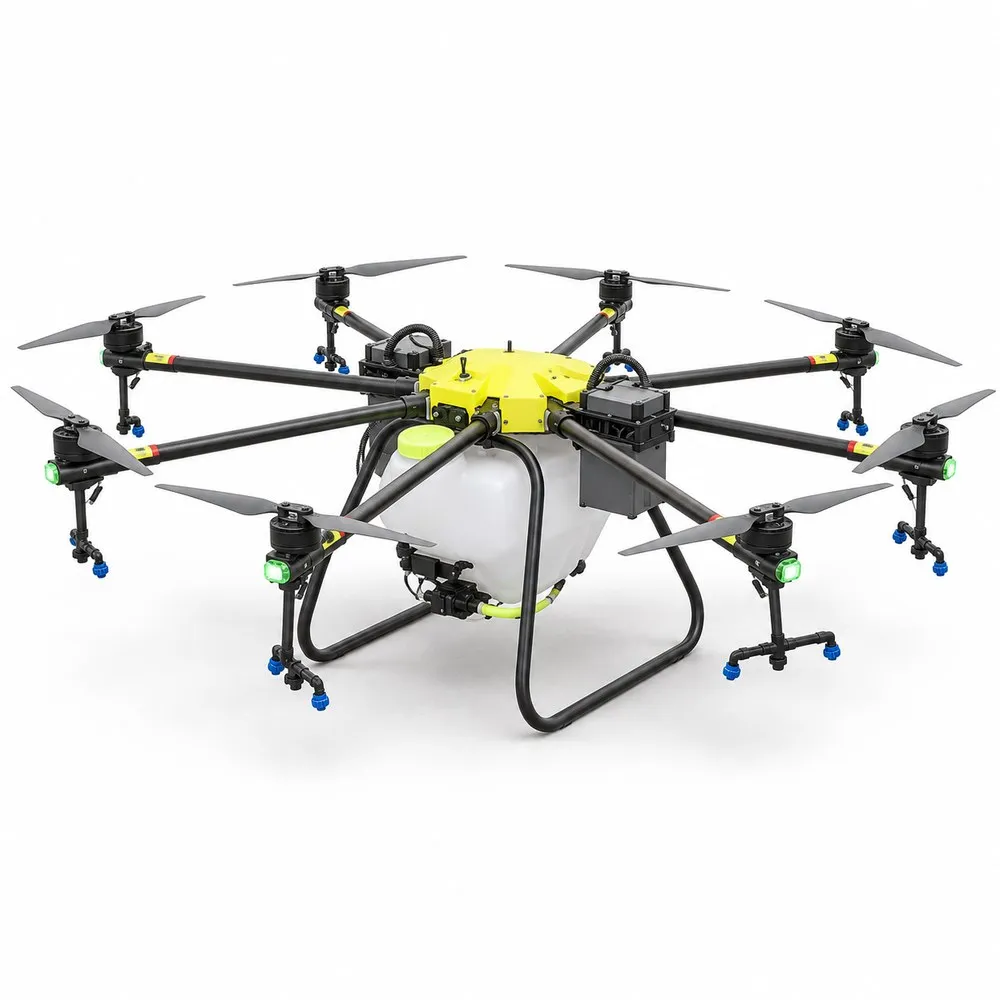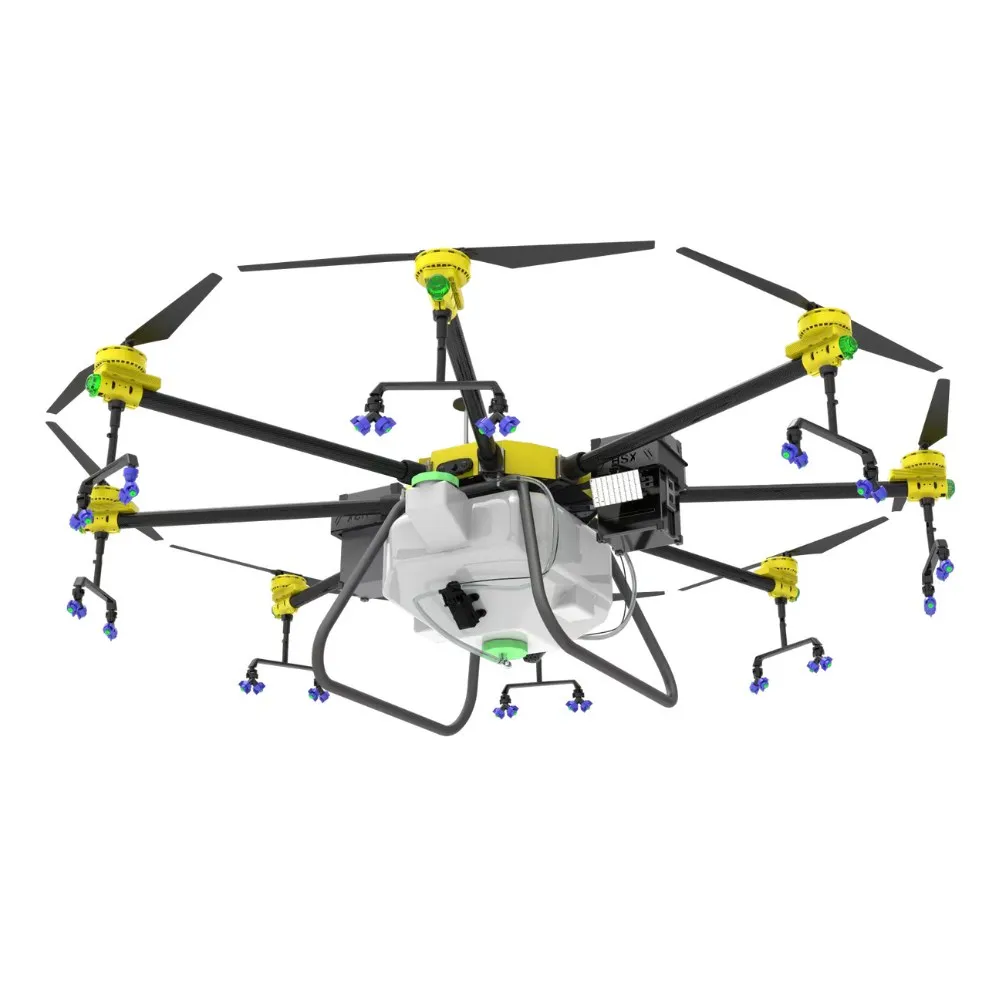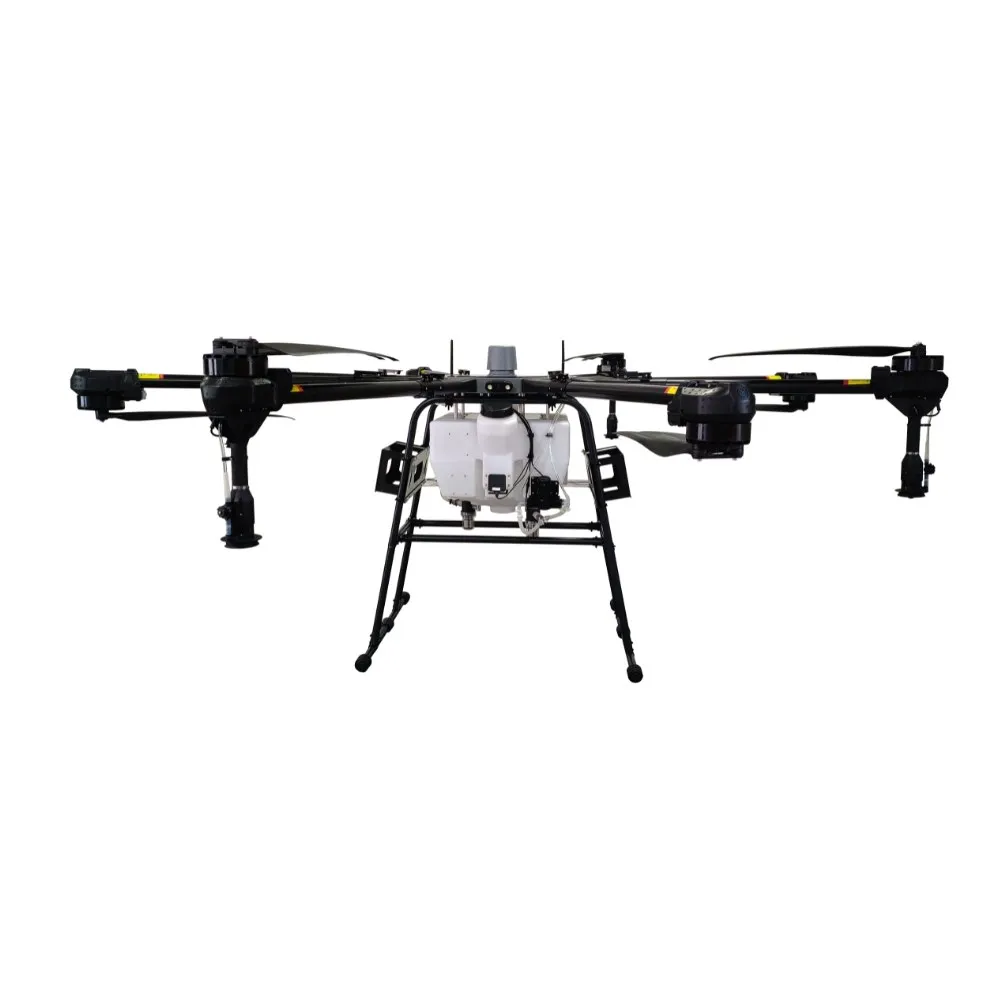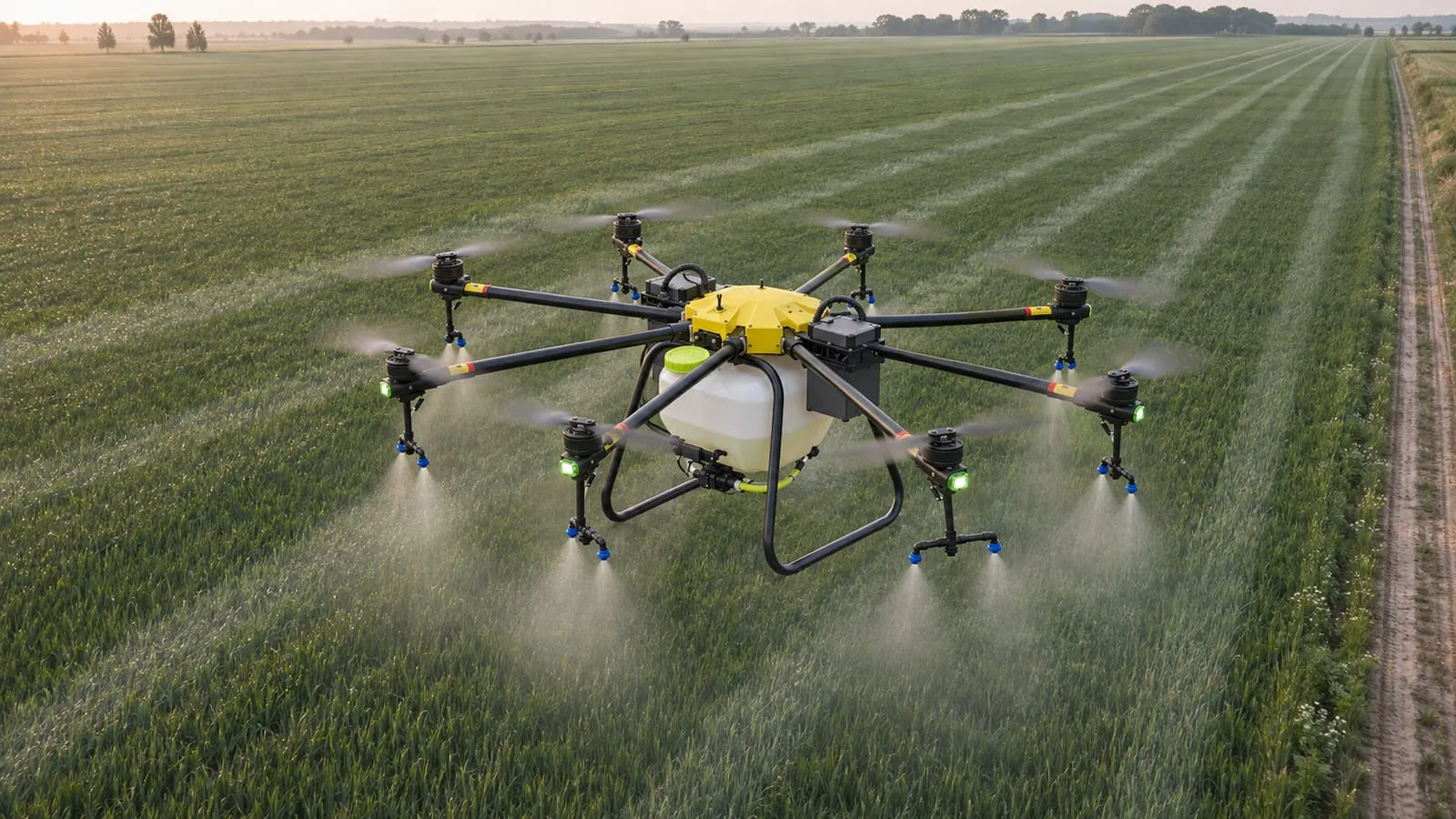
Short answer: A spray drone with a 12 m effective swath covers about 13 hectares (32 acres) per hour in a planning estimate, which is about 78 ha (190 acres) in a 6-hour working day. The estimate is swath in metres × 1.08 = hectares per hour. It assumes 6 m/s flight speed and 50 % field efficiency. Real output depends on spray volume, refill and battery plan, field shape and weather, so use the number to plan and test with your own fields.
The formula and where it comes from
Area per hour = swath × speed × time. With a swath of 1 m, a speed of 6 m/s and 3,600 seconds, a drone would cover 21,600 m² per hour if it never stopped. Half of the time goes to turns, refilling and battery changes, so we use 50 %. That gives 10,800 m², or 1.08 ha, for each metre of swath.
Hectares × 2.471 = acres.
Estimates by model
The table uses the effective swath from the FLYZOR calculator. It is an estimate, not a promise.
| Model | Tank | Effective swath | ha per hour | Acres per hour | Acres in 6 h |
|---|---|---|---|---|---|
| F10-30 series | 10–30 L | 5 m | 5.4 | 13 | 80 |
| F52 | 52 L | 10 m | 10.8 | 27 | 160 |
| F72 | 72 L | 12 m | 13.0 | 32 | 192 |
| F92 | 92 L | 13 m | 14.0 | 35 | 208 |
The F10-30 series has a supplier rating of 6–12 ha per hour on its product page. That is an upper reference, and the table above is a lower planning value.
What public sources say
A University of Kentucky extension paper gives acres per hour by tank size and spray volume. For a 30 L drone it lists about 21.3 acres per hour at 2 gallons per acre, 16.8 at 3, 13.8 at 4 and 11.7 at 5. For a 72 L drone it lists about 49.8 acres per hour at 2 gallons per acre. The pattern is clear: the more you spray per acre, the fewer acres you finish.
A dealer guide reports that real operators often see much less than the brochure number once chemical rate, refills, battery swaps and field edges are counted. Plan with the lower number.
Example: one day with an F72
This is an example. The numbers are not a promise.
- Field work: 6 productive hours.
- Estimate: 12 m × 1.08 = 13 ha per hour.
- Result: 13 × 6 = 78 ha, which is about 192 acres.
- Spray volume: at 15 L per hectare, 78 ha needs about 1,170 L, or about 16 tank loads of 72 L.
- Batteries: each flight uses two packs. With 16 loads you need enough packs, or fast charging, to keep the drone in the air.
If your target is 200 acres per day and your estimate is 100 acres, either add a second drone, add battery sets or raise the number of working hours.
What reduces output
- Spray volume per hectare. The biggest single factor.
- Distance to the water source. A long trip back to the tank truck cuts flying time.
- Battery sets and charging power. One set means waiting. Three or four sets with a generator keep the drone flying.
- Field shape. Long, straight fields are quick. Short, irregular fields mean many turns.
- Wind and heat. Operators stop in strong wind, and many chemical labels limit spraying in heat.
- Obstacles. Power lines, trees and buildings slow the route.
- Crew. A second person for mixing and refilling can raise output a lot.
How to raise your acres per day
- Add battery sets before you add drones.
- Place the refill point at the field edge.
- Plan routes for long straight passes.
- Use a drone sized for your field: a smaller one in small plots, a larger one in open land.
- Keep a spare propeller, nozzle and pump kit in the truck.
You can test your own swath and spray rate in the calculator on the field crops page. If you plan to sell the work as a service, read the spray service business guide and contact us with your crops and field sizes. We suggest a model and a battery plan, and the price is given in the quotation.