Short answer: A drone spraying plan has four numbers: hectares you can sell, price per hectare, running cost per hectare, and yearly fixed cost. Break-even hectares equal fixed cost divided by the margin per hectare. In the example below, a two-drone fleet needs about 2,400 hectares a year to break even and about three years to repay the investment at 3,000 hectares. Replace every input with your own quotes. For the step-by-step start-up path, see our guide to a drone spray service business.
What the plan must answer
Lenders, partners and you yourself need the same answers: who buys, how many hectares, what it costs, when the money comes back. Write one page for each of these: market, fleet, budget, running costs, break-even, risks.
1. Market
List crops, spray rounds per season and the number of farms within a day’s drive. Count peak weeks, because most customers want spraying at the same time. Public sources show that costs per acre fall as more acres are sprayed, so volume matters more than anything else. The University of Missouri Extension found that custom operators reached a low cost per acre only above several thousand acres a year under its assumptions.
2. Fleet and capacity
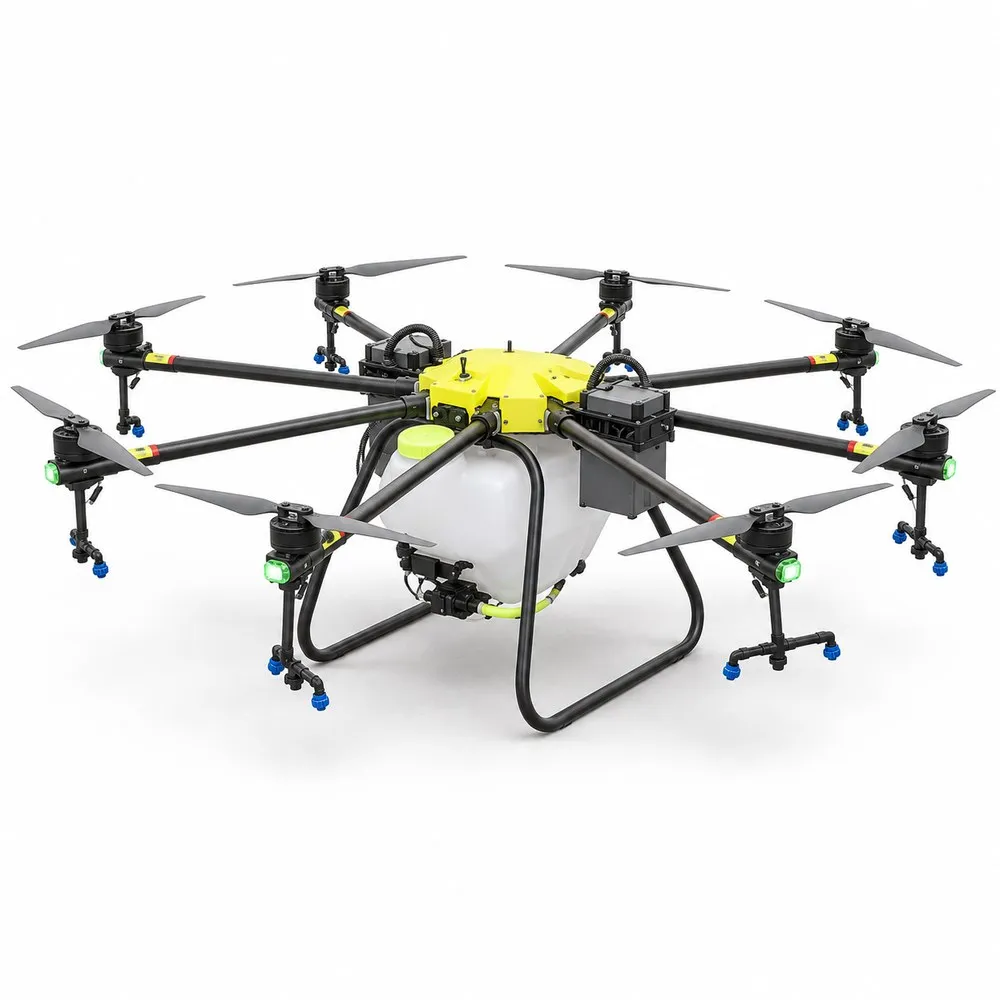
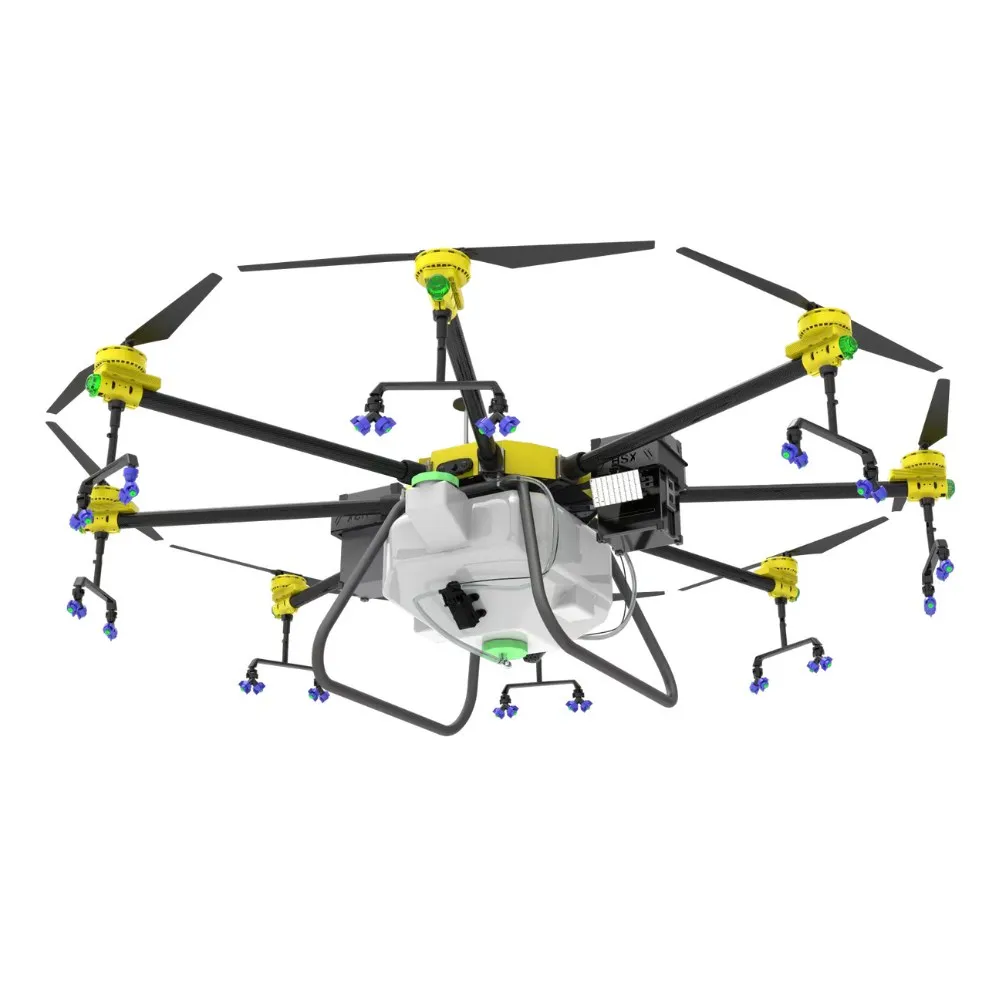
Use the work-rate formula: hectares per hour = effective swath x 1.08 (6 m/s at 50 % field efficiency). The F52 has an effective swath of 10 m in our calculator, so about 10.8 ha per hour. The F72 uses 12 m, so about 13 ha per hour. These are estimates, not promises.
| Input | Example |
|---|---|
| Drones | 2 x F52 |
| Effective spraying hours per drone per day | 5 |
| Output per drone per day | 5 x 10.8 = 54 ha |
| Fleet output per day | 108 ha |
| Workable days in the season | 35 |
| Maximum capacity | 3,780 ha |
| Hectares sold (about 80 % of capacity) | 3,000 ha |
3. Startup budget (example inputs, not quotes)
| Item | Example value (USD) |
|---|---|
| 2 ready-to-fly drone sets with batteries | 50,000 |
| Extra battery sets, fast chargers, generator | 8,000 |
| Vehicle fit-out, water tank, mixing pump | 6,000 |
| Total investment | 64,000 |
These values are placeholders chosen to show the method. They are not FLYZOR prices. Ask for a quotation for your configuration.
4. Running costs
Per hectare, include fuel for the generator, wages for the pilot and helpers, battery wear, small repairs and transport. In the example: price 12 USD per hectare, running cost 4 USD per hectare, so the margin is 8 USD per hectare. Fixed yearly costs: depreciation of 16,000 USD (64,000 over four years) plus insurance, registration, training and admin of 3,000 USD, total 19,000 USD.
5. Break-even and payback
- Break-even hectares = 19,000 / 8 = about 2,375 ha per year.
- Profit at 3,000 ha = 3,000 x 8 - 19,000 = 5,000 USD.
- Cash payback at 3,000 ha = 64,000 / (3,000 x 8 - 3,000) = about 3.0 years, because depreciation is not a cash cost.
| Hectares sold | Profit after depreciation (USD) |
|---|---|
| 2,000 | -3,000 |
| 3,000 | 5,000 |
| 4,000 | 13,000 |
The example leaves out interest and tax. Higher interest costs reduce the result.
6. Risks to write down
- Rain and wind reduce workable days.
- Customers may pay late.
- A long repair without spare parts stops work. Keep a parts kit.
- Rules for pilots, products approved for aerial use and distance to homes and water differ by country. The WHO and FAO publish guidance for aerial pesticide application.
7. Using the plan
Run the table three times: a bad case, a normal case and a good case. If the bad case still pays the loan, the plan is solid. For a model with a larger tank for big open fields, compare the F72 and the F92. Companies that want to sell drones as well as spray can look at the dealer programme. Contact us for a quotation based on your fleet size.