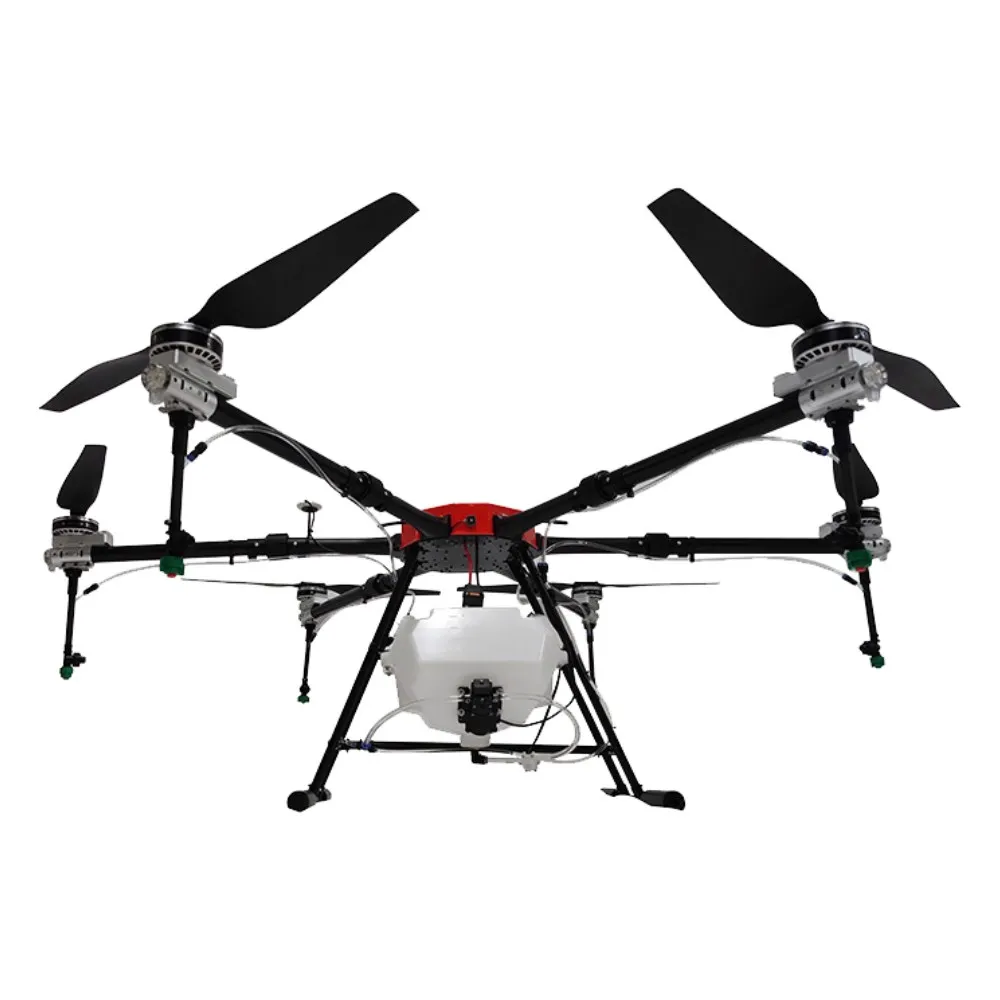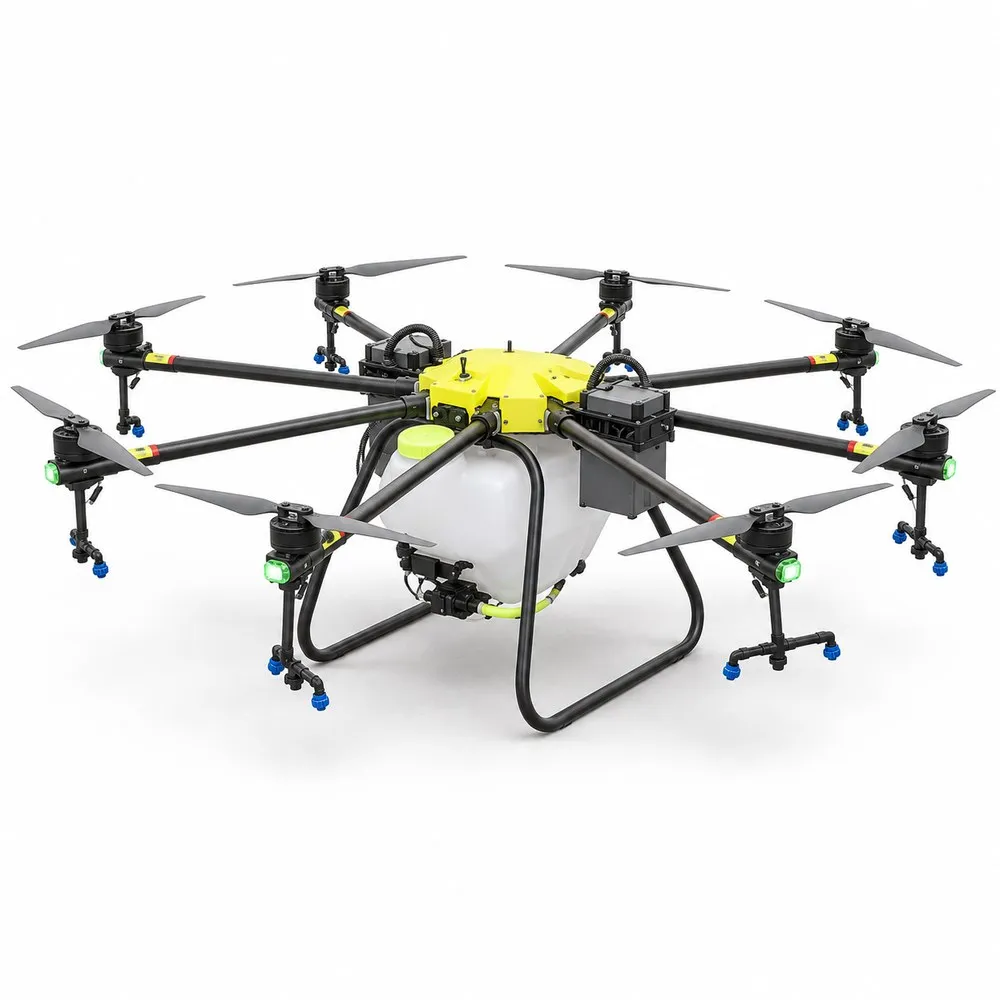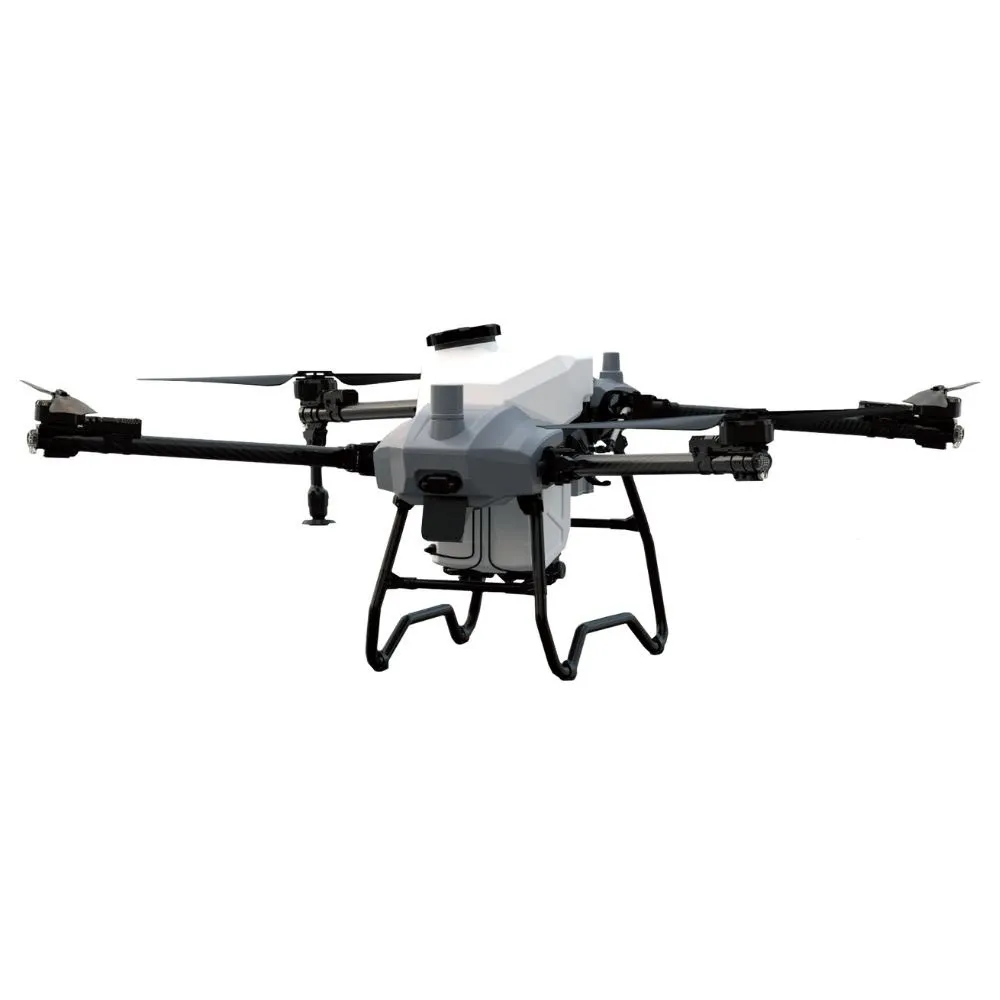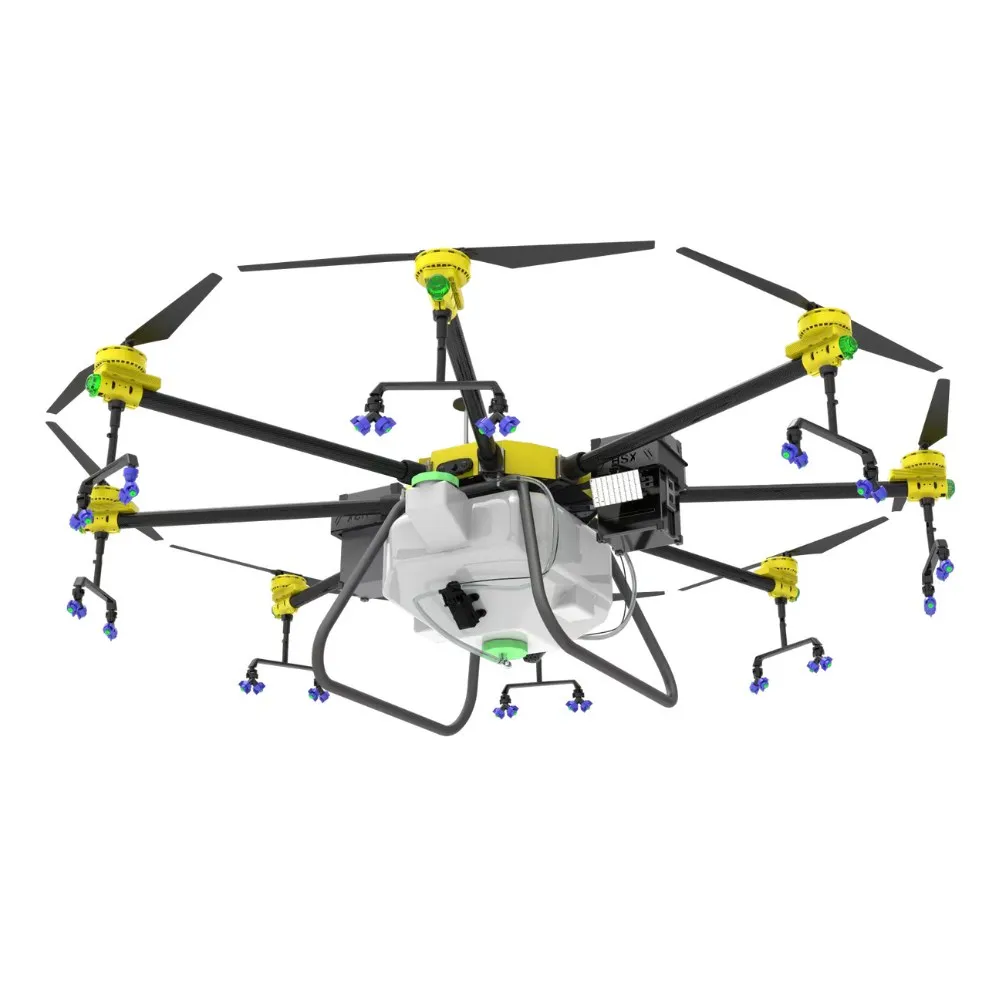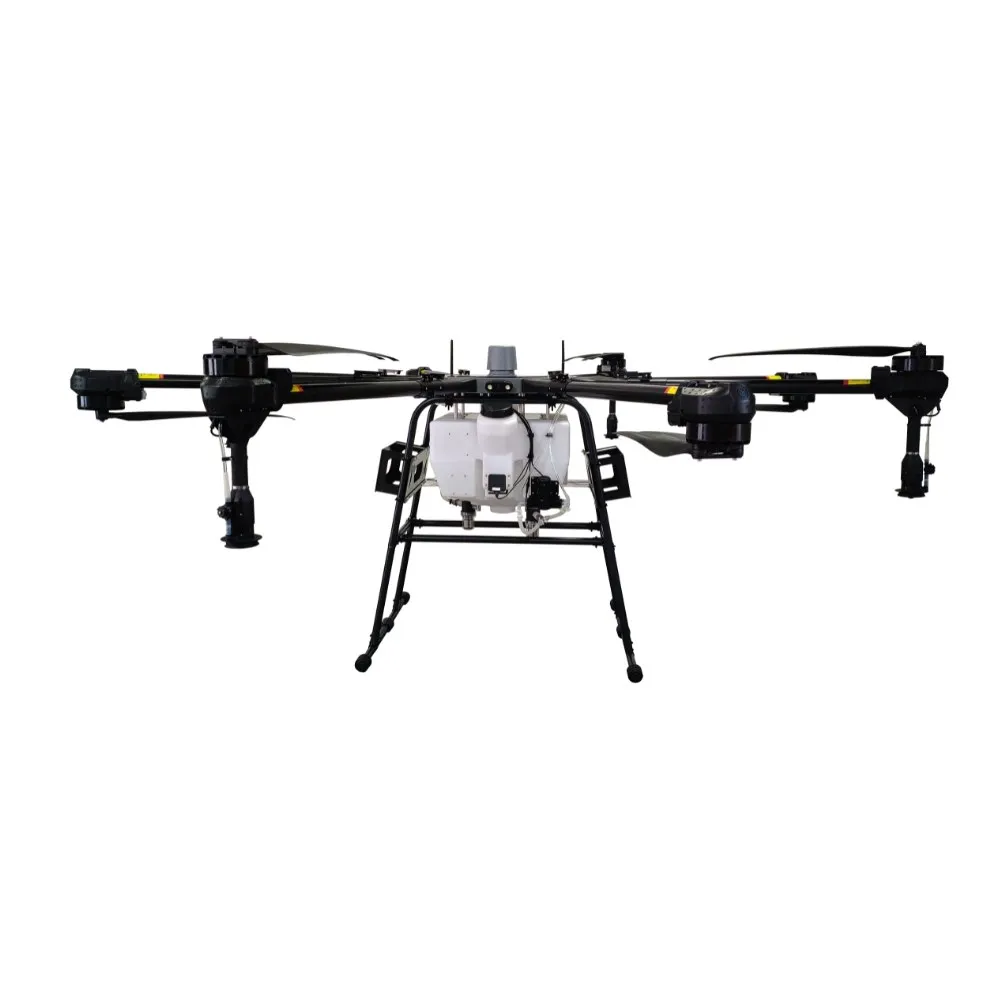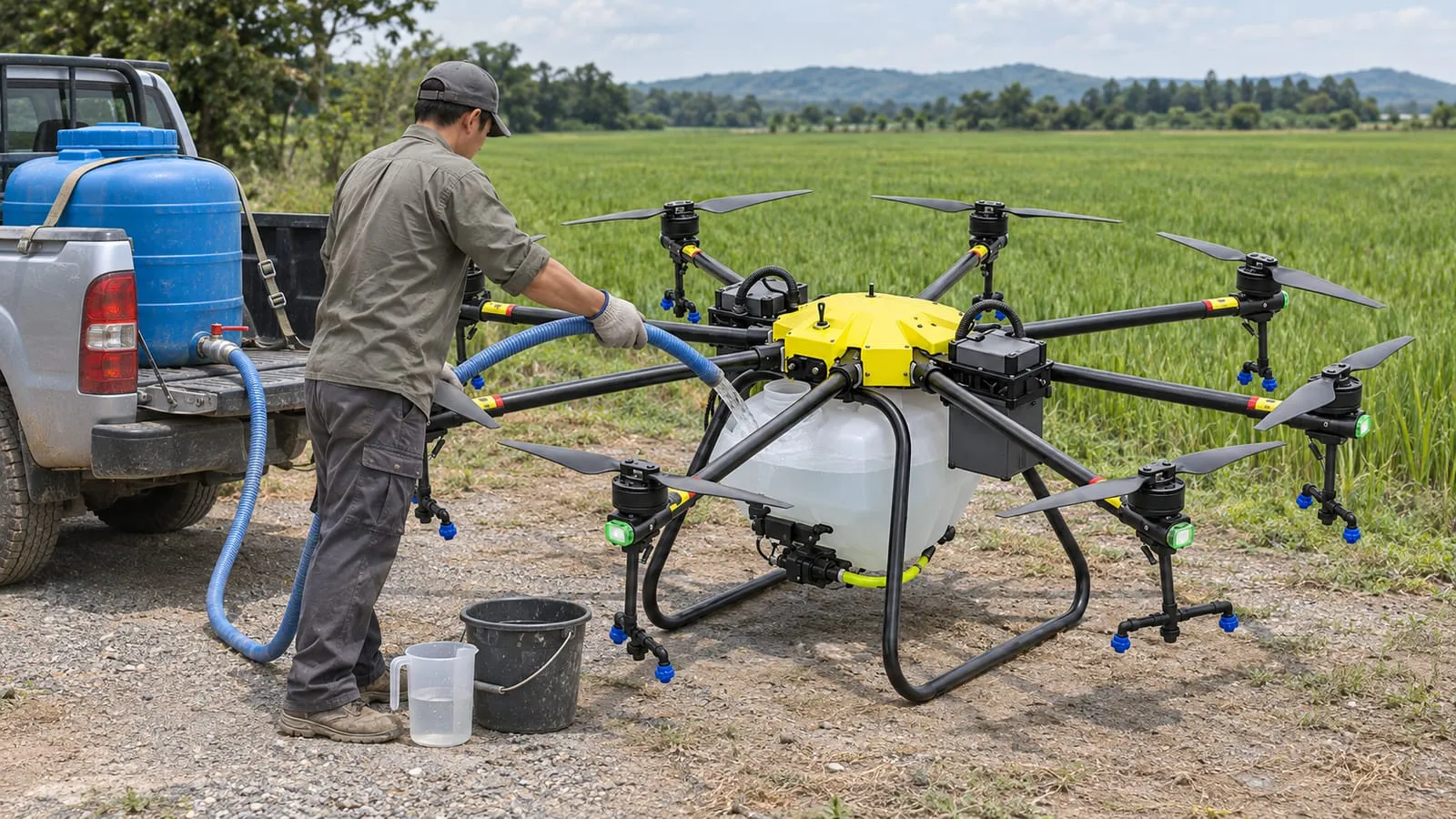
Short answer: Pick the tank size from the spray rate and the size of your usual fields. Divide the tank volume by the rate in litres per hectare to get the area per fill. Small plots, orchards and slopes suit 10-30 L drones. Mixed farms and contractors suit 50-62 L. Large open fields and service fleets suit 72-92 L. Always check the spray rate on the product label, and remember that battery changes can matter as much as tank size.
The basic calculation
Area per tank (ha) = tank volume (L) / spray rate (L/ha).
Drone spraying uses low volumes. A University of Kentucky guide gives a common range of two to five US gallons per acre, which is about 19-47 L/ha. Many jobs use less or more depending on the product, so the label decides.
Example (not a promise): at 15 L/ha, a 30 L tank covers 2 ha. A 52 L tank covers about 3.5 ha. A 72 L tank covers 4.8 ha. At 30 L/ha, divide each result by two.
Tank size comparison
The table uses our work-rate formula: hectares per hour = effective swath x 1.08 (6 m/s at 50 % field efficiency). Refills per hour = hectares per hour / hectares per tank. The values are estimates at 15 L/ha, and they do not include battery changes.
| Model | Tank | Effective swath | Estimated ha/h | ha per tank | Refills per hour |
|---|---|---|---|---|---|
| F10 | 10 L | 5 m | 5.4 | 0.7 | 8.1 |
| F30 | 30 L | 5 m | 5.4 | 2.0 | 2.7 |
| F50 / F62 | 50 / 62 L | 12 m | 13.0 | 3.3 / 4.1 | 3.9 / 3.1 |
| F52 | 52 L | 10 m | 10.8 | 3.5 | 3.1 |
| F72 | 72 L | 12 m | 13.0 | 4.8 | 2.7 |
| F92 | 92 L | 13 m | 14.0 | 6.1 | 2.3 |
The F10 shows the problem of a very small tank: it needs about eight refills for each hour of work. That is fine for a small plot, but slow on a large field.
What else decides the choice
Field size. A large tank is wasted on a 0.5 ha plot. On a 50 ha field, a small tank wastes time on refills and battery swaps.
Battery and charging. One flight uses one battery set, or two on some models. The bigger the drone, the larger the charging power you need on site. Check the product page for battery details, and plan the number of sets before you choose.
Transport. A folded large drone needs a pickup or trailer. A compact drone fits in a smaller vehicle and is easier to move between many small farms.
Terrain. For hills and orchards a lighter drone is easier to place and control. See our guide for orchards and slopes.
Crew. A big tank needs a fast refill: a transfer pump and a helper to mix. Without them, a large tank just waits.
Rules. Weight classes can change the licence, registration and insurance you need. Check your national rules before you buy a heavy model.
Choosing by business type
- Small farm or orchard owner. 10-30 L, one battery, low cost, small vehicle.
- Mixed farms and village services. 50-62 L (F52 or F62/F50). Good balance of size and ease.
- Large open fields, rice, wheat, corn. 72-92 L (F72 or F92). Fewer refills, higher daily output with enough batteries.
- Granules as well as liquid. Check the spreading box size, not only the tank. See granular spreading.
Example: choosing for 2,000 ha of rice
A service plans 2,000 ha in a 30-day peak with one spray round at 15 L/ha, so it needs 30,000 L. Over 30 days, that is 1,000 L a day, or about 67 ha a day. An F72 at an estimated 13 ha/h would need roughly 5 hours of spraying a day on paper, and the fleet needs a margin for rain and repairs, so two drones are safer. The same job with F30 drones at 5.4 ha/h would need more than 12 hours per day per drone, so you would need several. This is a planning example, not a performance claim.
Next step
Use the work-rate calculator on the field crops page with your own field size, then ask for a quotation for the models that fit. If you plan to sell drones to others, our dealer programme has the details.