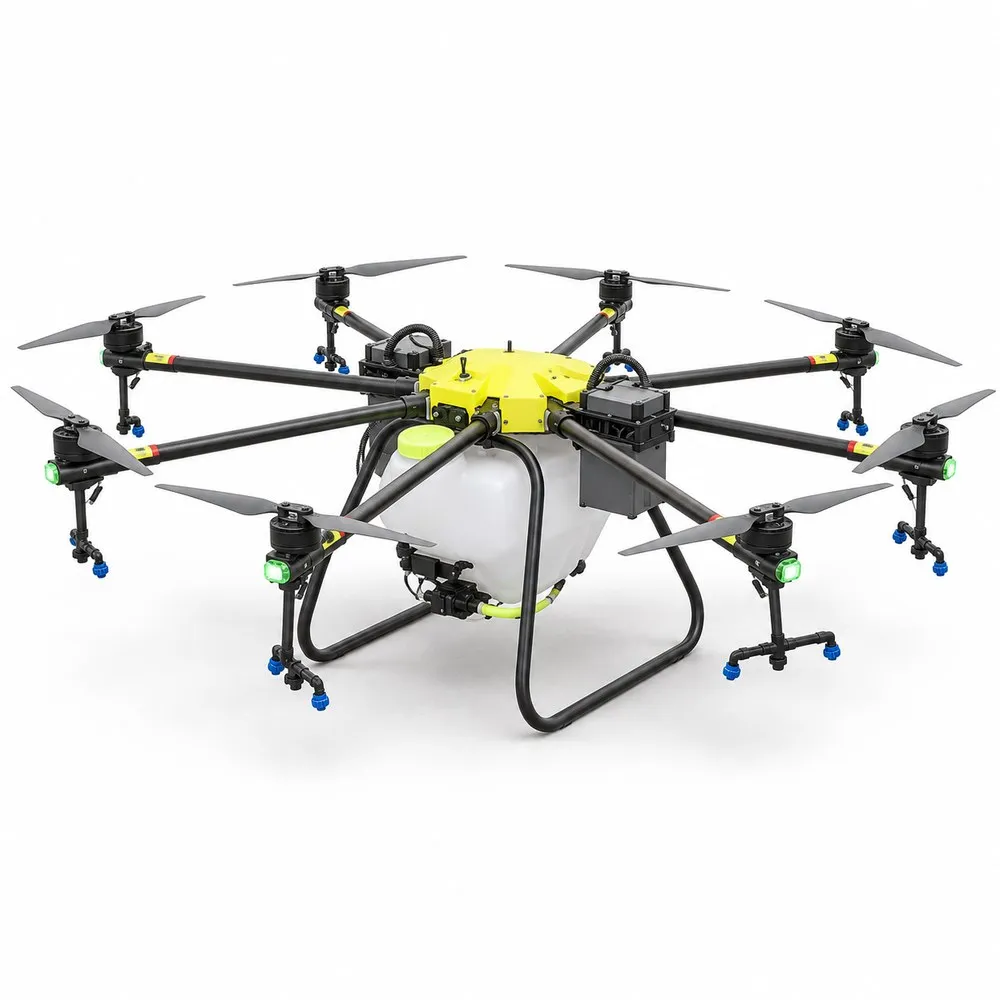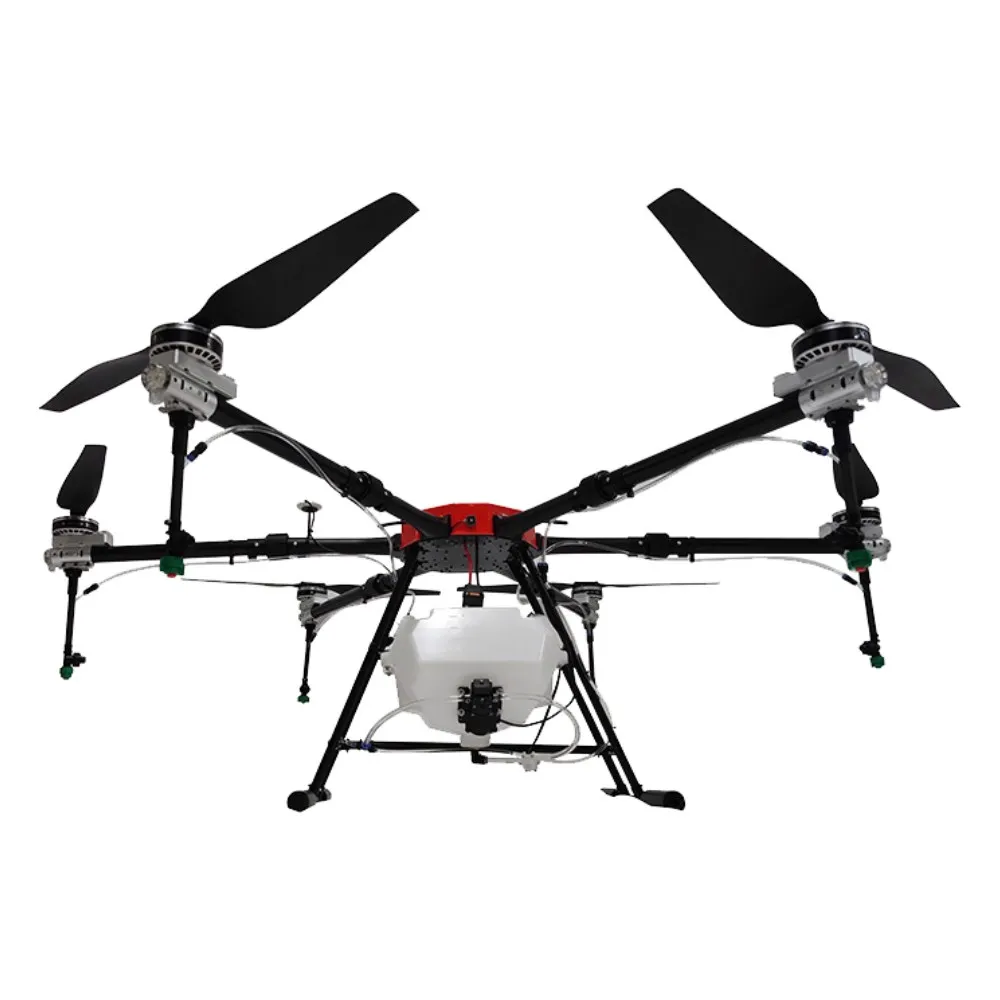
Short answer: Maintain a spray drone on four levels. After each job, rinse the spray line, clean nozzles and filters, and check propellers and batteries. Each week, check screws, arms, connectors and the pump. Before the season, do a full test and calibration. At the end of the season, clean, store the batteries correctly and order parts. Follow your maker’s manual first; this is a general schedule.
Why a schedule pays
A spray drone works in dust, wind, heat and chemical. A blocked nozzle gives stripes in the field. A loose propeller is a crash risk. A battery stored badly loses capacity. Each of these costs more than the ten minutes of checking that would have prevented it.
Purdue Extension notes that downwash can lift dust and debris that block nozzles or disturb motors and electronics. That is a reason to keep the landing area clean and the checks regular. Our field setup guide covers the landing strip and water.
The four-level schedule
| Level | When | What to do | Time |
|---|---|---|---|
| 1. After each job | Same day | Empty tank; rinse tank and lines; clean nozzles and filters; wipe body; check propellers; look at batteries; write the log | 15–30 min |
| 2. Weekly | In heavy use | Check screws, arm locks and connectors; test the pump and flow; check cables and seals; update firmware only as the maker advises; charge-cycle count | 30–60 min |
| 3. Before the season | Before first job | Full inspection; replace worn parts; flow calibration and swath test; test flight with water; check app, radar and sensors; check batteries one by one | 2–4 hours |
| 4. End of season | After last job | Deep clean; drain all lines; store batteries as the maker says; store drone dry and covered; list parts to order | 2–3 hours |
Level 1: after each job
- Empty the tank and dispose of rinse water as local rules require. Do not pour it into water sources.
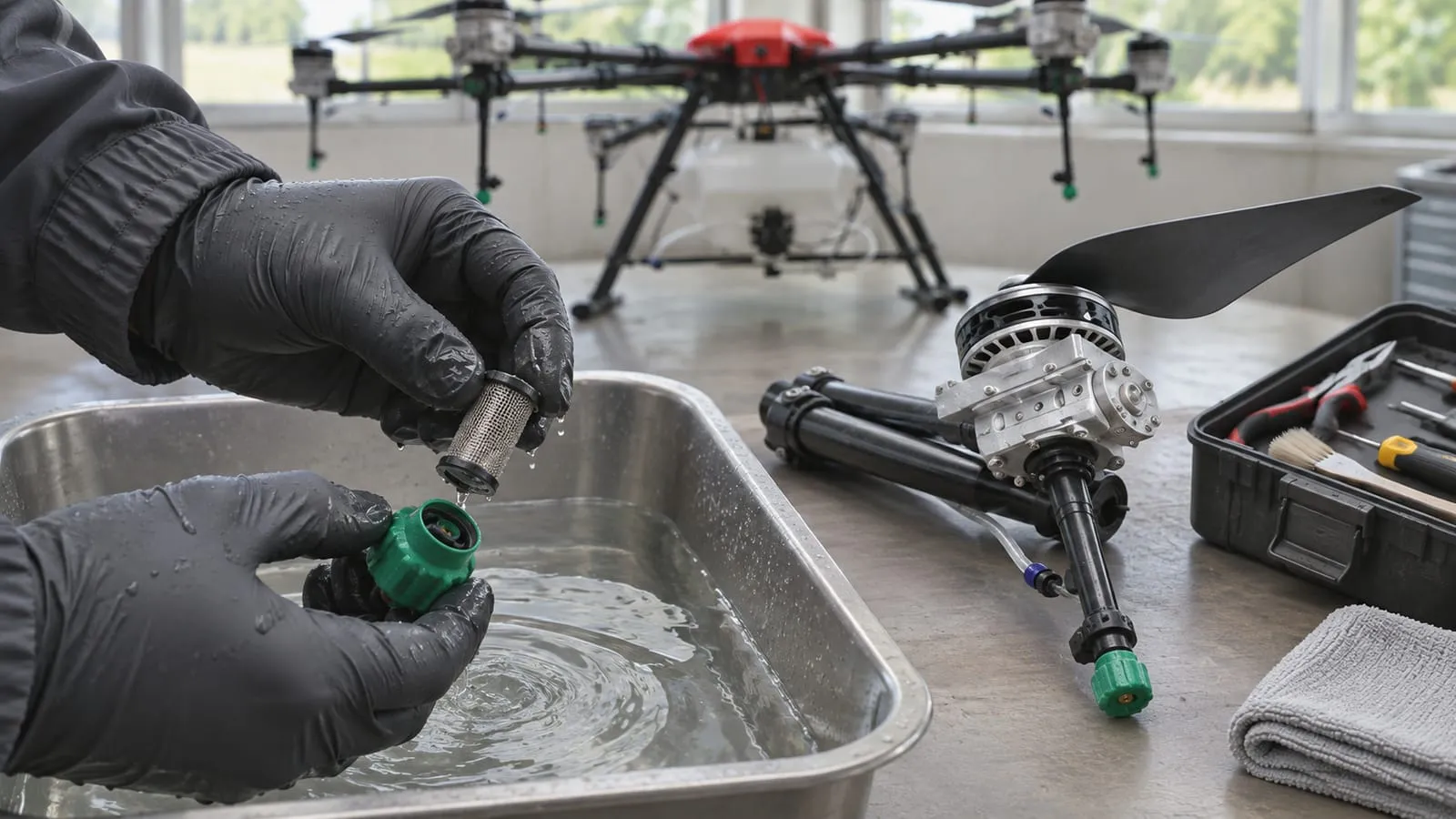
- Rinse tank and lines with clean water. Run the pump for a short time so water reaches the nozzles.
- Clean nozzles and filters. Take out the filter screens, brush gently under water, refit. Never blow into a nozzle with your mouth.
- Wipe the body. Chemical left on the body can harm paint, seals and electronics.
- Look at propellers, arms and landing gear. Cracks, chips and loose clamps mean replace now.
- Look at batteries. Swelling, heat damage or marks mean take them out of use. Let them cool before charging.
- Write the log. Date, field, product, hours, battery set numbers, anything unusual.
Level 2: weekly
- Tighten screws as the manual says. Use the right tool; do not over-tighten plastic parts.
- Check arm locks and folding joints for play.
- Check cables, connectors and strain relief for rubbing.
- Run the pump and see if the flow looks even across the nozzles.
- Check the spray line for leaks; replace damaged hoses.
- Check each battery for cycle count and voltage difference between cells as shown in the app or charger.
Level 3: before the season
This is the time for a full test. Replace what is worn, not what looks worn. Run a flow calibration and a swath test, as in our calibration guide. Test the drone with water in an open place and watch the spray pattern. Check that you hold the first-season spare parts and enough battery sets (see the battery guide).
Level 4: end-of-season storage
Clean the drone fully, including the tank, pump and filter housings. Flush with clean water and let everything dry. Store the drone dry, covered, away from chemical stores and sun. For batteries, follow the maker’s guide for storage charge level and temperature. IATA’s lithium battery pages explain why damaged batteries need special handling when you ship them (see our battery shipping guide). Write a list of parts to order while the season is fresh in your mind.
Example: a first-season service plan for two drones (illustration)
A team with two drones works 5 days a week for 10 weeks. Level 1 takes 20 minutes per drone per day: about 3.3 hours per week for the pair. Level 2 takes 45 minutes per drone: 1.5 hours. In total about 5 hours per week, or about 50 hours in the season, plus 6 hours for level 3 and 5 hours for level 4. That is roughly 60 hours of maintenance. Treat this as a planning example. Add it to your cost model and your income calculation.
What to record
Keep one page per drone and one for each battery set. Record the date, flying hours, flights, cycles, parts changed and any crash or hard landing. A clear log shows when a part is near its life and helps in a warranty claim; see warranty and after-sales.
Next step
Models differ in pump, nozzles and batteries. Ask us for the maintenance notes of the model you choose, for example the F52 or the F10-30 series, and a first-season parts list by quotation. See the support page.