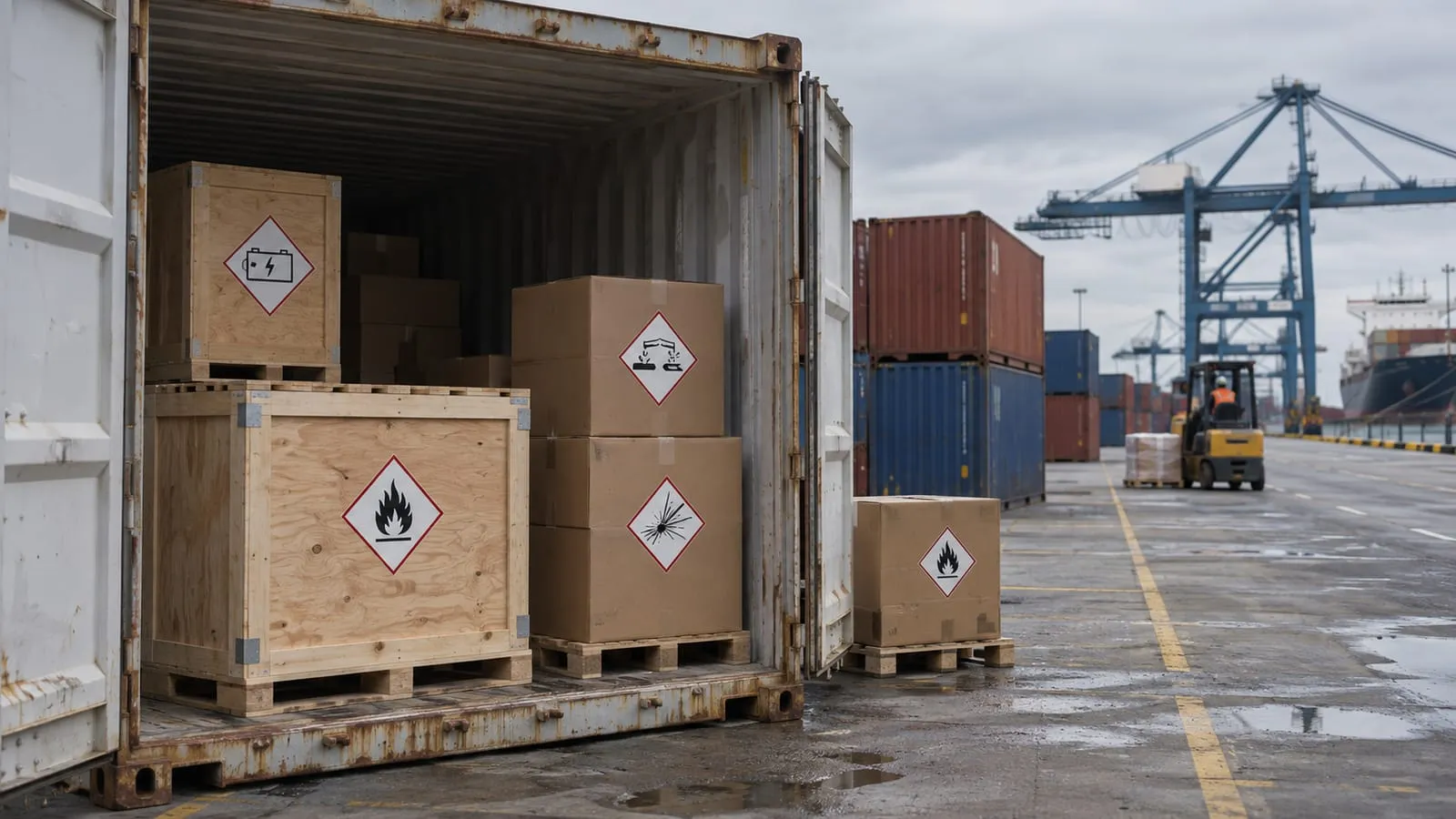
Short answer: Large spray drone batteries ship as lithium-ion dangerous goods (class 9). Batteries sent alone use UN3480; batteries packed with or inside equipment use UN3481. Each battery type needs a UN 38.3 test summary. For air cargo, lithium-ion batteries shipped alone must be at 30 percent state of charge or less under US rules, and cargo-only aircraft are used. Sea freight has its own rules. Always confirm with your carrier, forwarder and customs agent. This is general guidance.
Why this matters to an importer
Dealers and service teams often learn about battery shipping late: after the drone is built and the buyer is waiting. An airline refuses the boxes, a forwarder asks for a paper that does not exist, or the shipping line asks for more fees. Ask these questions at the quotation stage, together with price and lead time. Our import guide covers the wider process, and the battery guide explains sizing and care.
How big are these batteries?
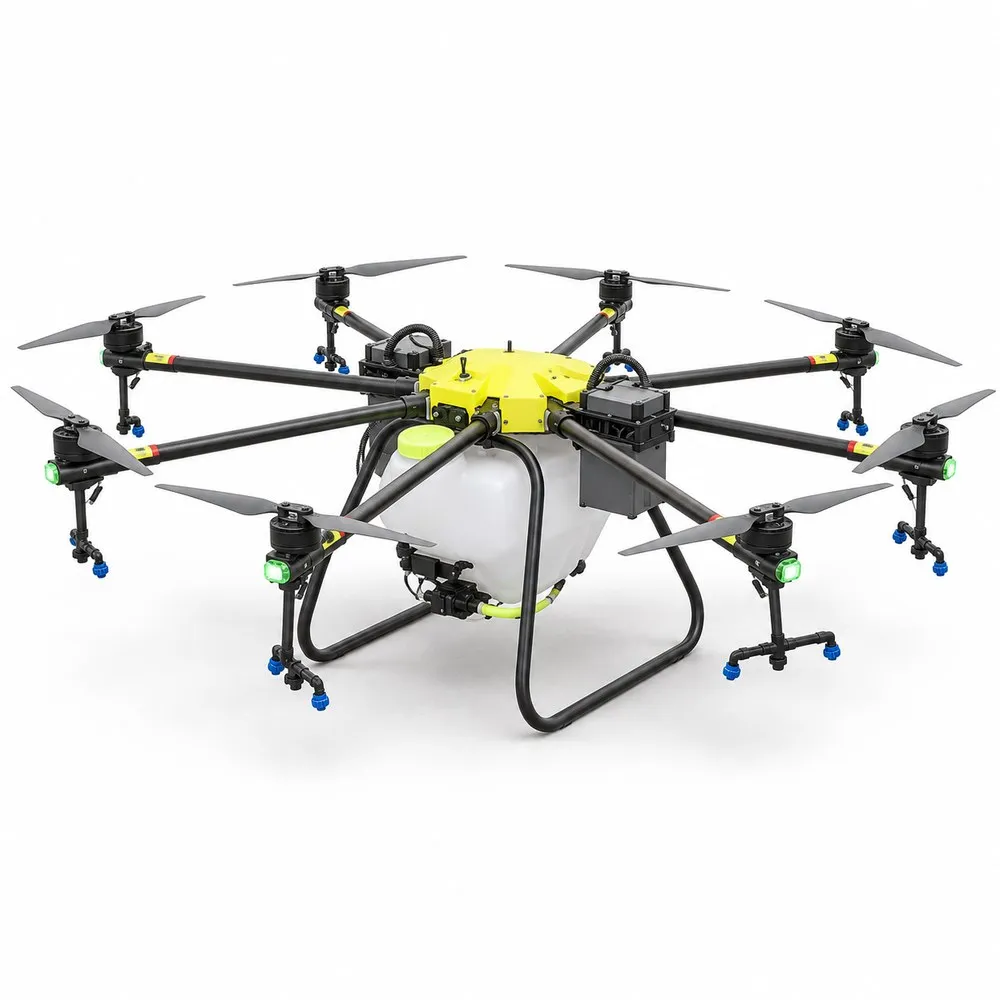
Battery energy is measured in watt-hours. A rough estimate is cells in series × 3.7 V × capacity in Ah. For the F52, the product page lists two 14S 28000 mAh batteries per flight. That is about 14 × 3.7 × 28 = 1,450 Wh per battery. For the F72, a 14S 42000 mAh battery is about 14 × 3.7 × 42 = 2,176 Wh. This is an estimate for planning, using a nominal 3.7 V per cell. Your documents use the exact figure on the battery label. Small consumer rules of 100 Wh are far below these numbers, so do not use them.
The main rules in plain words
| Item | What it means | Who gives it to you |
|---|---|---|
| UN3480 | Lithium-ion batteries shipped on their own | Forwarder confirms |
| UN3481 | Lithium-ion batteries packed with or contained in equipment | Forwarder confirms |
| UN 38.3 test summary | Proof that the battery type passed the UN transport tests | Battery or drone maker |
| Packing | Strong outer packing, battery protected from short circuit and movement, as the packing instruction says | Shipper (supplier) |
| Marks and labels | UN number, class 9 lithium battery label, handling label as required | Shipper (supplier) |
| Shipper's declaration | Dangerous goods declaration signed by a trained shipper | Shipper, with the forwarder |
| State of charge | 30 percent or less for lithium-ion batteries shipped alone by air under US and IATA rules | Supplier, checked by the carrier |
The FAA shipping guide and the IATA lithium battery pages describe these points. The IATA guidance document says shippers must have the UN 38.3 test summary available. IATA also warns that its document is for guidance only, and that you must use the current rules.
Air or sea?
| Factor | Air cargo | Sea freight |
|---|---|---|
| Speed | Days | Weeks |
| Cost for heavy loads | High per kilo | Usually lower per kilo for a full pallet or container |
| Battery rules | Cargo-only aircraft for batteries alone; 30 percent charge rule; strict acceptance | Dangerous goods booking and declaration; some lines and ports restrict |
| Best for | Samples, urgent parts, a few batteries | Full orders and stock |
| Risk | Refusal at the airport if papers are wrong | Long wait if the booking is refused |
A common pattern: send the sample drone and a few batteries by air express, and the stock order with batteries by sea. Whichever you choose, ask the forwarder to approve the papers before the supplier ships.
What your forwarder will ask for
- The battery model, voltage, capacity and watt-hours.
- The UN 38.3 test summary for that model.
- The net weight per battery and per box.
- The packing details and photos of the marked boxes.
- Whether the batteries go alone or inside the drone.
- The state of charge at shipping.
- The destination country and import rules for batteries.
Ask the supplier to prepare these before the order is final.
Example: one sample order versus one stock order (illustration)
A dealer wants one F52 sample with three battery sets for testing. This goes by air express, with the supplier shipping batteries at the right charge and with a test summary. A month later the dealer orders 6 drones and 24 battery sets. The forwarder suggests sea freight in a container, with the batteries as a dangerous goods booking. The dealer asks for the shipping line’s approval and the dangerous goods papers one week before the supplier ships. This is a planning example; the real route, price and time come from your forwarder and our quotation.
Customs and delivery terms
Delivery terms (Incoterms) say who pays freight, insurance and import steps. Make sure your contract says who arranges the dangerous goods booking. Tell your customs agent about the batteries early, since some countries ask for extra documents. See also the distributor agreement checklist and the supplier checklist.
Next step
Tell us your forwarder and country, and we will confirm which battery documents we can provide for your model, such as the F52. See also the support page or contact us for a quotation.