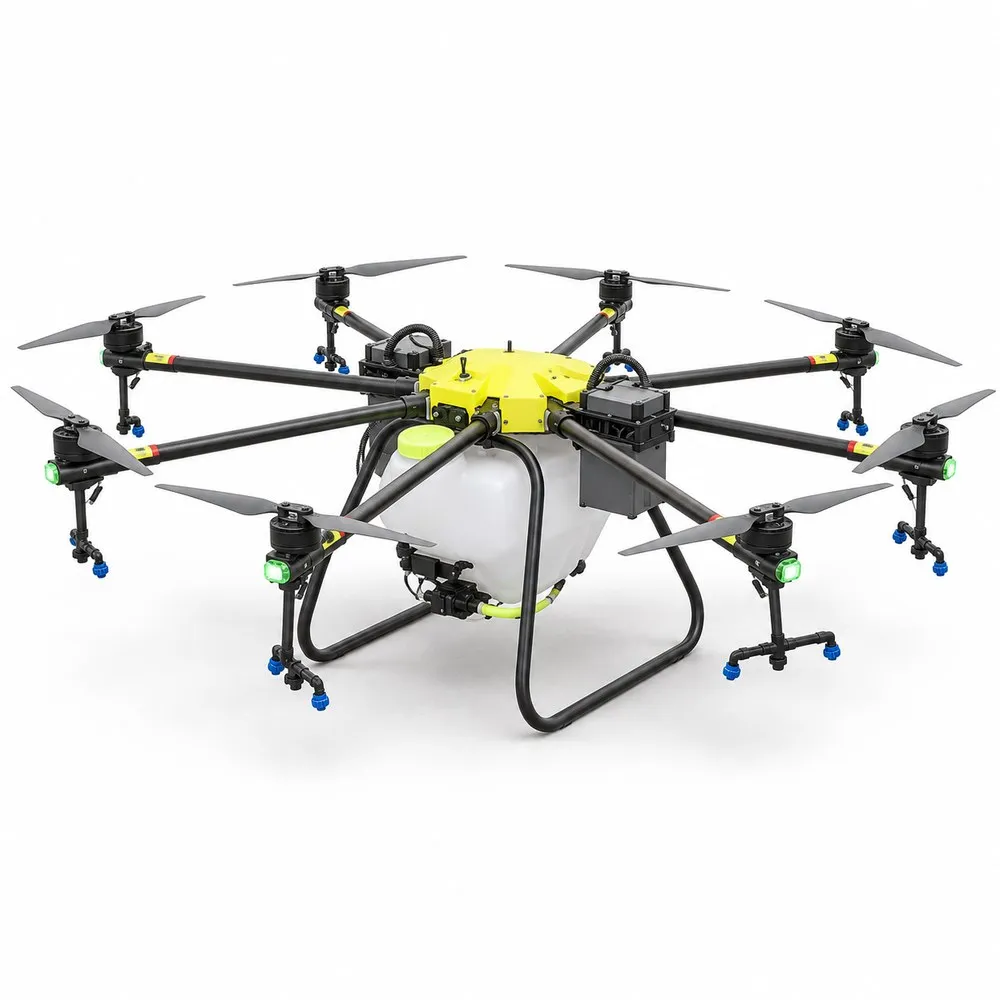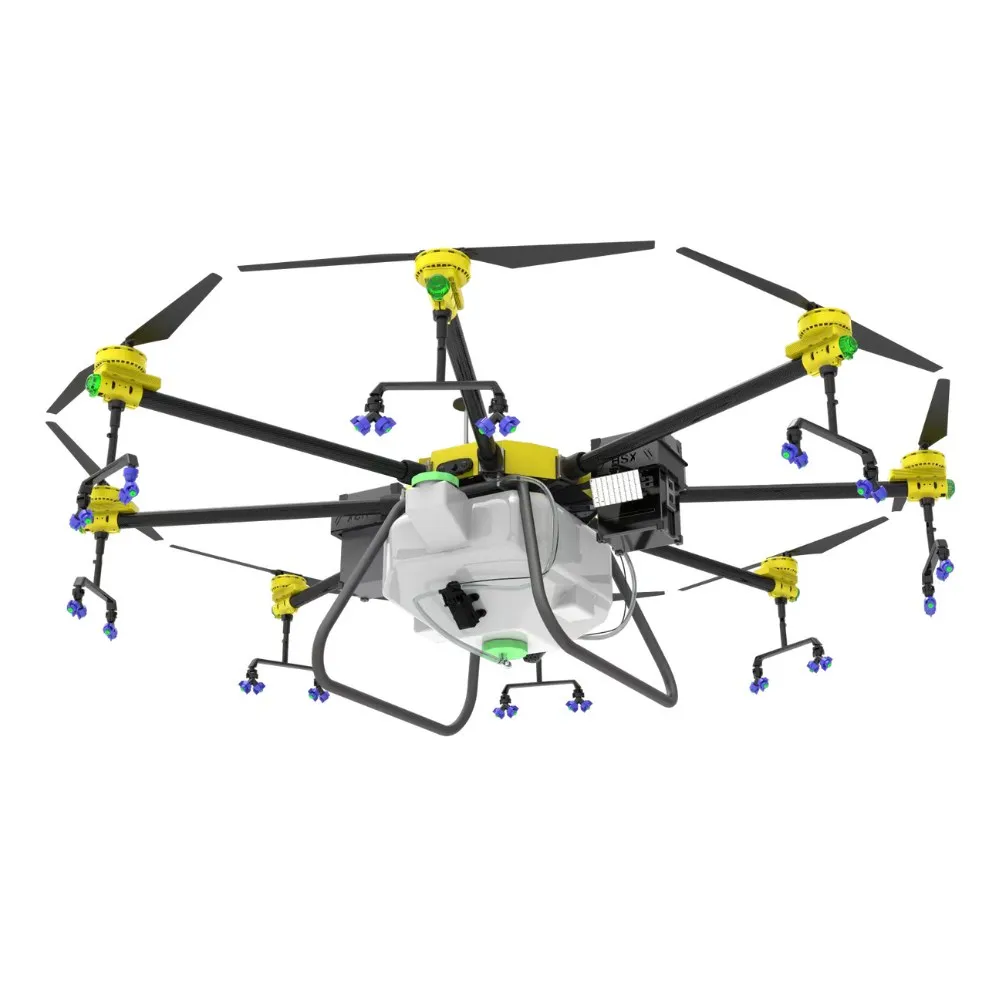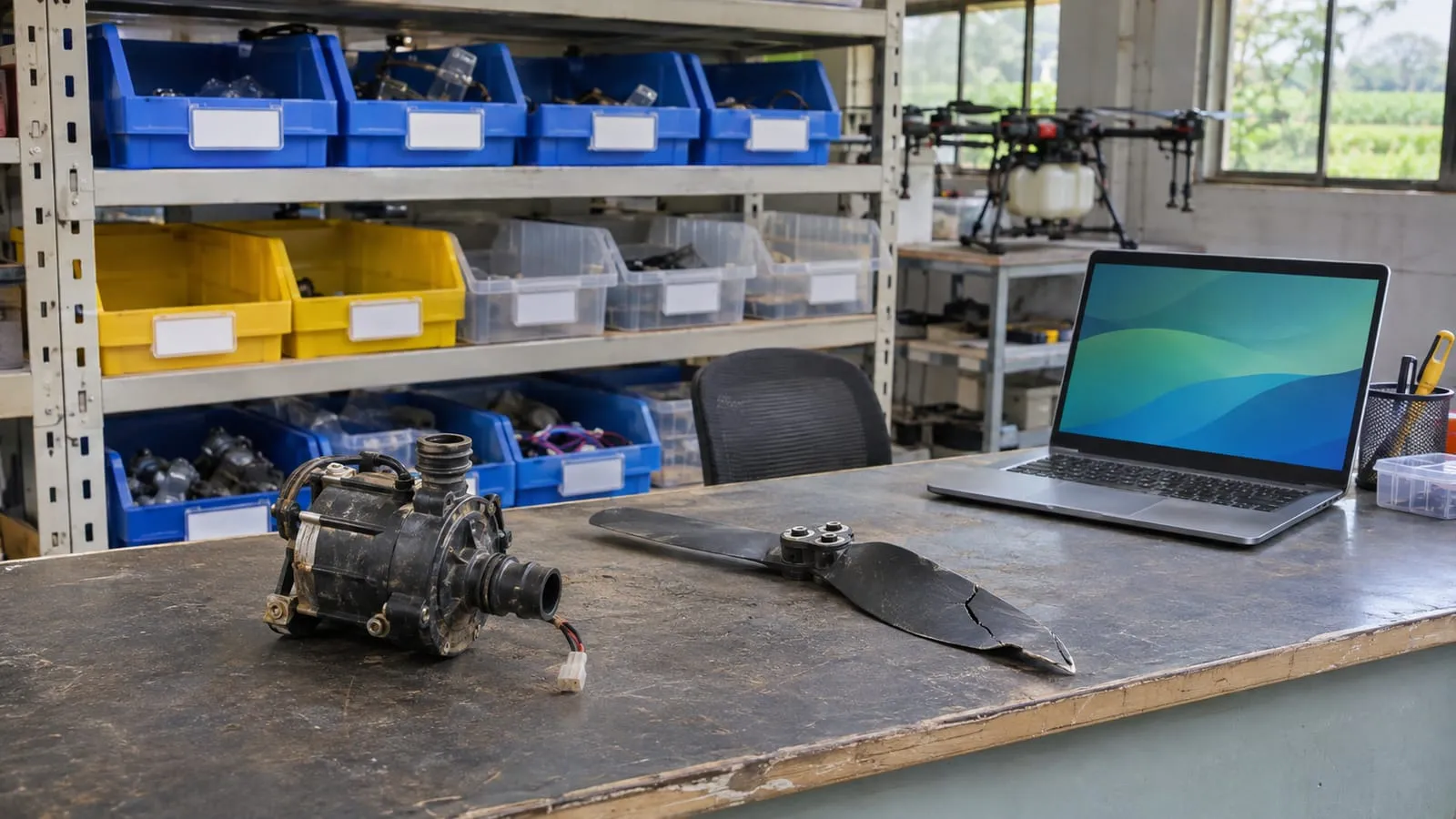
Short answer: Ask a drone supplier twelve questions before you buy: warranty period, what is excluded, wear parts, battery cover, spray system cover, response time, remote diagnosis, spare stock, freight, repair route, training and firmware policy. A public dealer policy in the US gives 12 months on aircraft electronics, 3 months on spraying parts, and battery cover by months or cycles. Our product pages state 12 months on the drone and 3 months on accessories; claim details are agreed in the quotation.
Why dealers and service teams should care
For a spray service team, a drone that is down for three weeks in the spray window means lost income and unhappy customers. For a dealer, every slow repair becomes a bad review of your name. The Purdue guide on buying a drone points to training, service and support as part of the real cost of ownership, not extras.
What public policies look like
Public policies show a common pattern. One US dealer page lists 12 months for the frame, motors, speed controllers, radar, controller and charger, but 3 months for spray and spreader parts such as pumps and flow meters. Its flight batteries are covered for a set number of months or charge cycles, whichever comes first. It also says incidents outside the warranty period are not covered. Other suppliers use similar tiers. We cite one page so you can see the shape of a policy; yours may differ.
The lesson: the headline “12 months” often hides shorter cover on the parts that fail most often. Ask for the table.
The 12 questions
| # | Question | What a good answer looks like |
|---|---|---|
| 1 | How long is the warranty on the aircraft, and when does it start (shipment, delivery or first flight)? | A date rule in writing |
| 2 | Which parts are wear parts and how long are they covered? | A list with months or hours |
| 3 | How are batteries covered (months, cycles, capacity limit)? | A clear limit and a test method |
| 4 | Is the spray system covered, and for how long? | Pump, nozzles, hoses, flow meter named one by one |
| 5 | What is excluded (crash, water, wrong use, no maintenance)? | A short, readable list |
| 6 | How fast will you answer a claim? | A number of hours or working days |
| 7 | Can you diagnose by video call and logs? | Yes, with a named contact and language |
| 8 | Do you hold spare parts stock, and where? | Factory stock and a plan for dealer stock |
| 9 | Who pays freight, in each direction, in the warranty period? | A rule written in the agreement |
| 10 | Where is the repair done, and how long does it take? | A route and a time estimate |
| 11 | What training is included and in which language? | Dates, number of people, language |
| 12 | What is your firmware and software update policy, and can it be locked or remotely disabled? | Clear statements; no hidden locks |
How to compare two offers (example)
Imagine two quotes for the same class of drone. Supplier A is cheaper but gives 12 months on the aircraft only, a 3 month limit on spray parts, no stock for dealers, and freight paid by you. Supplier B costs more but includes a parts pack, free replacement parts during the warranty and a reply in 48 hours. If one repair costs you two weeks of lost work in the season, the difference in price can disappear fast. This is an example to show the method. Numbers are yours to fill in.
A simple way: for each offer, write the price, then add the cost of the first-season parts list, the freight for one warranty repair, and the value of one week of lost work. Compare the totals.
What dealers should ask for
- A parts pack with the first order, sized to the number of drones (see the spare parts list).
- A named contact and a support language.
- Training for your own technicians, so that simple repairs are done locally.
- Terms written into the distributor agreement.
Keep your side of the warranty
Warranties usually exclude damage from lack of care. Follow the maintenance schedule, keep a log, store batteries as the maker says and keep proof of purchase. When you claim, send photos, flight logs and a clear description.
Check the supplier too
Warranty is only as good as the company that gives it. Use the supplier checklist before you pay and ask for references. The U.S. trade agency also recommends checking that foreign partners are reputable.
Next step
Ask us for the full warranty text for the model you want, such as the F52 or the F72, and a parts list for the first season. See the support page or contact us.