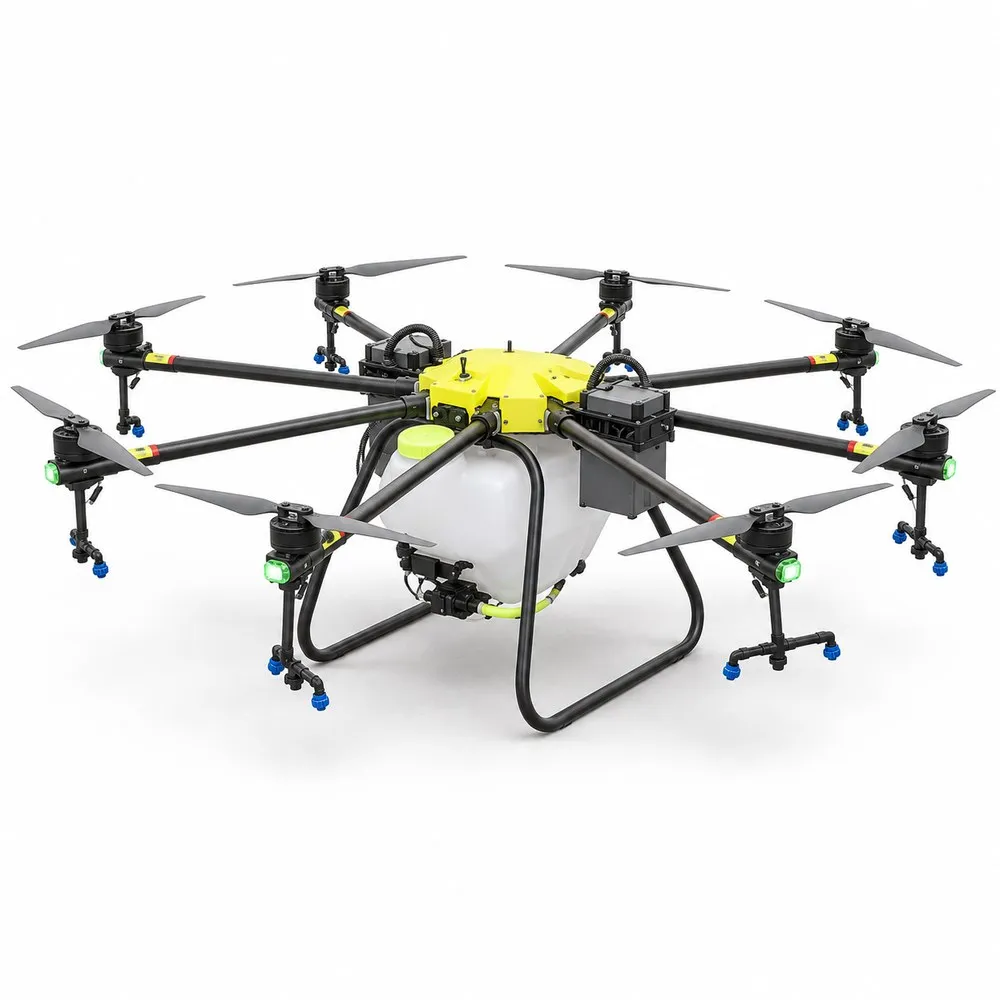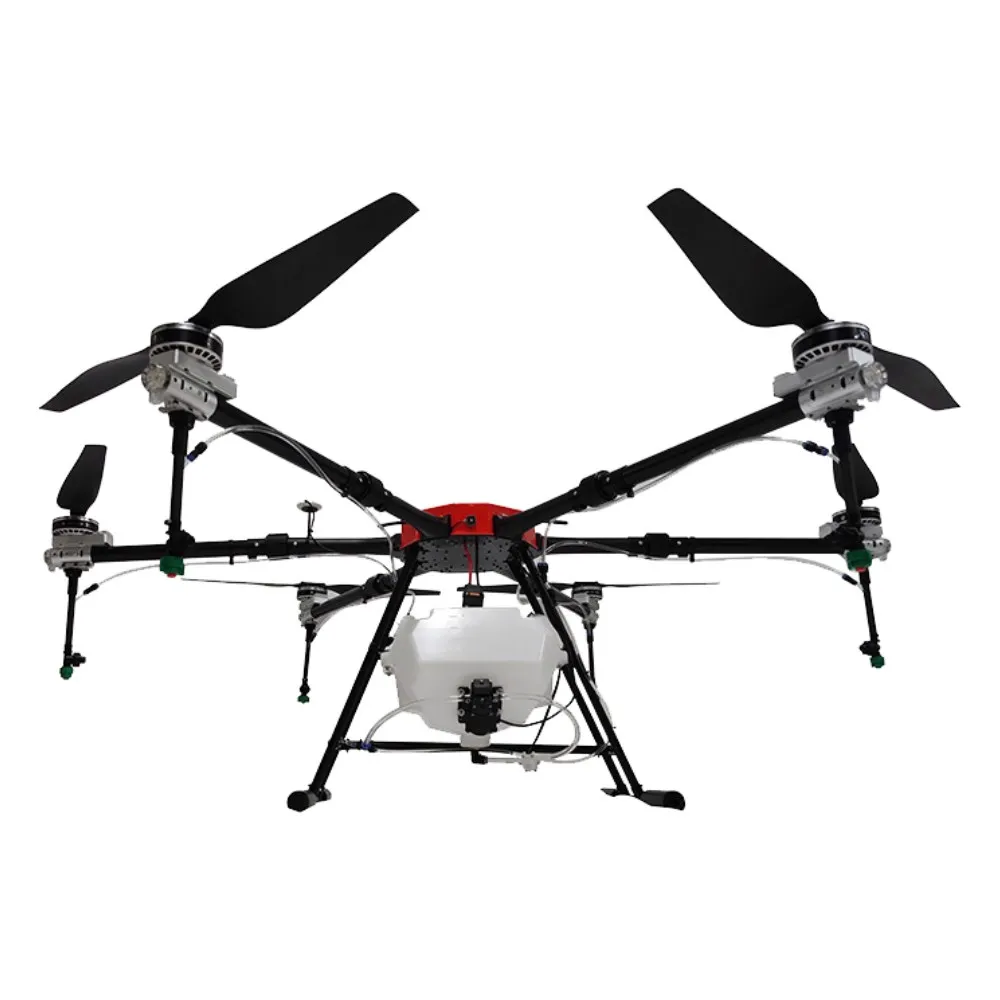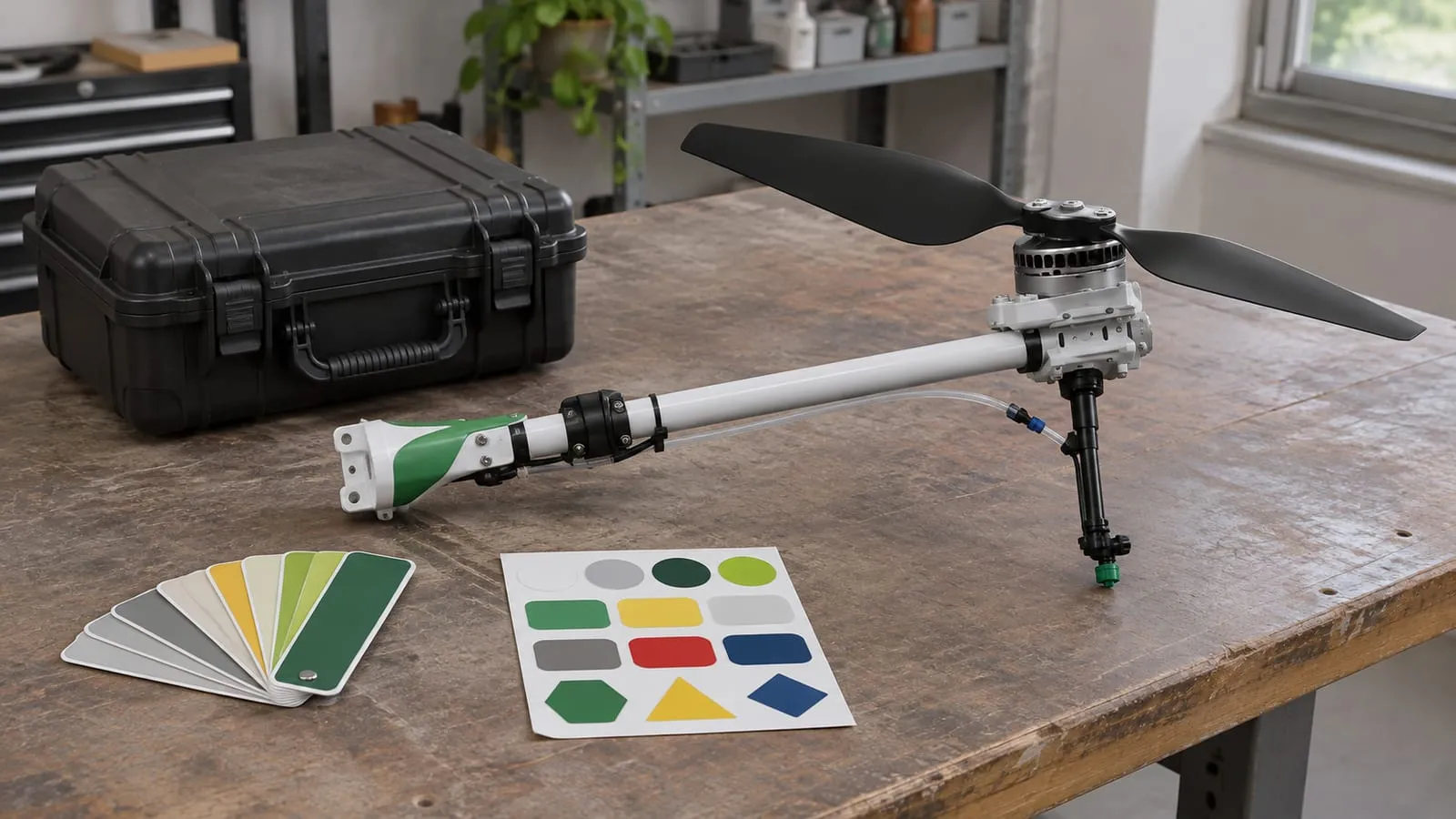
Short answer: A private label agricultural drone is a factory model that you sell under your own brand. You can usually change colour, logo, packaging, manuals and app language. You cannot usually change the core flight system without an engineering project. You should plan trademark, paperwork and after-sales before the first order, and you should not present yourself as the manufacturer. See our OEM / ODM page for what we can discuss.
What private label means in practice
Many brands in the spray drone market began by selling a model made in a factory with their own name on it. This is a normal way to enter a market if you have customers, a sales team and a service plan, but no wish to build a factory.
Words differ between companies. In plain language:
| Term | Who designs | Who builds | What you do |
|---|---|---|---|
| Private label | Factory | Factory | Pick a model, add your brand, sell and support |
| ODM | Factory | Factory | Choose a design, ask for set changes, add your brand |
| OEM | You (or shared) | Factory | Give a specification; factory builds it |
Write the real scope in the quotation. “OEM” on a price list may only mean a new sticker.
What you can usually change, and what you cannot
| Item | Usually possible | Needs an engineering review |
|---|---|---|
| Body colour, logo, stickers | Yes | — |
| Packaging, case, manuals | Yes | — |
| App language and start screen | Often | New languages and new features |
| Battery label and charger label | Yes, with the right safety markings | New battery design |
| Tank, pump, nozzle options | Choose from the list | New parts |
| Flight controller, motors, frame | No, in most light projects | Yes, and usually a larger volume |
Our models have different options. For example, the F52 and the F10-30 series have different tank and nozzle choices. Ask us which items can be changed on the model you want.
The usual steps
- Define the market. Country, crops, customers and price band. Not “all farmers”.
- Choose a model and a sample. Order a sample first. Check build quality, pump, app and manuals.
- List the changes. Colour, logo, packaging, language. Ask for drawings or digital mock-ups.
- Agree the paperwork. Who holds test reports, who files documents, who is named as maker.
- Approve a pre-series unit. Check the branded sample against the list.
- Place the first order and plan service. Parts stock, training, warranty text.
Ask for a written timeline with dates. Time depends on scope, sample approval and the season. Do not accept “it depends” without a date for each step.
Who carries the responsibility
When your name is on the box, customers come to you. Authorities may also ask who put the product on the market. In the EU, for example, rules treat a company that sells a product under its own name as having manufacturer duties; check this in the European Commission guidance on CE marking. Other countries have their own rules. This is not legal advice; ask the local authority or an advisor.
Practical points:
- Ask the factory for its CE statement, test reports and battery transport test summary (see the battery shipping guide).
- Register your trademark in your market. WIPO explains the basics.
- Do not claim you manufacture the drone. Use clear words such as “designed for” or “distributed by”. Misleading claims about origin can cause legal trouble and lose customer trust.
Example: light branding or new hardware (illustration)
A dealer with 20 service-team customers wants its own spray drone. Option A is light branding on a mid-size model: new colour, logo, case and an app start screen. Option B is a new frame with different arms. Option A needs a sample, a few approvals and a first order. Option B needs design work, tooling, testing and a much larger volume to pay back. Most first-time brand owners choose A, learn what customers ask for in one season, and then decide about B. Numbers for your project come by quotation.
After-sales is part of the brand
Your brand is judged by the first pump failure. Plan a parts stock, a repair route and training. See the spare parts guide, the distributor agreement checklist and the supplier checklist.
Next step
Send us your market, crops, expected yearly units and the changes you want. We will say what is possible and quote the scope. Start on the OEM / ODM page or the contact page.