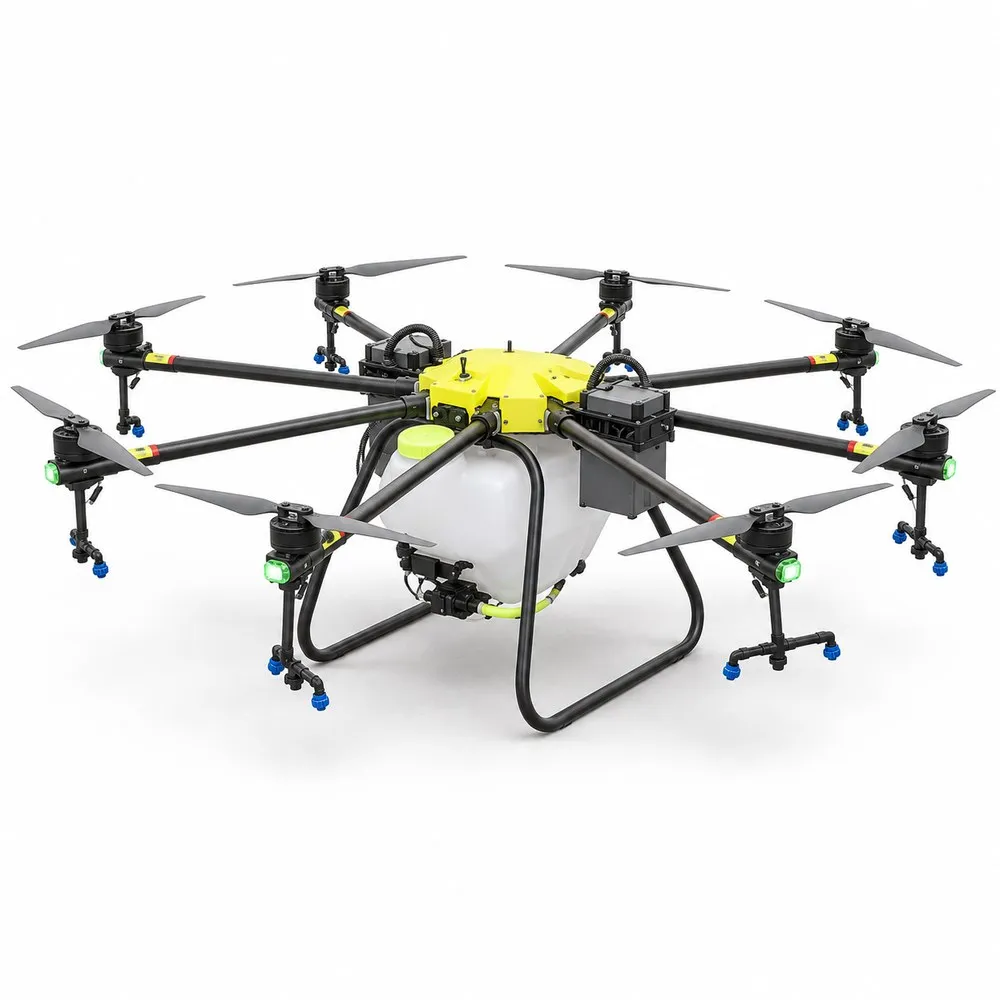
Short answer: Mix for a drone in this order: half to two thirds of the water, then each product one at a time, then the rest of the water. Do a jar test first if you mix more than one product. Spray soon after mixing, because drone tanks do not stir. Purdue Extension warns that drone mixes are much more concentrated than ground mixes, so products that were fine in a ground sprayer can gel, separate and block nozzles in a drone.
Why drone mixes are different
Purdue says drones apply about 2 to 3 gallons per acre, which is about 19 to 28 L/ha. Ground sprayers often use 10 to 20 gallons per acre, which is about 94 to 187 L/ha. The same amount of product goes into much less water. Drone tanks are small, have little or no agitation, and the pumps look more like spot-sprayer pumps than field-sprayer systems. Drone nozzles also have small holes, and many have no screen in the nozzle body. That is why clogging is the most common field problem.
Example (made-up product, not a label rate): A product label says 1.5 L per hectare. On a ground sprayer using 200 L/ha, the mix is 1.5 / 200 = 0.75 % product, or 7.5 mL per litre. On a drone using 20 L/ha, the mix is 1.5 / 20 = 7.5 %, or 75 mL per litre. That is ten times stronger. An F52 with a 52 L tank at 20 L/ha covers 2.6 ha per fill and needs 3.9 L of product per fill (52 / 20 x 1.5). Check every real number against your own label.
Mixing order
- Fill one half to two thirds of the water into the mixing tank.
- Add each product one by one, and let each one disperse before the next. Follow the label order if it gives one.
- Fill up with the remaining water.
- Never pour concentrates into each other first.
Jar test
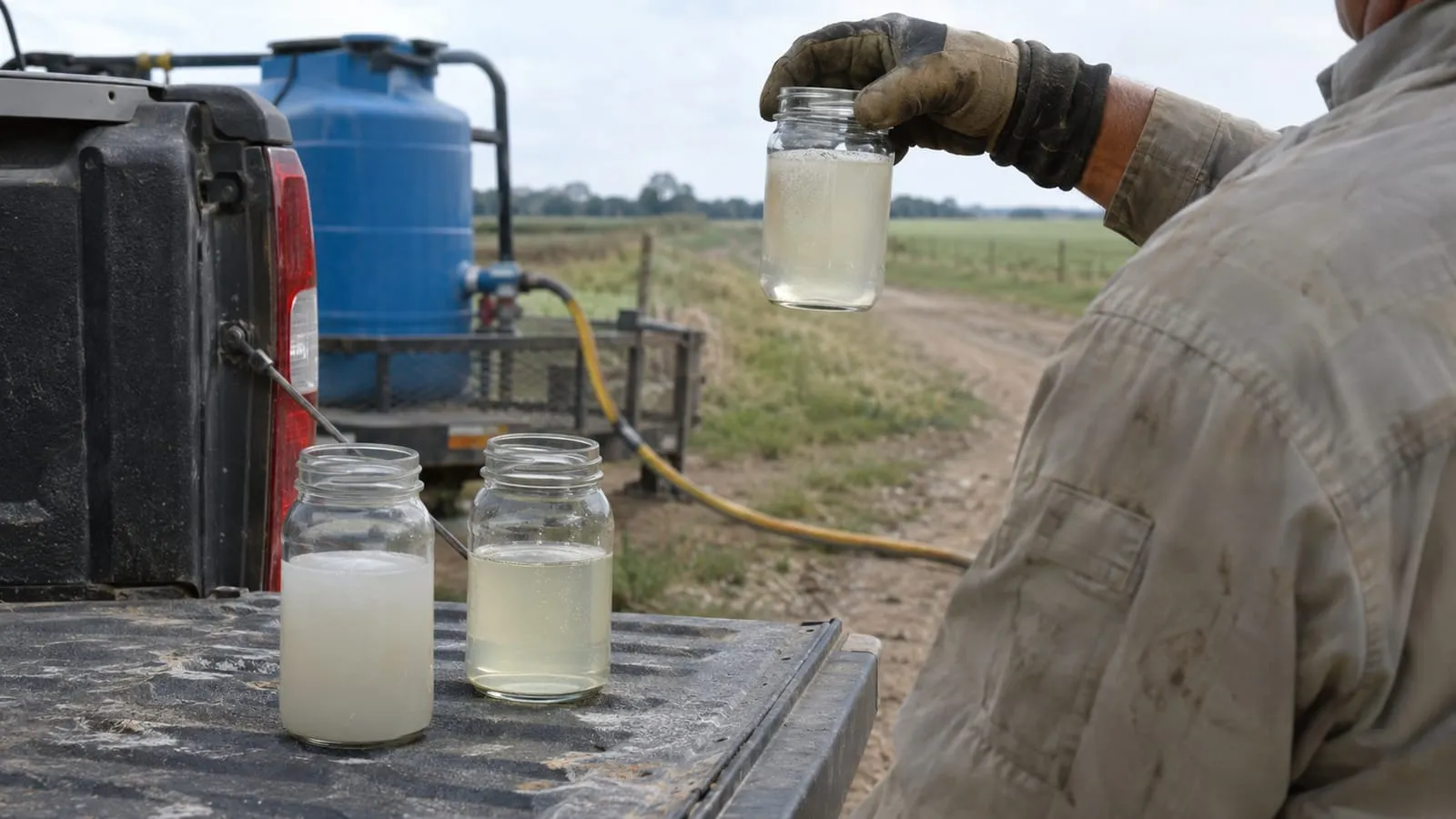
Use a clear 1 litre jar. Scale the ratio from your real tank mix. In the example above, you would add 75 mL of product to a litre of mix. Add things in the same order. Look for flakes, gel, layers or heat. Wait and look again. If anything separates, do not use that mix. Purdue Extension refers to its publication PPP-122 for the full method, and your local extension office may have one too.
Mixing places
| Method | Good | Bad | Use when |
|---|---|---|---|
| Mix in the drone tank | No extra equipment | No stirring, slow, more mistakes, more exposure | Very small jobs only |
| Premix in a separate tank, then fill the drone | Better mixing, faster refills, safer | You need a tank, a pump and hoses | Most paid work |
| Mixing trailer or truck with an enclosed transfer | Fast and cleaner handling | Highest cost | Service teams with large daily area |
Purdue says that if you mix in the drone tank, you may need to prepare a fresh mix every two to five acres. That means about every 0.8 to 2 ha. Premixing is better for that reason.
Adjuvants
An adjuvant is an additive that changes how the spray behaves. Purdue notes that adjuvants and other chemicals can change the physical properties of the spray solution, and with it the swath width, deposition and calibration. So after you add one, repeat the swath test. Use only what the product label allows. We do not recommend specific products. Ask your local adviser.
Keeping nozzles open
- Spray soon after mixing. Powders and slow-to-dissolve products settle when the tank is not stirred.
- Clean nozzles every day, especially after products with dry formulations. Use a soft brush. Never use a wire or a knife, and never blow into a nozzle.
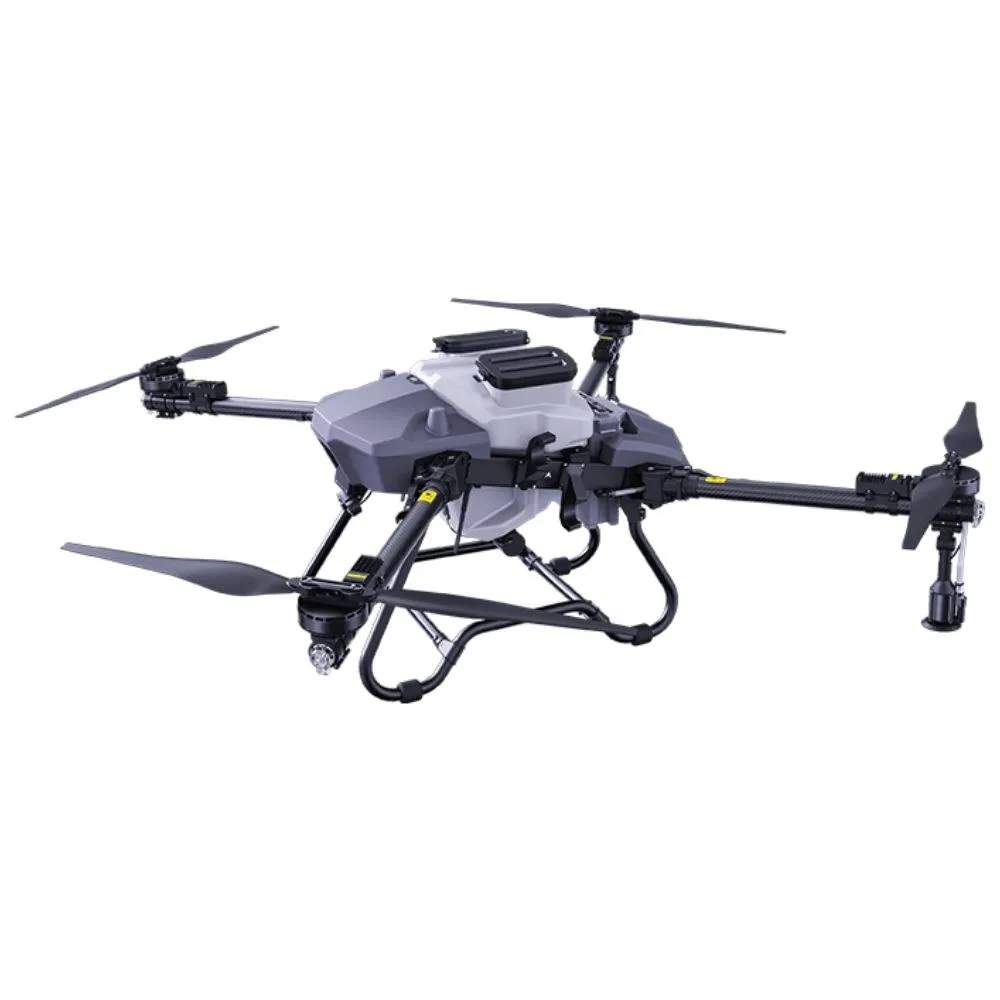
- Purdue says rotary atomisers are less prone to clogging than small-orifice hydraulic nozzles. Our F30C/F50C uses centrifugal nozzles. Read the nozzle guide.
- Rinse the system with clean water after each day. Bring enough clean water for rinsing and hand washing. Purdue gives a planning figure: 200 acres at 2 gallons per acre needs at least 400 gallons (about 1,500 L) of water, plus rinse water.
For service teams and dealers
Put a mixing tank, a jar test kit and spare filters on the first order list. See the trailer setup guide and the calibration guide. For terms, talk to us through the dealer page.