Short answer: Use pressure nozzles when you want high flow on large open fields, and centrifugal nozzles when you want to change droplet size for different products and crops. A North Dakota State University guide explains why droplet size matters: small droplets cover better and drift more, and the smallest 10 % of the spray volume should be at least 150 microns to reduce drift. Whatever the nozzle, the pesticide label sets the droplet size, volume and conditions you must follow.
How the two nozzles work
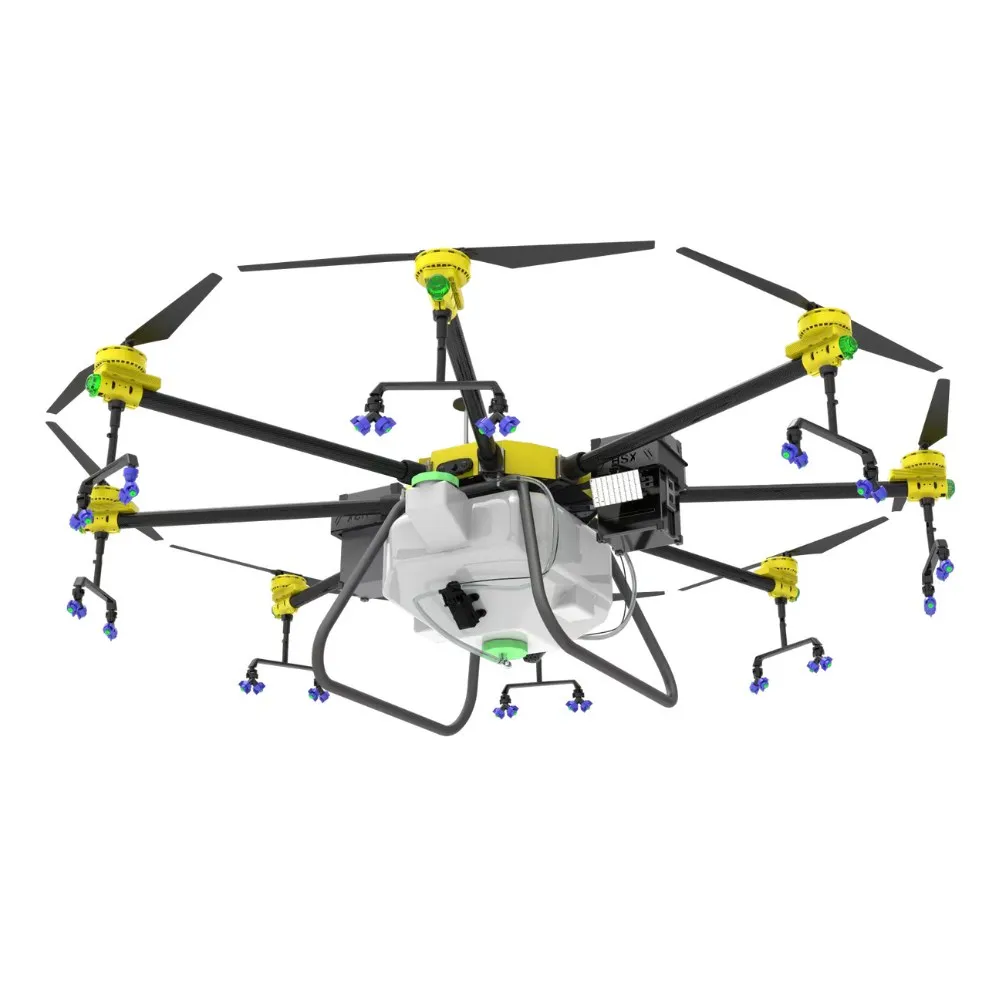
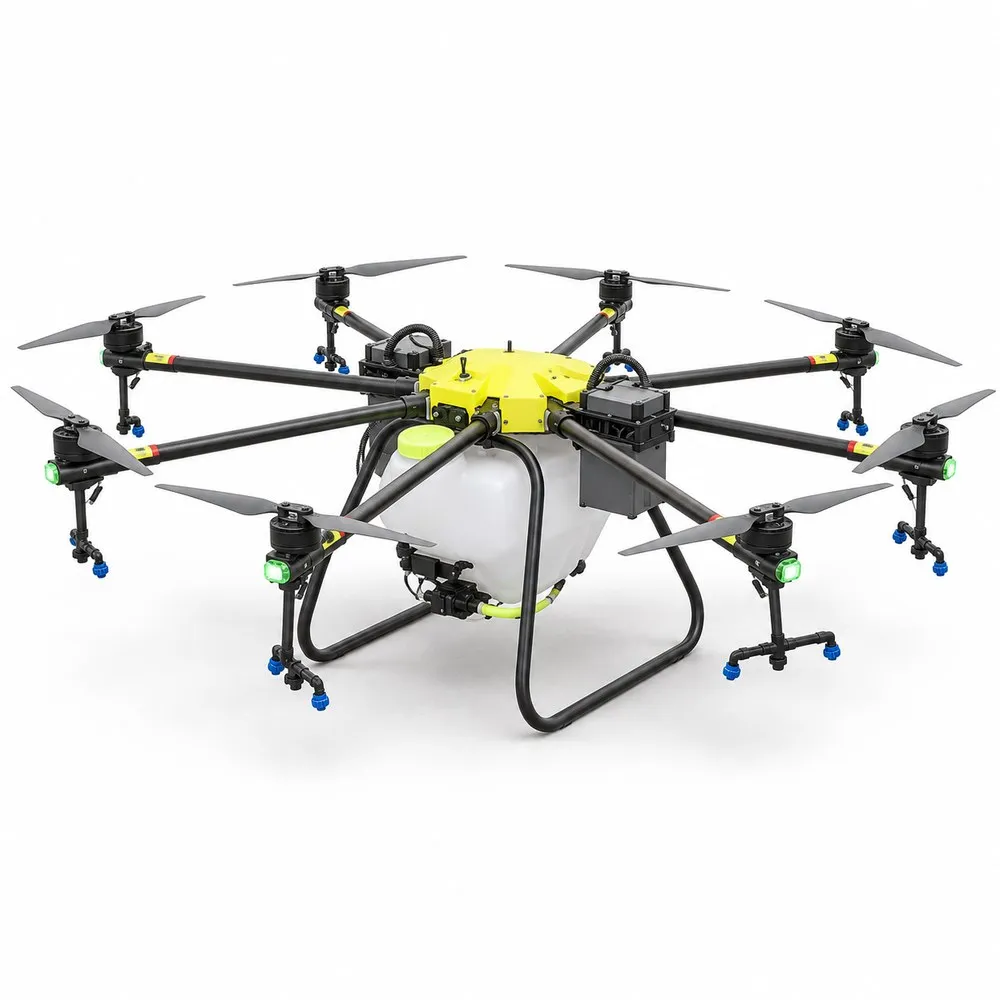
Pressure nozzles. The pump pushes liquid through a small opening. Droplet size depends on the opening, the pressure and the flow. Higher pressure makes finer droplets. Many models can take several nozzle tips for different flow rates.
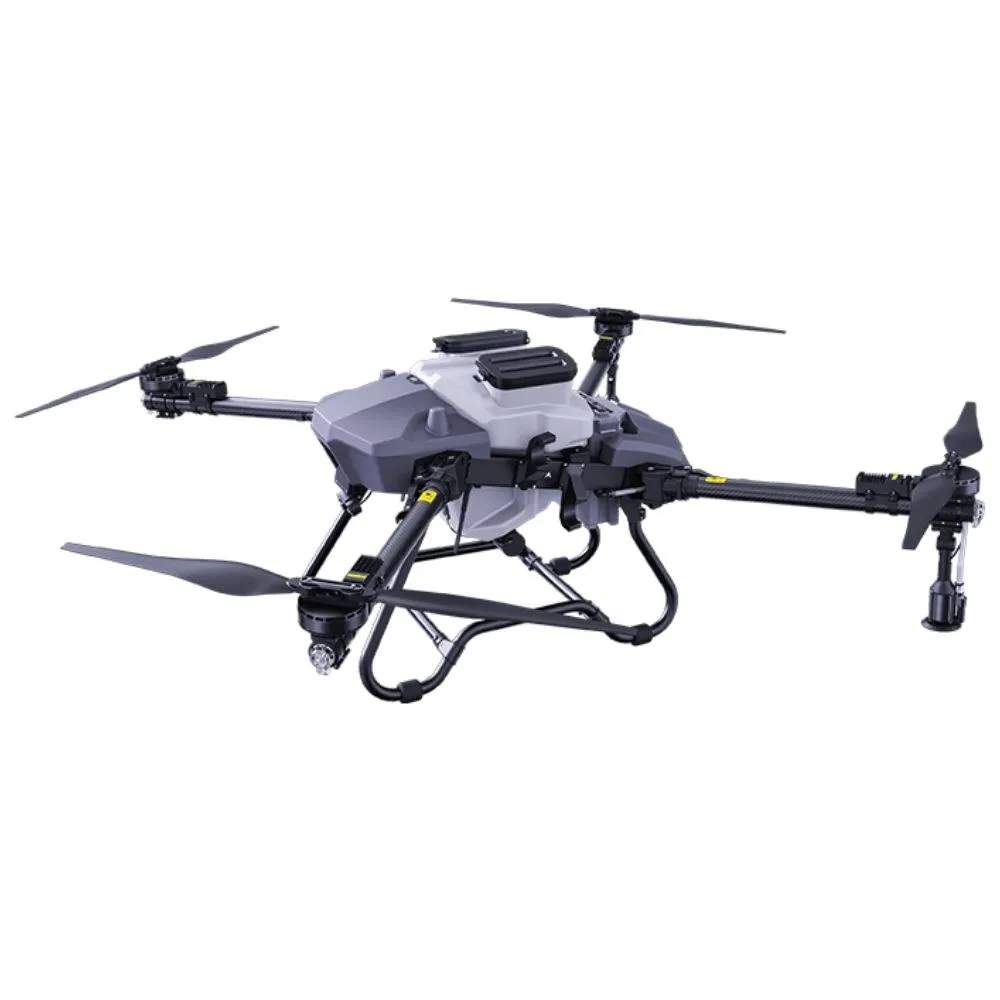
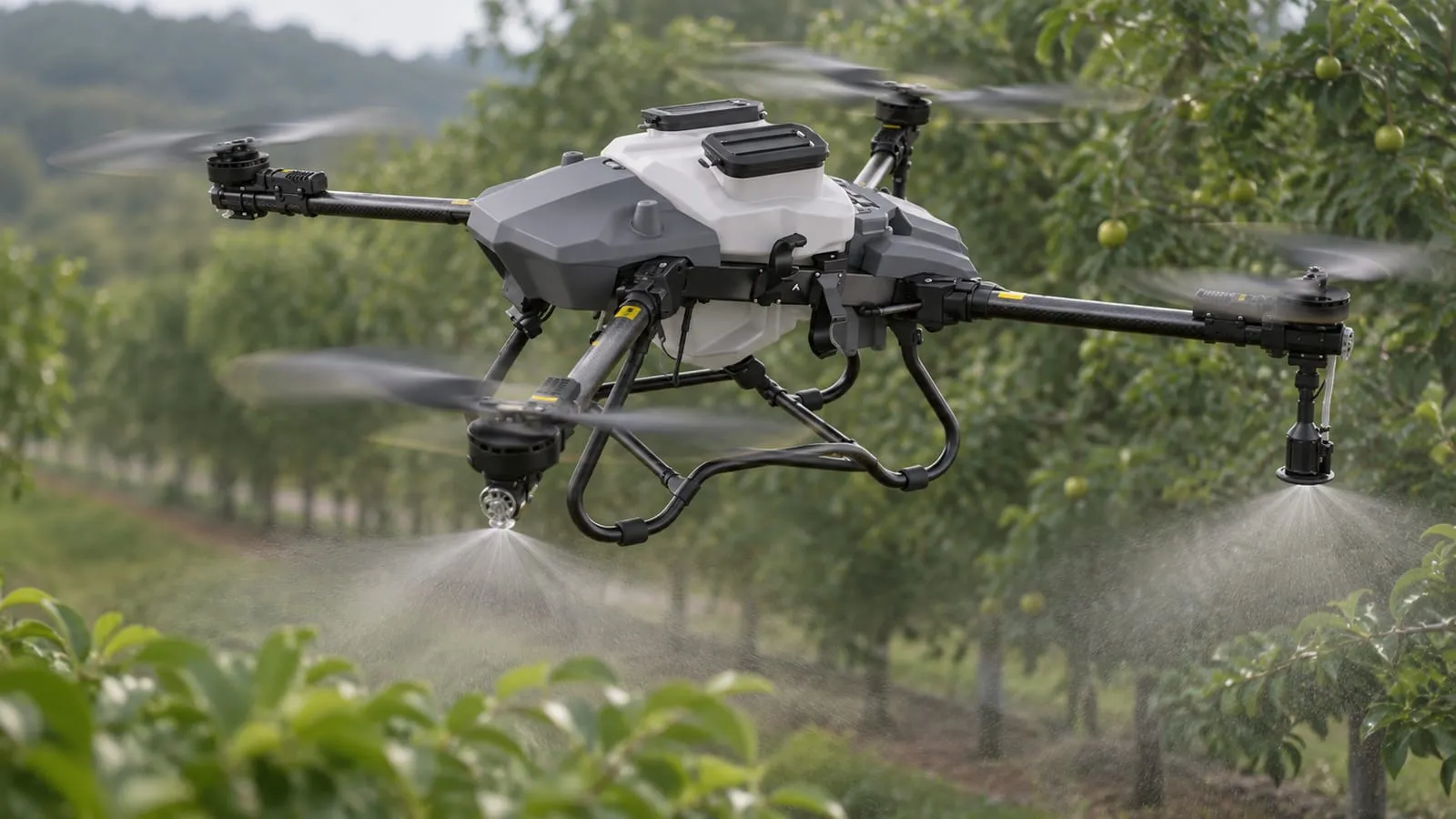
Centrifugal nozzles. A motor spins a disc or cup. The liquid leaves the edge and breaks into droplets. A faster spin gives smaller droplets. The operator or the flight controller sets the speed, so one nozzle covers a range of sizes.
Side-by-side
| Point | Pressure nozzles | Centrifugal nozzles |
|---|---|---|
| Droplet control | Set by tip choice and pressure | Set by spin speed, can change in the field |
| Flow | High flow possible (16 L/min on F52 and F72) | Lower flow (8 L/min on F30C/F50C) |
| Best for | Large open fields, high volume work | Orchards, vegetables, mixed crops, low volume |
| Moving parts | Few at the nozzle | Small motor at each nozzle |
| Maintenance | Clean tips and filters, watch for wear | Clean the discs, check motors and bearings |
| FLYZOR models | F52, F72 (standard) | F30C/F50C, F72 (option) |
Flow figures and droplet ranges come from our product pages. The F52 and F72 give 30–400 μm. The F30C/F50C gives 50–500 μm with an 8 L/min flow.
Droplet size: the trade-off
The NDSU guide describes the ASABE S572.3 classification, which names eight spray quality classes from extremely fine to ultra coarse. It states that the Dv0.5 is the midpoint of the spray volume, and that the smallest 10 % of volume (Dv0.1) should be 150 microns or more to reduce drift. It also says that no single nozzle suits every job. Insecticides and fungicides generally need fine to medium spray quality, contact herbicides medium to coarse, and systemic herbicides coarse to very coarse.
Be careful: the S572 classes were written for hydraulic nozzles. Spinning-disc nozzles on drones may report droplet size differently, so ask the maker how they measure it, and follow the label.
| Droplet size | Good side | Bad side | Used for |
|---|---|---|---|
| Fine | More spots per leaf, better cover | Drifts and evaporates easily | Some fungicides and insecticides, where the label allows |
| Medium | Balance of cover and drift | Not best at either | Many contact products |
| Coarse | Less drift, reaches the target | Fewer spots, runs off waxy leaves | Many herbicides |
This table is a simplified guide. Always read the product label.
Example: one drone, three jobs
This is an example of workflow, not label advice. A grower with an F50C has three jobs in a week: a fungicide on vines, an insecticide on vegetables and a herbicide at field edges. With centrifugal nozzles the operator can change droplet size between jobs, say towards the finer end for the fungicide and the coarser end for the herbicide, as each label allows. With fixed pressure tips the operator would change tips or pressure and re-check the flow. The saving is time and fewer spare parts, not a different result.
Why mid-size drones still use pressure nozzles
For rice, wheat and corn, the aim is to cover hectares fast at 20–30 L/ha and the products are often applied at a coarser spray quality. Pressure nozzles give the flow for this. The F72’s 72 L tank and 16 L/min flow are built for that job. On slopes, tree rows and dense canopy, the ability to adjust droplets matters more than raw flow.
Keep nozzles working
- Use clean water and filters. Mix products as the label and extension guides advise.
- Extension guidance notes that drone downwash can lift dust that clogs flat-fan nozzles. Land and load on a clean strip.
- Flush the system after each day and check for worn tips or sticking discs.
- Keep spare nozzles and filters. See the spare parts list.
Choosing for your market
If your customers grow orchards or many small crops, offer a centrifugal model first. If they grow open-field grain, offer a pressure-nozzle model. Dealers can ask about configuration on the dealer page. For orchard work see our orchards and slopes page, and read the full buyer checklist.
Related reading: F30C/F50C centrifugal drone, F72 spray drone and drone vs ground spraying.