Short answer: An agricultural drone dealership works when you sell drones, keep batteries and parts in stock, and fix problems quickly. Start small: one demo unit, a few models, a spare parts kit and one trained technician. Add stock when orders arrive. The exact margin, territory and minimum order are agreed with the manufacturer, so get them in writing. See the dealer programme for how FLYZOR works with partners.
Who buys from a dealer
Your customers are spray service companies, estates, cooperatives and larger farms. Their question is not only the price. They ask how many hectares a day the drone can cover, what happens when a part breaks, and who trains the pilot. University studies show that the cost per acre of owning a drone falls when the area sprayed grows, so serious buyers want volume, uptime and support. Public work from the University of Missouri Extension is a useful source when you explain ownership cost to a buyer.
Step 1: choose the range
Pick two or three models so that you can stock parts and learn them well.
| Customer | Typical model | Why |
|---|---|---|
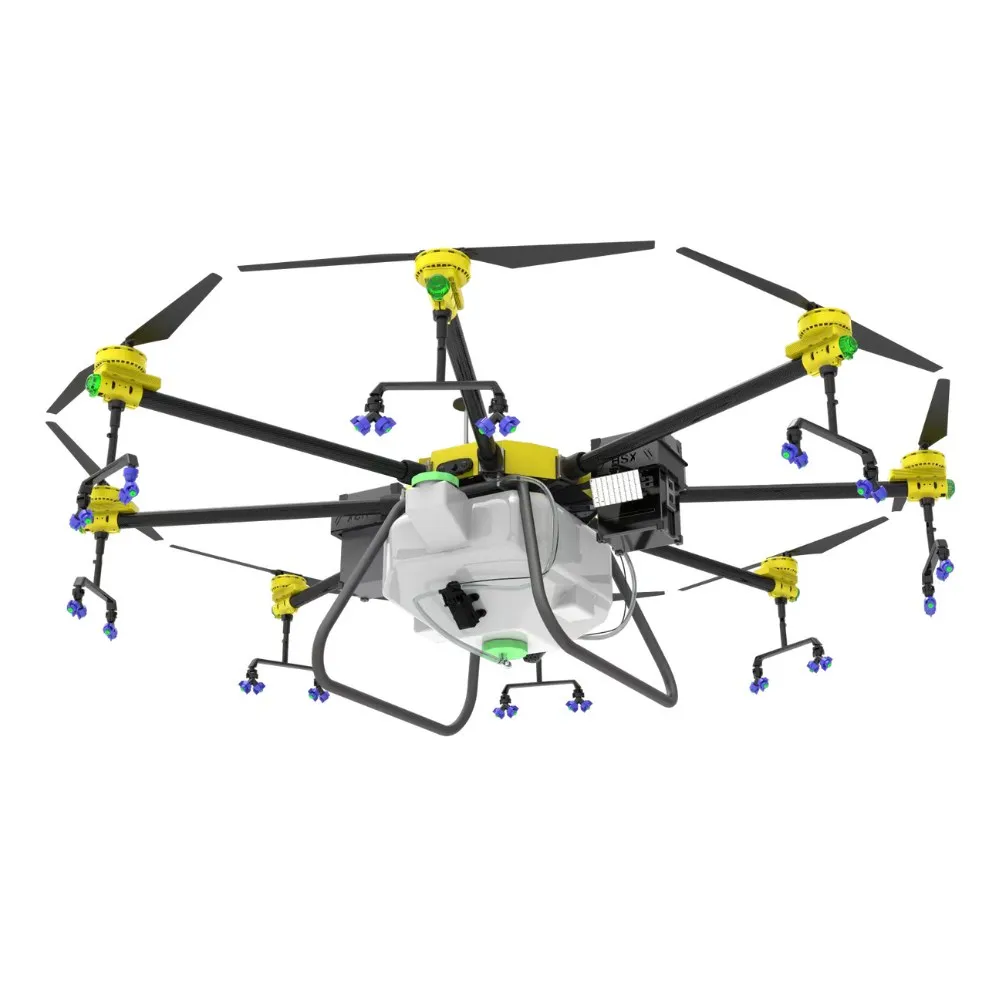
| Small farms, vegetables, orchards | F10-30 series | Compact, one battery per flight, easy to transport |
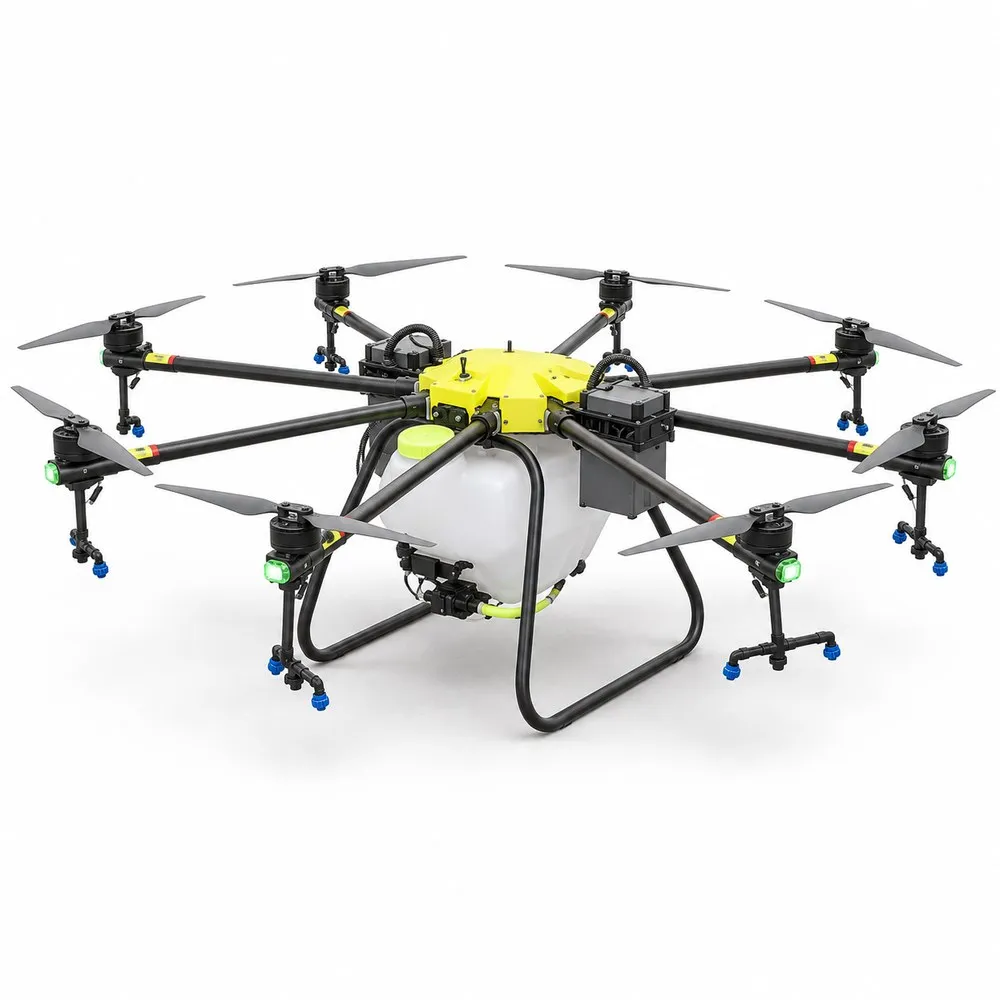
| Mixed farms and contractors | F52 | Mid-size tank, spraying and spreading |
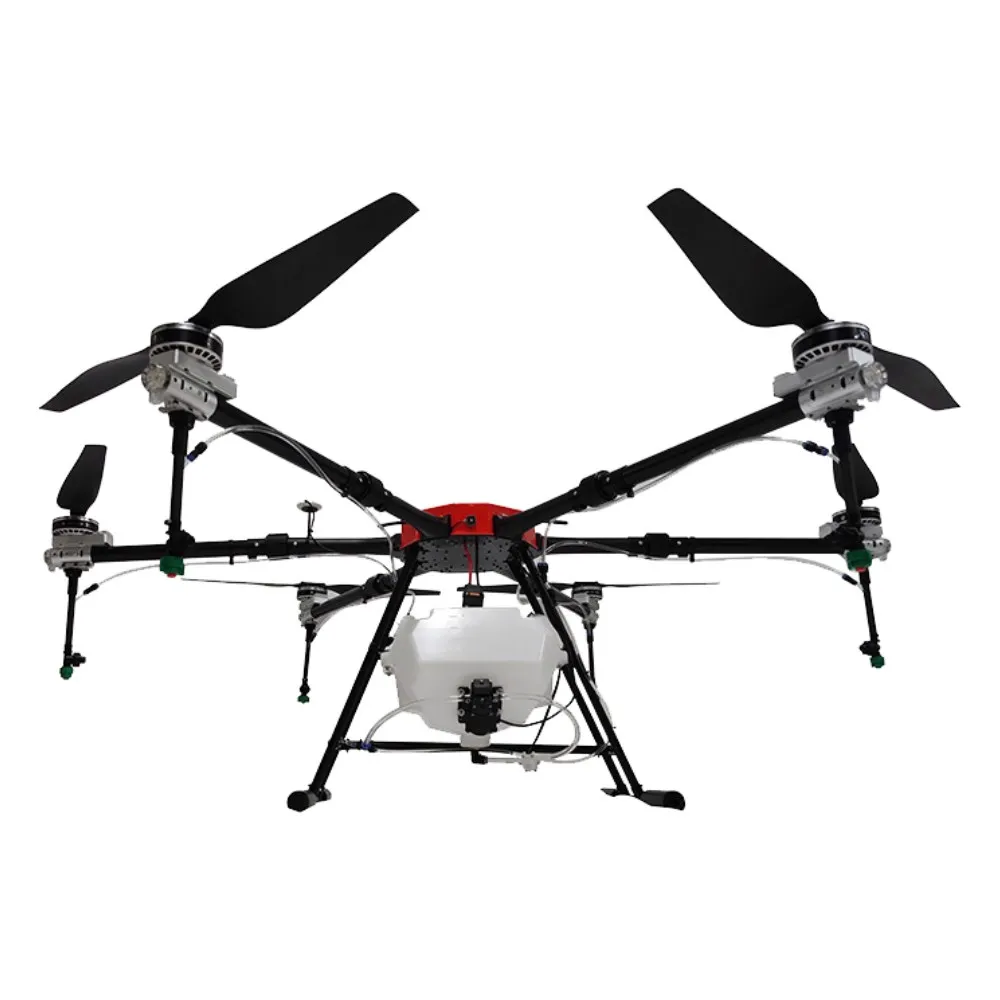
| Large open fields | F72 | 72 L tank, 8-18 m spray width |
Step 2: build the stock
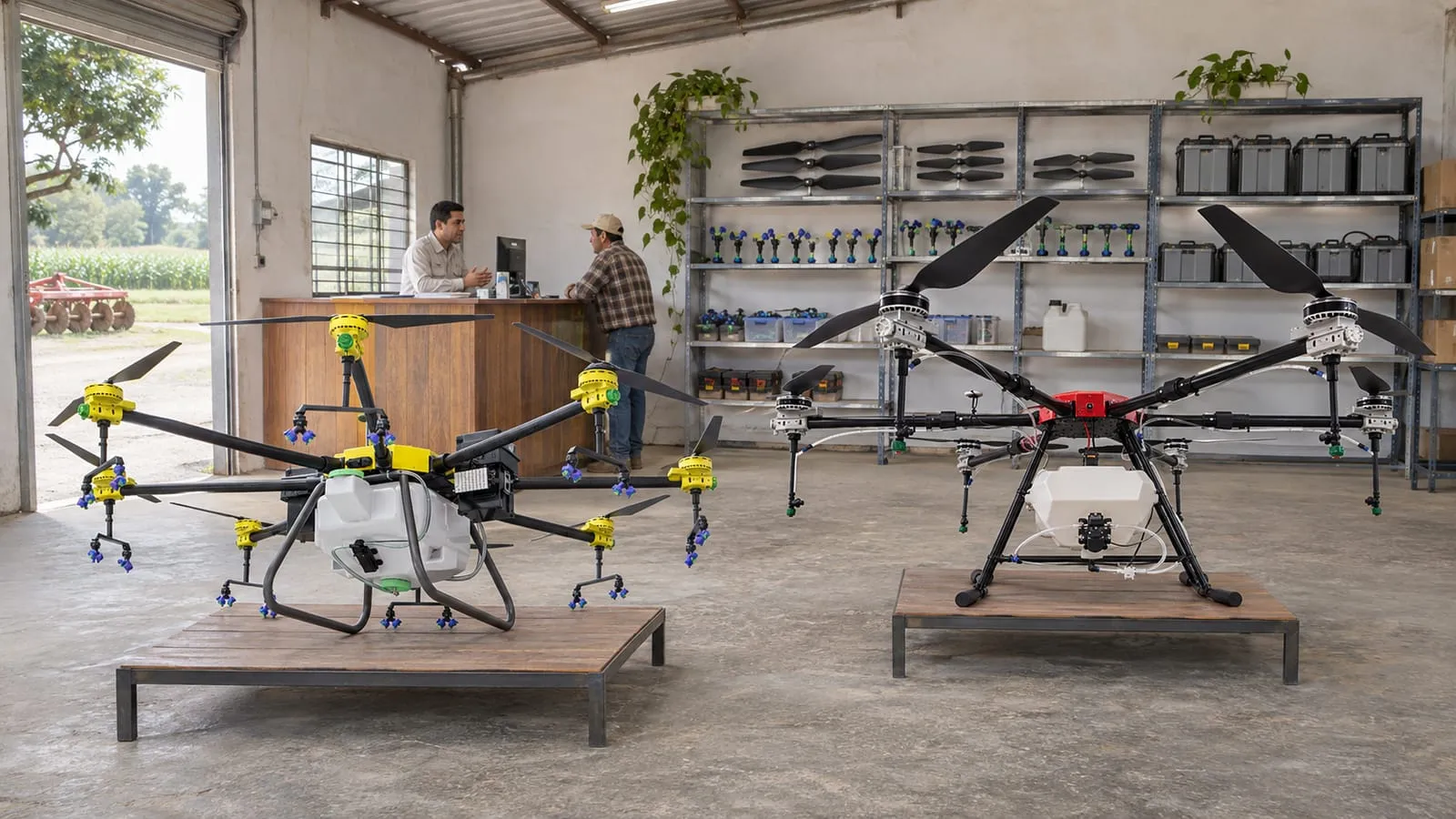
- Demo unit. Customers want to see the drone fly in a field. A demo day is your best sales tool.
- Drones. Hold only a few units at first. Take orders for the rest.
- Batteries and chargers. Every drone needs several battery sets. Batteries are also a repeat sale.
- Spare parts. Propellers, arms, pumps, nozzles, hoses and filters wear out first. Ask the manufacturer for a recommended starter parts kit.
Batteries are dangerous goods when they move, so plan shipping with a forwarder trained for them. Our guide to importing from China explains the rules. Do not hold more batteries than your storage allows: store them in a cool, dry place away from other goods and follow the maker’s storage advice.
Step 3: set up the service center
A basic center needs:
- A clean repair bench and basic tools.
- A charging area with safe power and fire safety equipment.
- A test field or open space for first flights.
- A technician trained by the manufacturer.
- A record for each customer drone: serial number, batteries, repairs.
Ask the manufacturer for repair training, manuals and a fast route for warranty parts. Our support page describes what we offer.
Step 4: where the money comes from
Dealers usually earn from several streams. The mix differs by market, so these are example shares for planning only, not FLYZOR terms:
| Income stream | Example share of dealer gross profit |
|---|---|
| Drone sales | 50 % |
| Batteries, chargers, accessories | 20 % |
| Spare parts | 15 % |
| Service, training, spraying jobs | 15 % |
Example: if a dealer sells 10 drones in a year and makes a gross profit of 3,000 USD on each, that is 30,000 USD from drones. If drones are 50 % of gross profit, total gross profit is about 60,000 USD. Subtract rent, wages, transport, demo flights and marketing to find the real result. The 3,000 USD is an assumption, not a promise.
Step 5: questions to ask a manufacturer
- Is the territory exclusive and for how long?
- What is the minimum first order, and the minimum per year?
- Is there a demo unit, and who pays for it?
- What does the warranty cover, and how are claims paid?
- How long does it take to send parts?
- What training and marketing material is included?
- Who ships batteries and who pays?
For FLYZOR, conditions are discussed per country and partner. Ask for terms through the dealer page or the contact page.
Step 6: win the first customers
Run a demo day on a real field. Bring a work-rate estimate and a simple cost sheet, as in our business plan guide. Offer to train the pilot. Visit input shops and cooperatives. One happy service company often brings many more.