Short answer: In South Africa, spraying crops by drone for payment involves two sets of rules. SACAA, the civil aviation authority, regulates the aircraft, the remote pilot and the operator under Part 101. The agriculture side adds pesticide rules: industry sources say the product label must allow aerial application, and operators must be registered under the pesticide laws. Details change, and press reports do not always agree, so confirm every step with SACAA and the Department of Agriculture before you import or sell. We found no verified public price list for spray drones here, so ask for a package quote.
The market in brief
South Africa has large commercial farms and many different crops. The farm press has written about spray drones for maize, sugarcane, vineyards and citrus, and about service companies that spray by the hectare. We do not give market-size figures or name local companies, because we could not verify them.
For a dealer, the useful questions are simple. Who in your region already pays for spraying, how large are their plots, what crops and chemicals do they use, and who will train and certify pilots? A service company or a farmers’ group is often the best first customer.
Which drone for which job
| Situation | What matters | FLYZOR model to discuss |
|---|---|---|
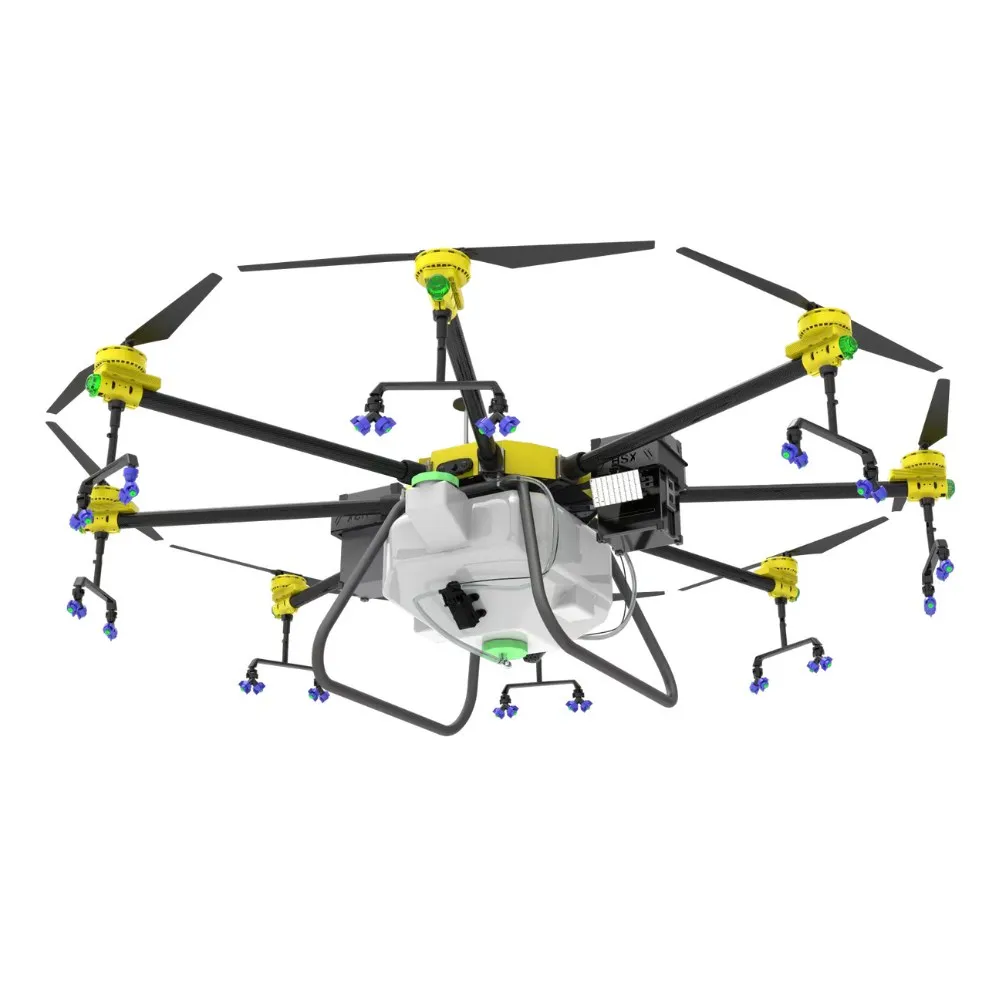
| Vineyards, orchards and slopes | Narrow rows, steep ground, canopy; test the spray on a trial block | F10-30 series; see also the orchards and slopes page |
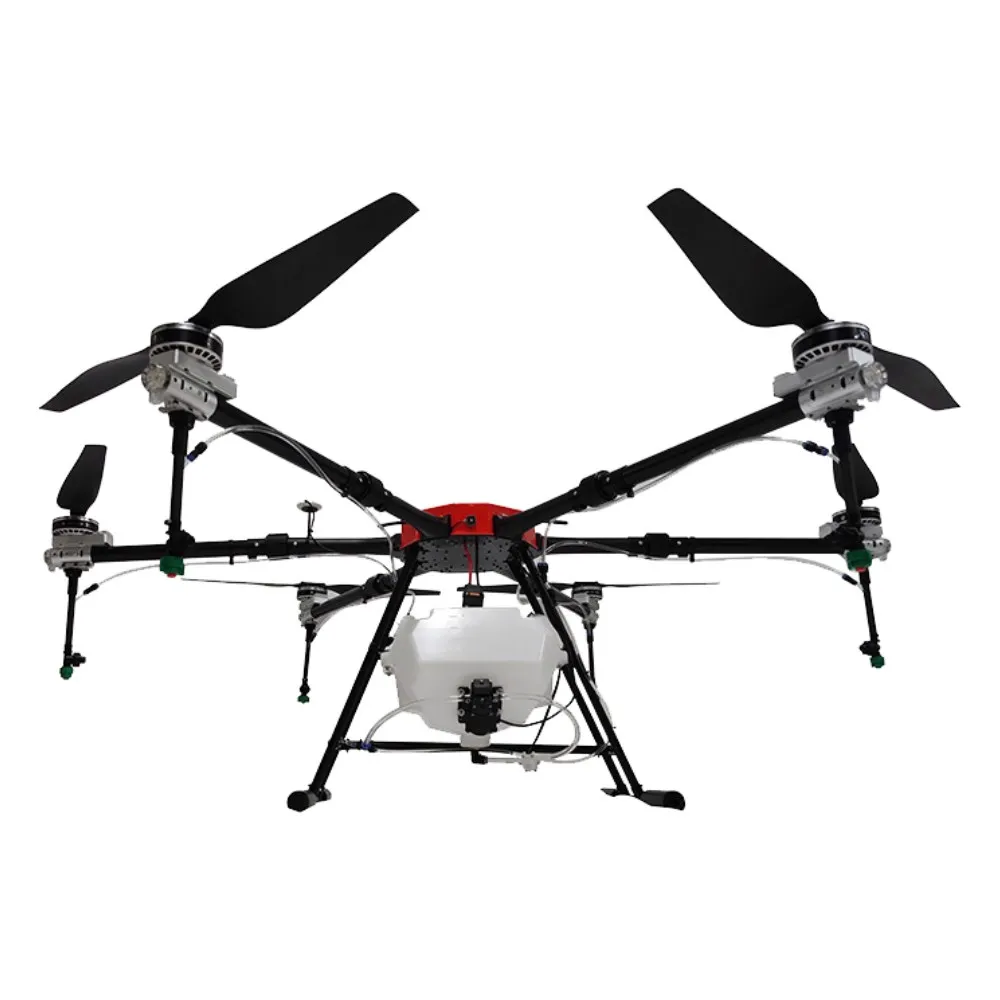
| Sugarcane and mixed farms | Medium plots, a service team that moves between farms | F52 (52 L, 6–16 m spray width) |
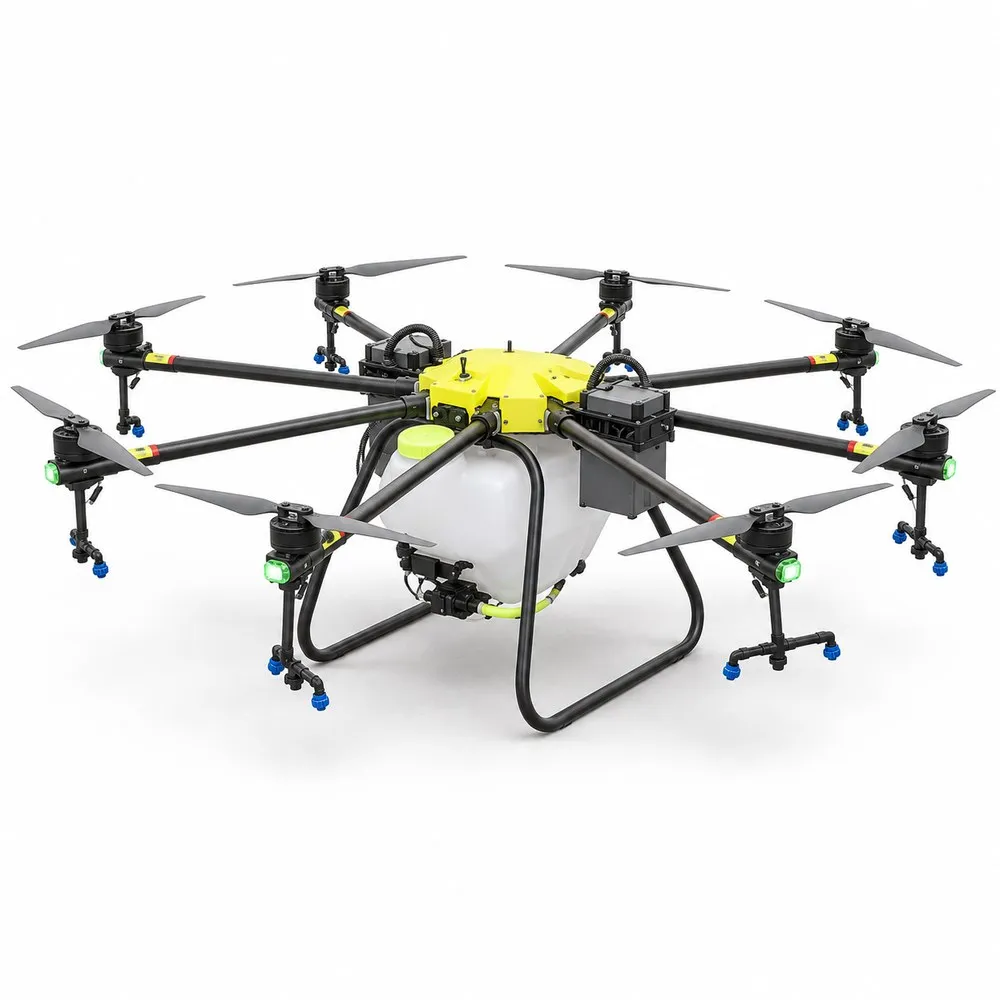
| Maize and large open fields | Area per battery set, refill distance | F72 (72 L, 8–18 m spray width) |
Example (not a promise): an F52 with an effective swath of about 10 m covers roughly 10.8 hectares per hour of spray time (10 m × 6 m/s × 50 % efficiency). A 300-hectare spray job is about 28 hours of spray time, before refills and battery changes. The work-rate calculator on the field crops page lets you test your own plots.
Rules to check
- Aviation (SACAA). SACAA oversees drones under Part 101 of the Civil Aviation Regulations. Sources describe a certificate of registration for each aircraft, a remote pilot licence obtained through approved training and a skills test, and an operator certificate for commercial work, with insurance. A 2024 law-firm overview and SACAA’s own UAS page are the places to start. Some industry articles also mention an airworthiness requirement for spraying drones; ask SACAA whether it applies to your aircraft.
- Pesticides. Pesticide use falls under Act 36 of 1947 and its regulations. Industry sources say a drone may apply a product only where the label allows aerial application, and that spray operators must register as pest control operators. CropLife SA has published a position statement on drone application. Ask the agriculture department and CropLife SA which products and registrations apply.
- Import and customs. Ask a clearing agent about duty and permits. Lithium batteries ship as dangerous goods, so use a forwarder who can handle them.
Under local rules, please confirm every point with the authorities. We cannot promise that a given drone can be imported or used.
Prices: what is public
We did not find a public, verifiable price list for spray drones in South Africa. Retail listings change often and mix different packages. A price for “a drone” also leaves out batteries, a charger or generator, spares, training, freight and import costs. The price of a FLYZOR drone depends on the model and the package. Read our price guide for how to compare quotes.
How a dealer can start
- Pick one crop and one region first.
- Run demonstration spraying on trial plots with the farmer’s own chemicals and label advice.
- Plan pilot training and a stock of batteries, propellers, nozzles and pumps.
- Settle the paperwork with SACAA and the agriculture department before the first paid job.
If you want to represent FLYZOR in South Africa, see the dealer page. Terms such as territory, first order and support are by discussion. For a spray service plan, read the spray service business page or contact us.