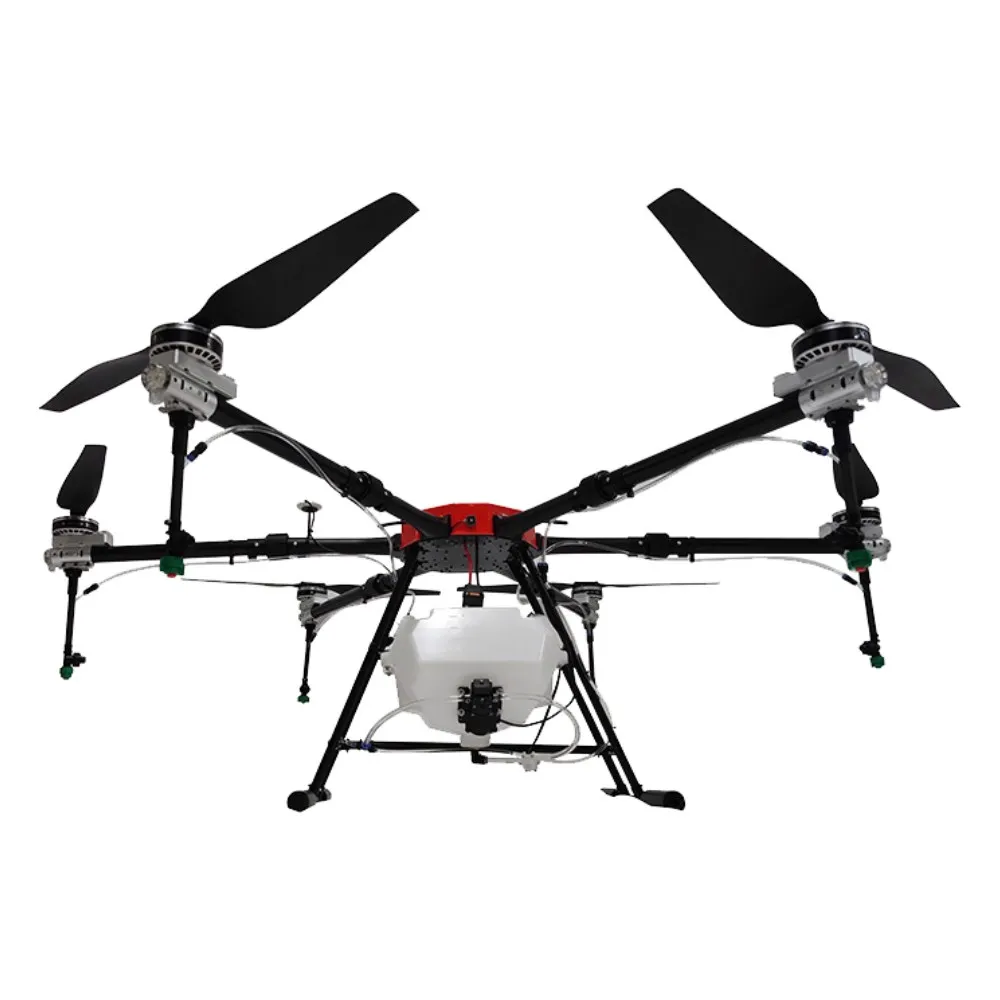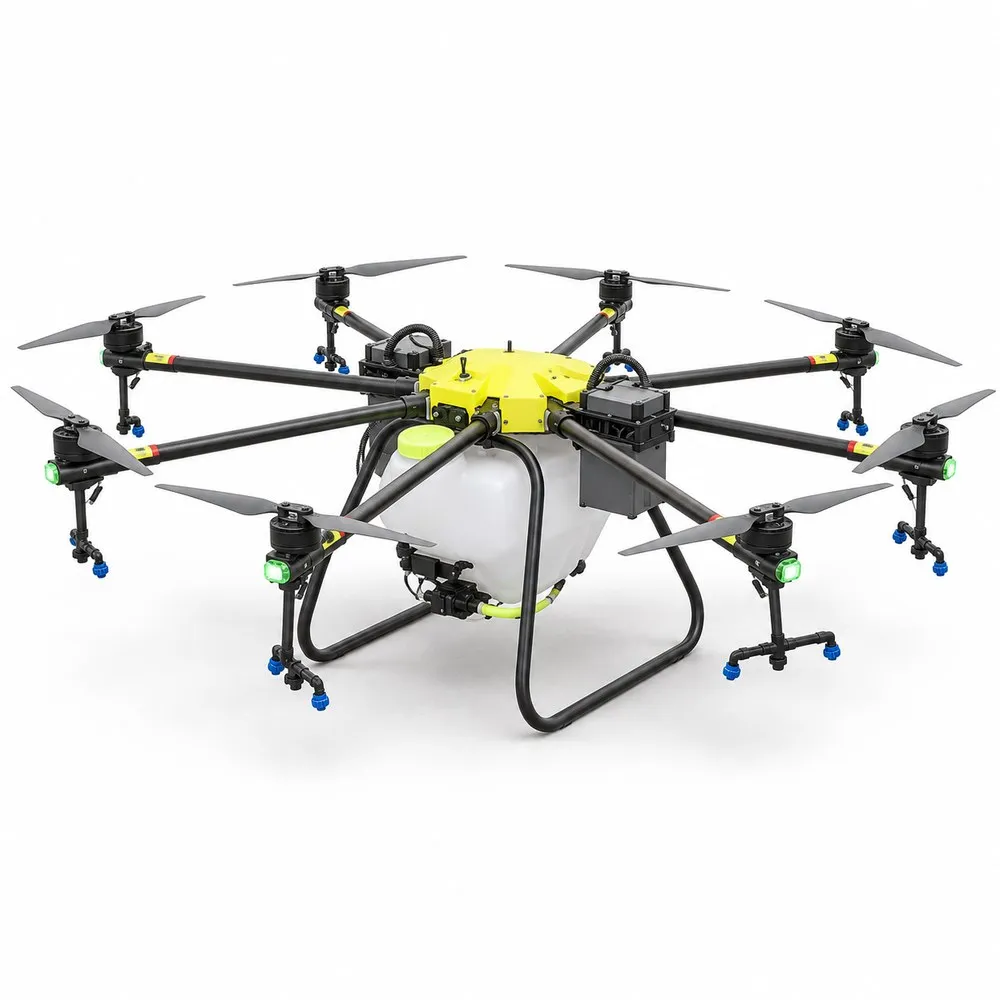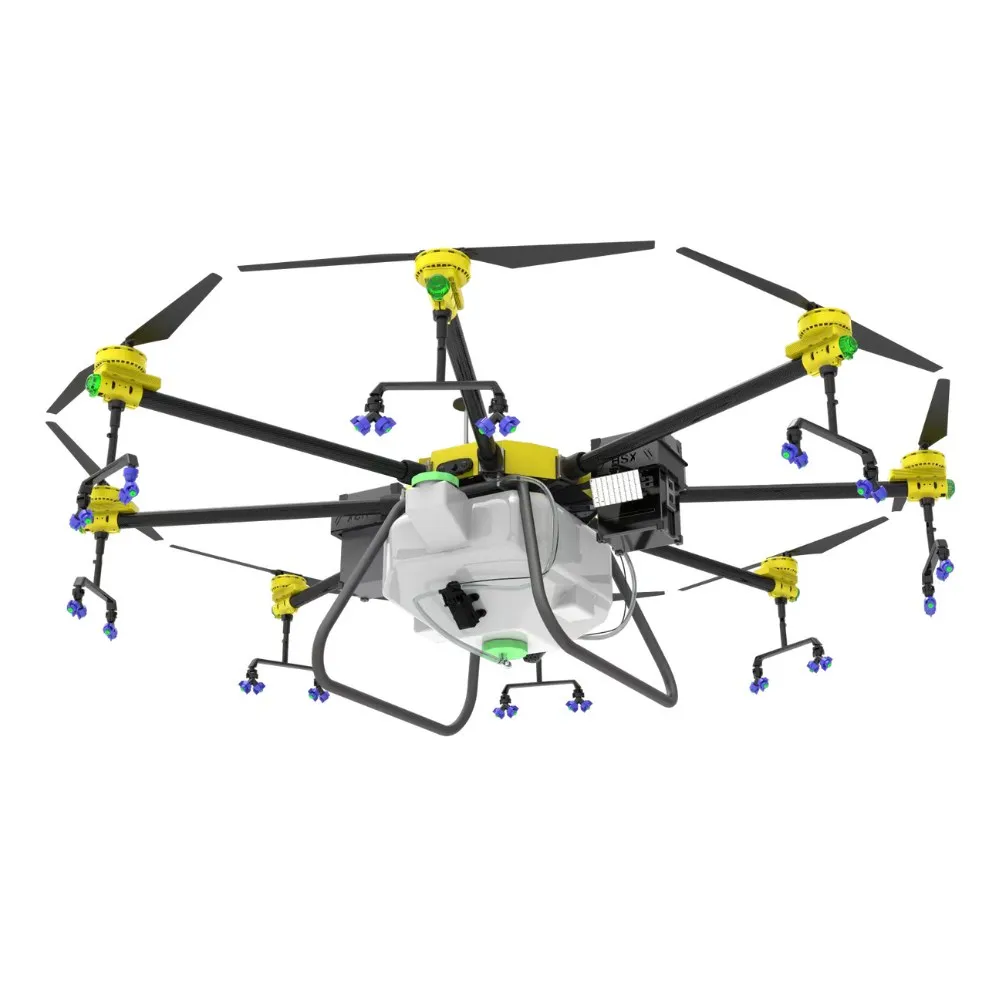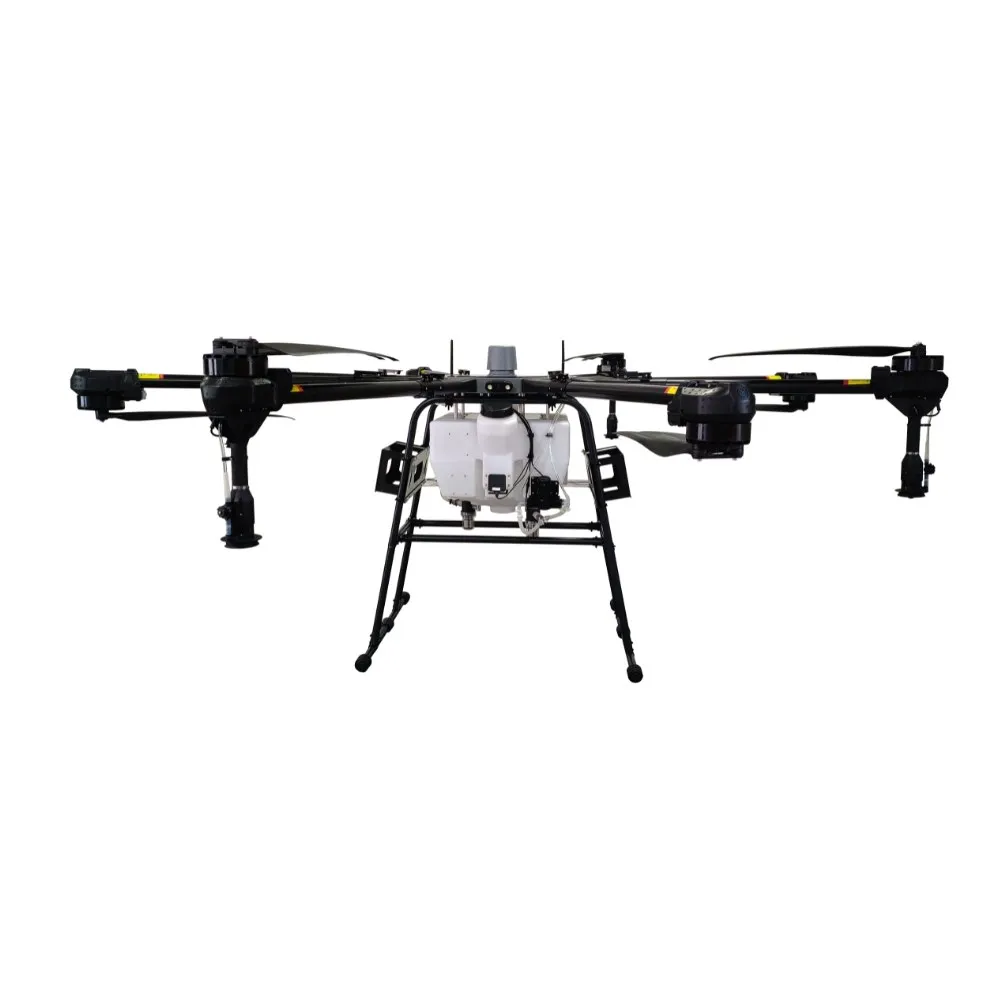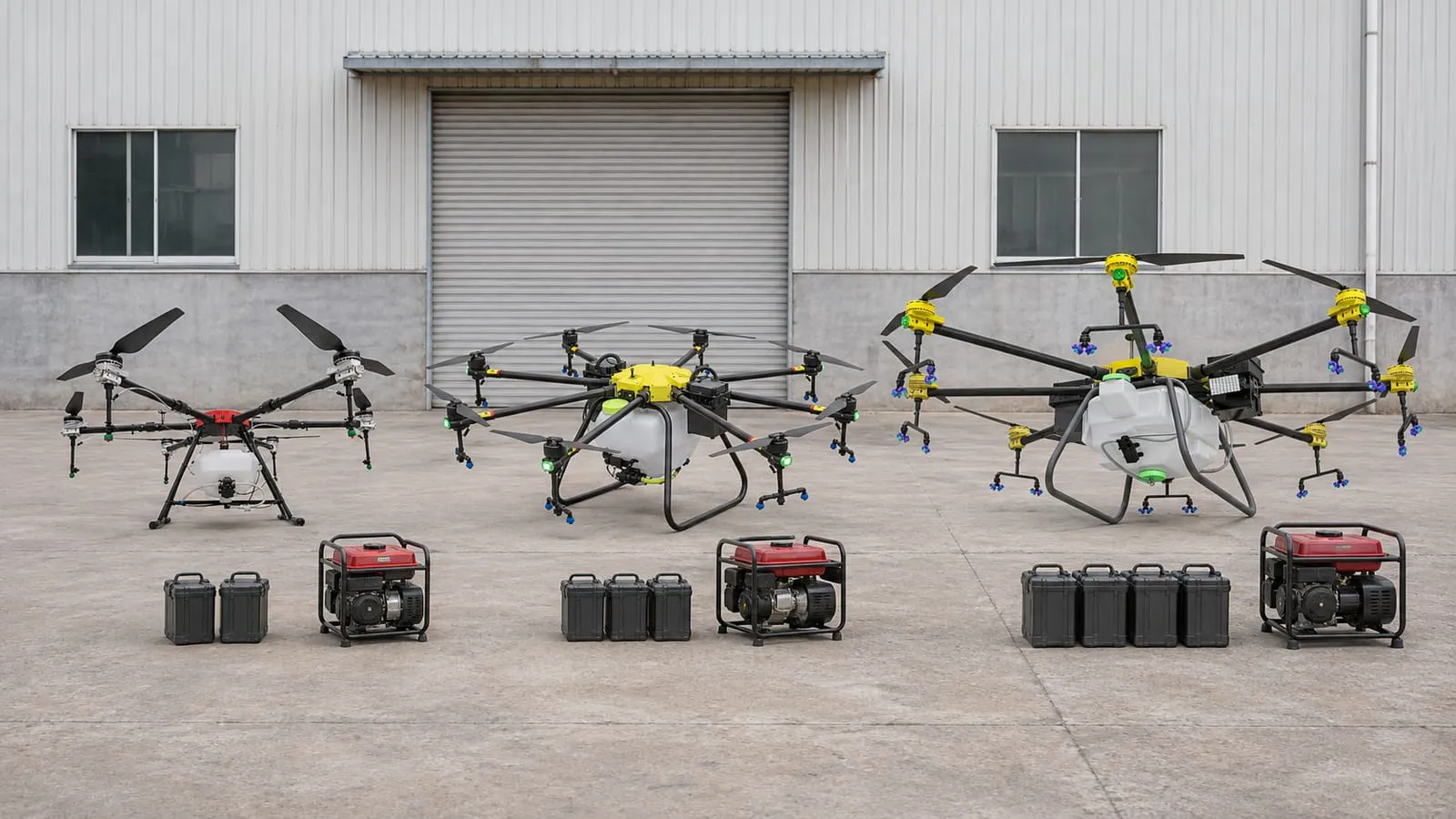
Short answer: Spray drone prices rise with tank size, but the number on the aircraft is only part of the cost. In public US dealer listings checked in November 2026, a 40 L-class aircraft alone was about US$13,500–16,000, a ready-to-fly kit was near US$26,500, and a full field set with extra batteries and a generator reached US$40,000–52,000. Treat these as reference ranges. Your own price depends on model, package and trade term.
What you are really buying
When a buyer asks for the price of an agricultural drone, a seller can answer with very different things. One quote may be the aircraft only. Another may include the remote controller, two batteries and a charger. A third may include a generator, a transport case and spare parts. If you compare them line by line, a low price is often a smaller package.
Ask each seller for a written list. A fair comparison needs the same items on every quote.
| Package level | Usually includes | Public reference (40 L class, US, Nov 2026) |
|---|---|---|
| Aircraft only | Drone, remote controller, often a basic charger | About US$13,500–16,000 |
| Ready-to-fly kit | Aircraft, two batteries, charger and cables | About US$26,500 |
| Full field set | More batteries, charging station or generator, RTK base, case | About US$40,000–52,000 |
These numbers come from US dealer web listings and a 2026 buying guide. Prices in other countries differ because of tax, freight and local rules. Listings also change often, so check again before you plan a budget.
Price classes by tank size
Tank size is the simplest way to group spray drones. The table shows the FLYZOR range with the specifications from our product pages. Prices are given on request because the final price depends on the configuration you choose.
| Class | FLYZOR model | Tank | Spray width | Typical buyer |
|---|---|---|---|---|
| Compact | F10-30 series | 10–30 L | 3–9 m | Small plots, orchards, first drone |
| Mid size | F52 | 52 L | 6–16 m | Service teams, medium farms |
| Large | F72 | 72 L | 8–18 m | Contractors, large open fields |
| Extra large | F92 | 92 L | 8–20 m | Estates, high-volume service |
Costs that sit outside the aircraft price
Batteries decide how many hectares you finish. One flight uses one or two packs, and a pack needs time to charge. Teams that work all day usually run three or four sets per drone with a generator or fast charger, so one set charges while another flies. The aircraft price does not show this cost.
Other lines to include in your budget:
- Spare propellers, nozzles, pumps and filters for the first season.
- Training for pilots, and any licence or registration fee in your country.
- Insurance for the drone and for third-party damage.
- Freight, import tax and a customs agent. Lithium batteries travel as dangerous goods, which can raise freight cost.
- A truck, trailer or van to move the team between fields.
Example: a simple budget
This is an example to show the method. The numbers are not a quotation.
If the aircraft package for a 70 L-class drone is US$20,000, you may add US$4,000 for two extra battery sets, US$1,500 for a generator, US$1,000 for spare parts and US$1,500 for freight and local fees. The first-year budget is then US$28,000, which is 40 % above the aircraft price. Replace each number with figures from your own quotation.
Does owning make sense?
A university study from Missouri estimated that owning a spray drone costs about US$12.27 per acre at 1,000 acres per year, and about US$7.39 per acre for a custom operator working 4,000 acres. It put the break-even against a hired service at about 980 acres per year when the hire rate is US$16 per acre. Your costs and hire rates will differ, but the logic is the same: more hectares per year lower the cost of each hectare.
How to compare quotes from sellers
- Ask for the same package list from every seller.
- Write the trade term next to each price. EXW, FOB and CIF include different costs.
- Compare warranty. FLYZOR lists 12 months on the drone and 3 months on accessories.
- Ask who provides spare parts, training and repair after the sale.
- Ask for the first-order terms if you want to start with one unit.
For dealers and service teams
Dealers usually need a demonstration unit, a price list by model and a spare parts plan. Service teams need a clear total for the first season. In both cases, the best way to get a price is to send your crops, plot sizes and power supply. For large fields compare the F72 and F92; for small plots start with the F10-30 series. We prepare a quotation for the model that fits. See the dealer program or request a quotation. Prices, minimum orders and terms are agreed in the quotation.