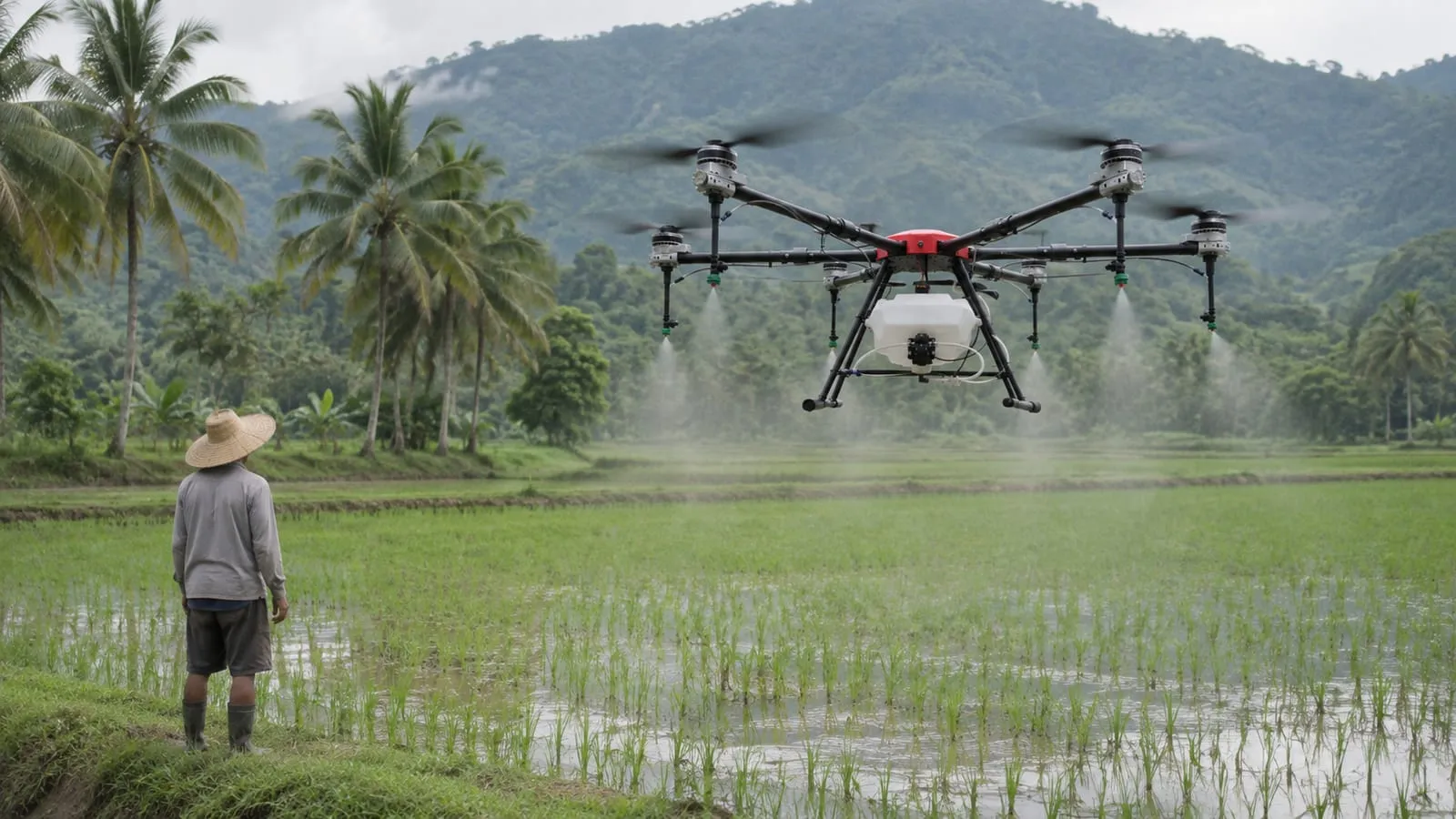
Short answer: In the Philippines, most rice farmers pay a drone service by the hectare instead of buying a drone. A PhilRice article from 2018 reported fees of about PHP 850 to 1,500 per hectare. The Department of Agriculture said in November 2024 that organised rice groups would get vouchers worth PHP 2,000 per hectare for drone-assisted work. Drone operators must follow the Civil Aviation Authority of the Philippines (CAAP) and the Fertilizer and Pesticide Authority (FPA).
The market in short
The Philippines has many small rice plots, a long wet season, and islands where labor can be hard to find. The government is pushing drones in rice farming. The Drones4Rice project, run by the International Rice Research Institute (IRRI) with the Department of Agriculture and PhilRice, is making standard protocols for applying seeds, fertilizer and pesticides with drones. For dealers, this creates a demand for trained service teams and a clear way to explain the technology to farmers.
PhilRice also reported test results that matter for sales talks. In its tests, a drone used about 16 liters of spray per hectare, compared with about 160 liters per hectare with a knapsack sprayer, and a drone can cover 20 to 30 hectares per day. These are 2018 figures from one institute. Spray volume depends on the chemical label and the drone settings, so always follow the product label.
Prices: what we can say
We did not find a verified public price list for spray drones sold in the Philippines. The same PhilRice article said buying a drone sprayer meant an investment of roughly PHP 500,000 to 1 million in 2018, and a 2019 business report said companies in Davao planned to buy drones at about PHP 500,000 each for renting out to banana farms. Those were other brands and other years. Do not use them as a FLYZOR price. The cost of our drones depends on the model, battery sets, charger or generator, spare parts and training. Ask for a quote.
We also searched for a service fee of PHP 400 per hectare. We could not find a public report that supports it, so we do not use it. The numbers we can support are below.
| Item | Figure | Source and date |
|---|---|---|
| Drone spraying service fee | About PHP 850 to 1,500 per hectare | PhilRice article, 2018 |
| DA voucher for drone-assisted rice work | PHP 2,000 per hectare, for organised groups | FPA report of DA announcement, November 2024 |
| Spray volume, drone vs knapsack | About 16 vs 160 liters per hectare | PhilRice test, 2018 |
| Drone daily area | 20 to 30 hectares per day | PhilRice article, 2018 |
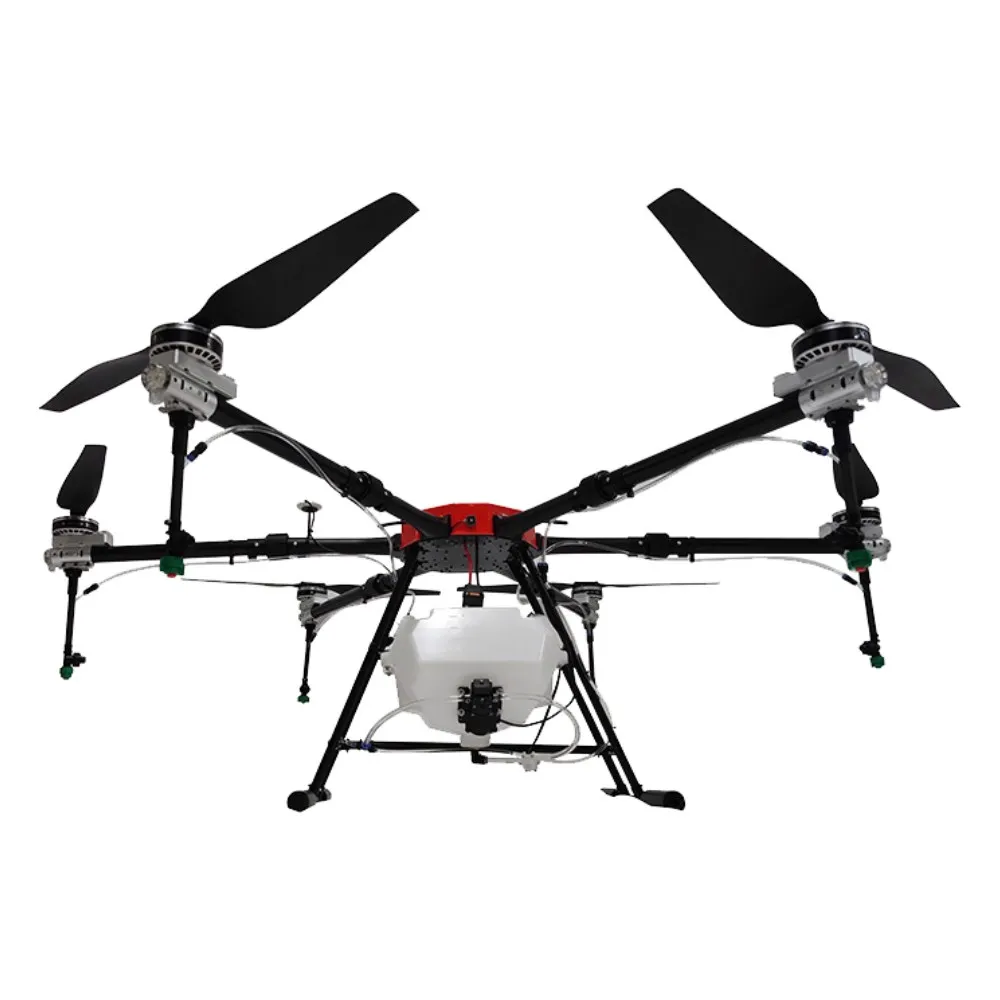
Example (estimate, not a promise): a rice cluster has 100 hectares. An F52 with an effective swath of about 10 m covers roughly 10.8 hectares per hour of pure spraying (10 m x 6 m/s x 50 % efficiency). So 100 hectares need about 9 to 10 flying hours. With refills and battery changes, plan several working days with one drone, or fewer days with a second drone. Use the calculator on the field crops page with your own numbers.
Crops and drone fit
- Rice: Flat paddies suit the F52 and F72. Small terraced plots may suit the F10-30 series.
- Banana: In Davao, press reports describe drones for fungicide spraying on banana farms and FPA accreditation for drone spraying companies. Tall plants and rules about aerial spraying make this a field-by-field topic. Run a trial.
- Coconut: We found no public report of drone spraying on coconut farms. Tall palms are a hard case, so treat it as a trial project, not a promise.
Rules in the Philippines
- Aviation (CAAP): CAAP handles registration of drones and the pilot and operator certificates. Its website lists the RPAS registration and certificate checklists.
- Pesticides (FPA): FPA issued enhanced rules for pesticide application by drone in October 2024. FPA accredits drone controllers and spray crews and checks the pesticides used. The FPA says it wants to protect users, the public, crops and the environment.
- Local rules: Some cities may add their own limits. Ask the local government.
- Customs: Ask your customs broker about duty and documents. Lithium batteries ship as dangerous goods.
Under local rules, please check each requirement with CAAP, FPA and customs. We cannot promise that a drone can be imported or used.
How a dealer can help customers
- Build a service plan with a cooperative or a contractor before you promote a machine.
- Offer pilot and crew training that matches the accreditation steps.
- Keep spare batteries, propellers and nozzles in the country.
- Prepare a clear after-sales route. During the rice season, a stopped drone loses money every day.
If you want to represent FLYZOR in the Philippines, read the dealer page. Terms such as territory, first order and support are agreed by discussion. To ask for a quote, contact us.