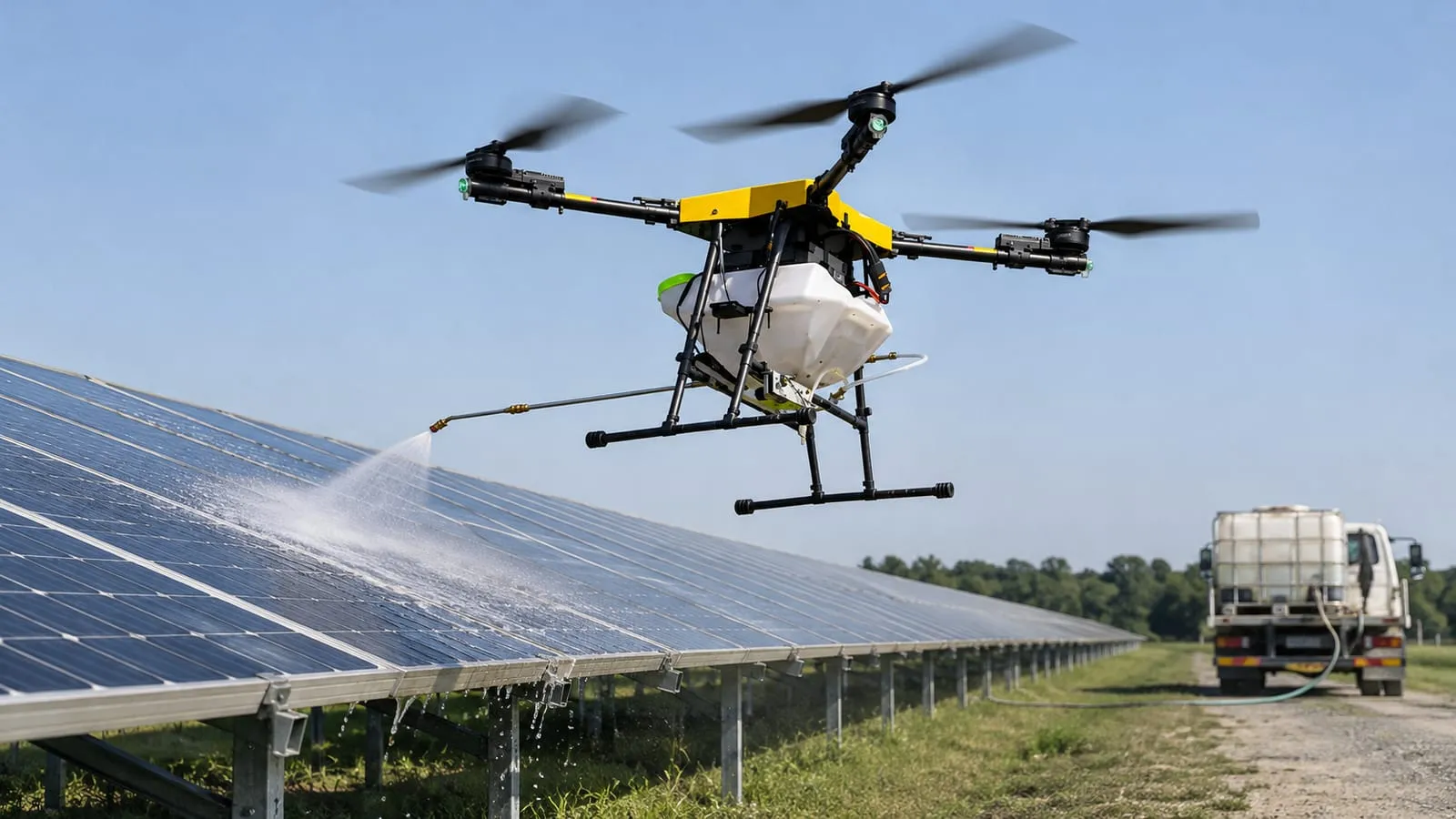
Short answer: A solar panel cleaning drone sprays panels from the air, so a crew does not walk on the array or climb on a roof. It pays back when dust or pollen costs you more energy than the cleaning costs, which is often true on big arrays in dry, dusty places. NREL reports typical soiling losses of about 5 %, and tests at plants that went more than seven years without manual cleaning showed gains of 5–11 % after a wet-brush clean. Your numbers will differ, so use the payback formula below with your own data.
Why cleaning matters
Dirt on glass blocks light. The loss grows between rain or cleaning days. NREL’s research on pollen found that rain did not return output to the clean level at some sites. The size of the loss changes with climate: wet places lose less and dry, dusty places lose more. Sources that give one fixed number for all sites are marketing, not measurement.
The way to know your loss is to compare production with a clean reference panel or with the data of a recently cleaned block.
How a cleaning drone works
The drone flies above the array and sprays water, or water with a mild cleaning agent, onto the panels. Water comes from one of two places:
| Supply | How it works | Best for |
|---|---|---|
| Onboard tank | The drone carries its own water, so there is no hose | Small and medium roofs, quick jobs, sites with no ground station |
| Ground booster pump | A pump on the ground feeds the drone through a hose, so flights are not limited by tank size | Large ground-mount farms, long rows |
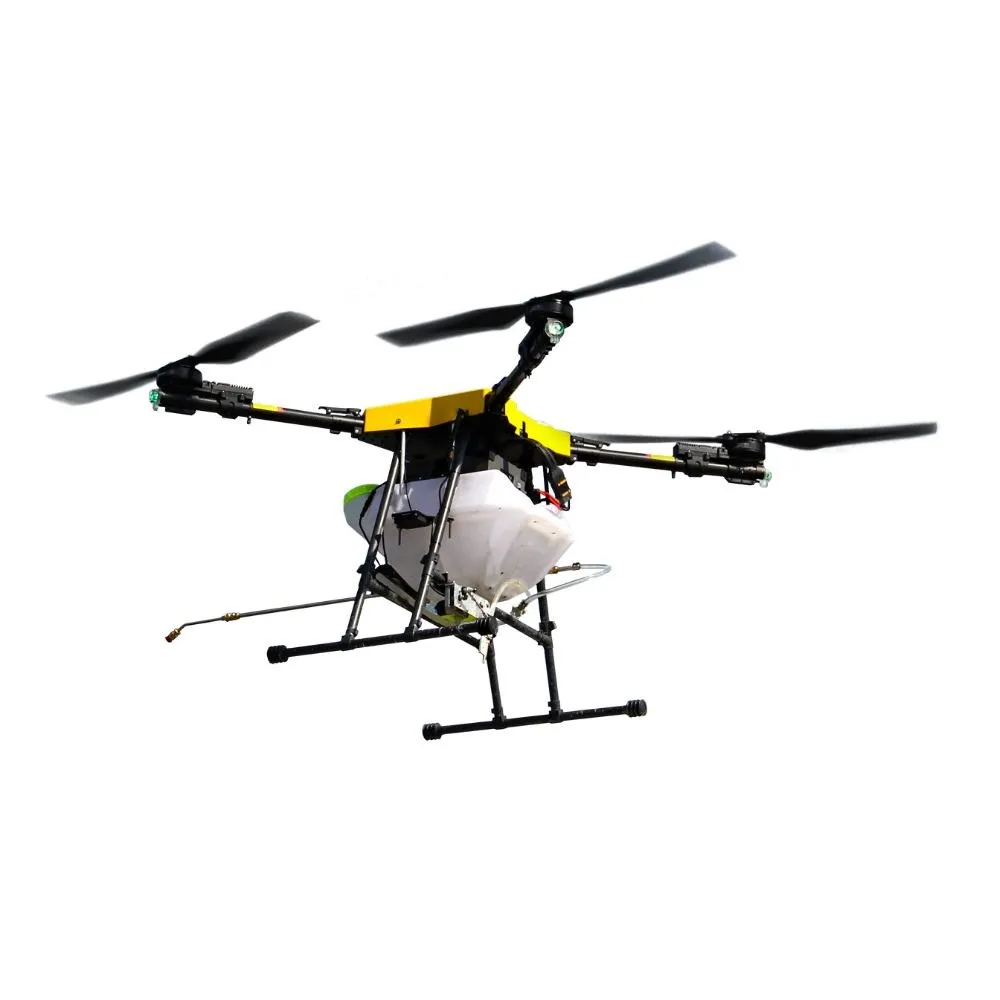
The FLYZOR FC30 supports both. It has a 30 L onboard tank, a ground booster option, 25° and 45° tilted spray angles for panels, IP67 protection and a 60 kg take-off weight. Flight time is 18–35 minutes. These are the figures on the product page; the exact result depends on your configuration.
Water use: what we can and cannot say
You will see claims such as “75 % less water” on seller sites. These claims rarely show a method, a site or a baseline. Water use depends on nozzle type, flow, distance to the panel and how much dirt there is. Some research studies drone downwash cleaning that uses no water, and robot cleaners use small amounts per panel, but those are different systems. So we do not give a litre number here. Ask each supplier for measured litres per hour and per megawatt on a site like yours, and test it. In water-short regions, plan how you will bring water and where wastewater goes.
A simple payback formula
Net gain per clean = (energy recovered × power price) − cleaning cost
Payback of a drone = purchase and setup cost ÷ yearly net gain
Example (numbers are not a promise): a 5 MW plant makes 8,000 MWh per year. Suppose dirt builds up during the dry season and a clean recovers energy equal to 3 % of the year. That is 240 MWh. At US$60 per MWh the value is US$14,400. If a drone crew cleans the plant for US$3,000, the net gain is US$11,400 for that clean. If you clean twice a year with the same effect, the yearly net gain is about US$22,800. If the equipment and training cost US$60,000, simple payback is about 2.6 years. A cleaning company would use the same formula with its own price per job instead of the plant’s cost.
Replace every number. If the soiling loss at your site is 1 %, the same plant recovers only 80 MWh per clean and the picture changes.
When a drone is not the best tool
- A few panels on a low roof: a hand tool is cheaper.
- Sites with no water access and no way to haul it.
- Panels whose maker forbids the cleaning method or detergent.
- Places where rules do not allow flights over the site. In most countries you need a registered drone and a trained pilot. Check with your aviation authority.
Who buys
Three groups ask for these drones: plant owners and O&M companies who want a lower cost per clean, cleaning companies that already wash buildings, and agricultural dealers adding a second product line for the off-season. See also our guide to starting a drone facade cleaning business, because the same aircraft works on both.
To discuss the FC30, a pump size for your array or dealer terms, see the dealer page or ask for a quote. Price and support are by discussion.